wozzeck
Alban Berg
Musiktheater im Revier
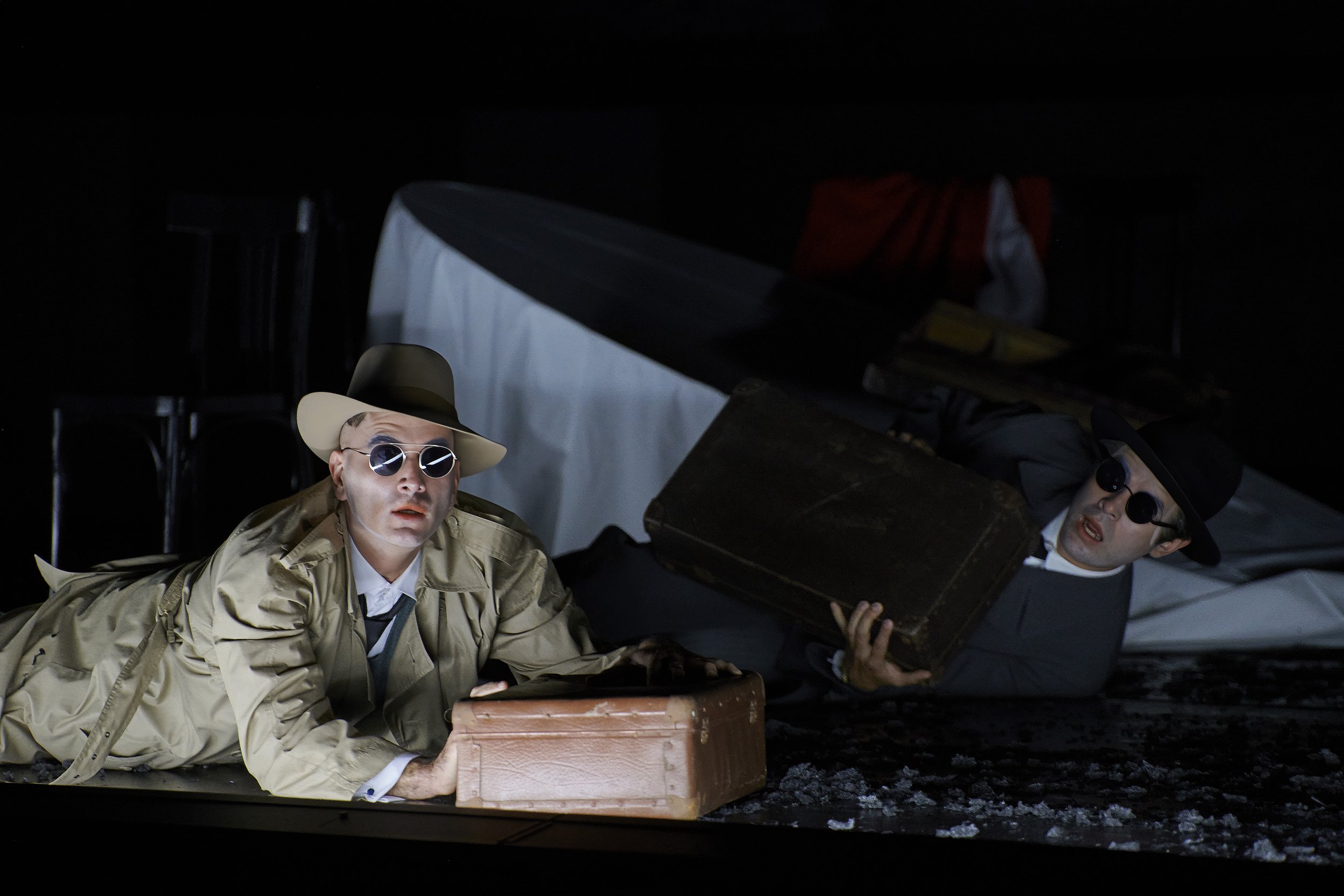
„Ilaria Lanzino makes a remarkable directorial debut at the Gelsenkirchen house with an interpretation that touches in every moment, feels absolutely coherent throughout, and handles the highly delicate subject with great sensitivity. In her interpretation Wozzeck is not the ultimate loser. And here an interesting additional perspective opens up, one that goes beyond the Wozzeck we know. Wozzeck is no longer just one of the "poor folk" whose fate touches us and for whom we can and must feel pity. Wozzeck, this tiny cog in the Nazi machinery, suddenly faces questions of obedience and responsibility: obedience to orders from above, such as shooting an imprisoned Jew. And individual responsibility for his actions, their compatibility with his conscience, that is, the question of guilt. A crucible. All the more so for someone like him, who permanently suffers from feelings of inferiority, which ultimately also leads him to accuse his wife Marie of cheating on him with the so-virile Drum Major. Which may well be true, for Marie, it seems, quite likes to profit from the "new era" and lets suitcases belonging to deported prisoners be brought into the house. (…) Verdict: an exciting new view of Alban Berg's hundred-year-"old" masterpiece, staged at perfection from the beginning until the end."
NMZ
„Lanzino succeeds in creating a dense, deeply unsettling evening of music theatre (…) In her interpretation at the Musiktheater im Revier, Ilaria Lanzino achieves something that one would hardly have thought possible. She raises Wozzeck's powerlessness and suffering to a level at which his wish to please everyone in order to keep his small family together leads him to far crueller decisions of conscience, over which he is inescapably bound to perish.
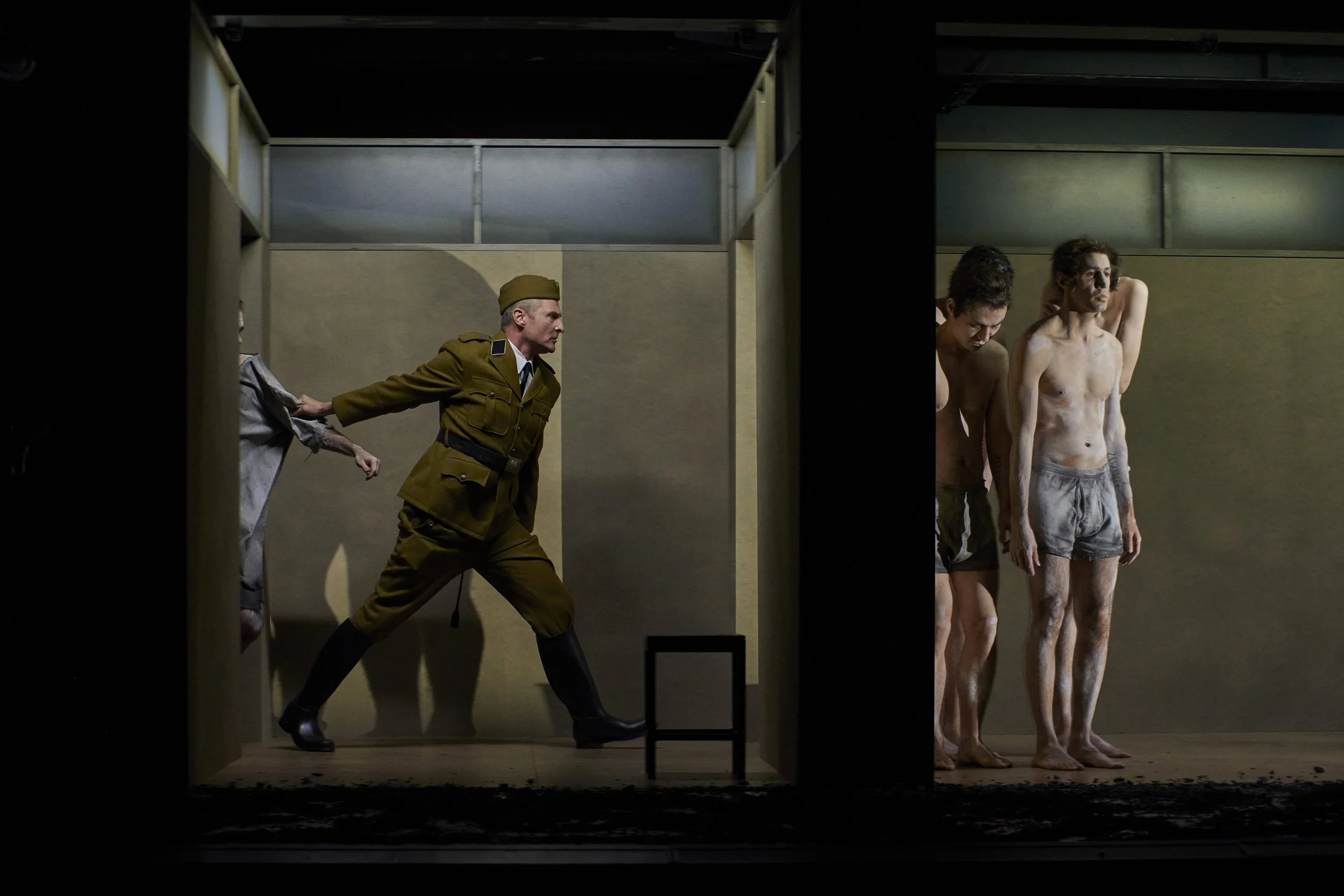
Lanzino's Wozzeck is set in a concentration camp. There, Wozzeck is an assistant to the SS and has to force prisoners to take part in medical experiments. In Gelsenkirchen, it is not Wozzeck who has to eat peas until he can no more. It is the camp inmates who do so. But Wozzeck has to force them to do it and, in the end, also shoot "useless human material." In this way, the director doubles Wozzeck's torments and sustains her directorial concept through to the end without any contradictions with the text. (…) Ilaria Lanzino and her team have pulled off a great coup at the start of the season. She shows what music theatre can and should do. Here one can debate and engage closely with a coherent interpretation. We want much more of this."
Theater Pur
„Ilaria Lanzino has relocated the story of the soldier Wozzeck to the Nazi era, turning it into a dark social drama about power, obedience, and responsibility. The evening impresses with a stage direction that is thought through to the end, a striking stage design, outstanding vocal performances, and a magnificent orchestra. A gripping theater evening.(…) A strong, almost overwhelming opening, with a Wozzeck that asks the question: victim or aggressor, or… victim and aggressor? (…) This gives the character an uncomfortable ambivalence, which nonetheless builds dramaturgical tension. Lanzino works out all of these points very consistently in her rigorous staging. (…) Overall, Lanzino's Wozzeck is neither a historical lesson nor a mere updating. Rather, the Nazi era provides the concrete framework for a far more general but uncomfortable question: where does individual responsibility stand when the law of the strongest turns victims into aggressors? The production shows impressively that this is exactly what can happen, and that this fact does not undo the individual's deed.
Verdict: a successful start to the new season at the MiR. Not because the staging resolves every question, but because it convinces both musically and scenically and places Berg's opera in a context in which no one can comfortably withdraw.“
OPER! Magazin
"A visually powerful, unsettling production. (…) A brave, thought-provoking and musically gripping start to the new artistic directorship at the Musiktheater im Revier. After moments of stunned silence, the audience in the Großes Haus rightly celebrated it with long, heartfelt applause. (…) What makes Lanzino‘s concept so interesting is that it radically breaks open the classic victim role. Ilaria Lanzino forces the audience to face individual guilt, ethics and morality in a world of brutalized, dehumanized everyday fascism.
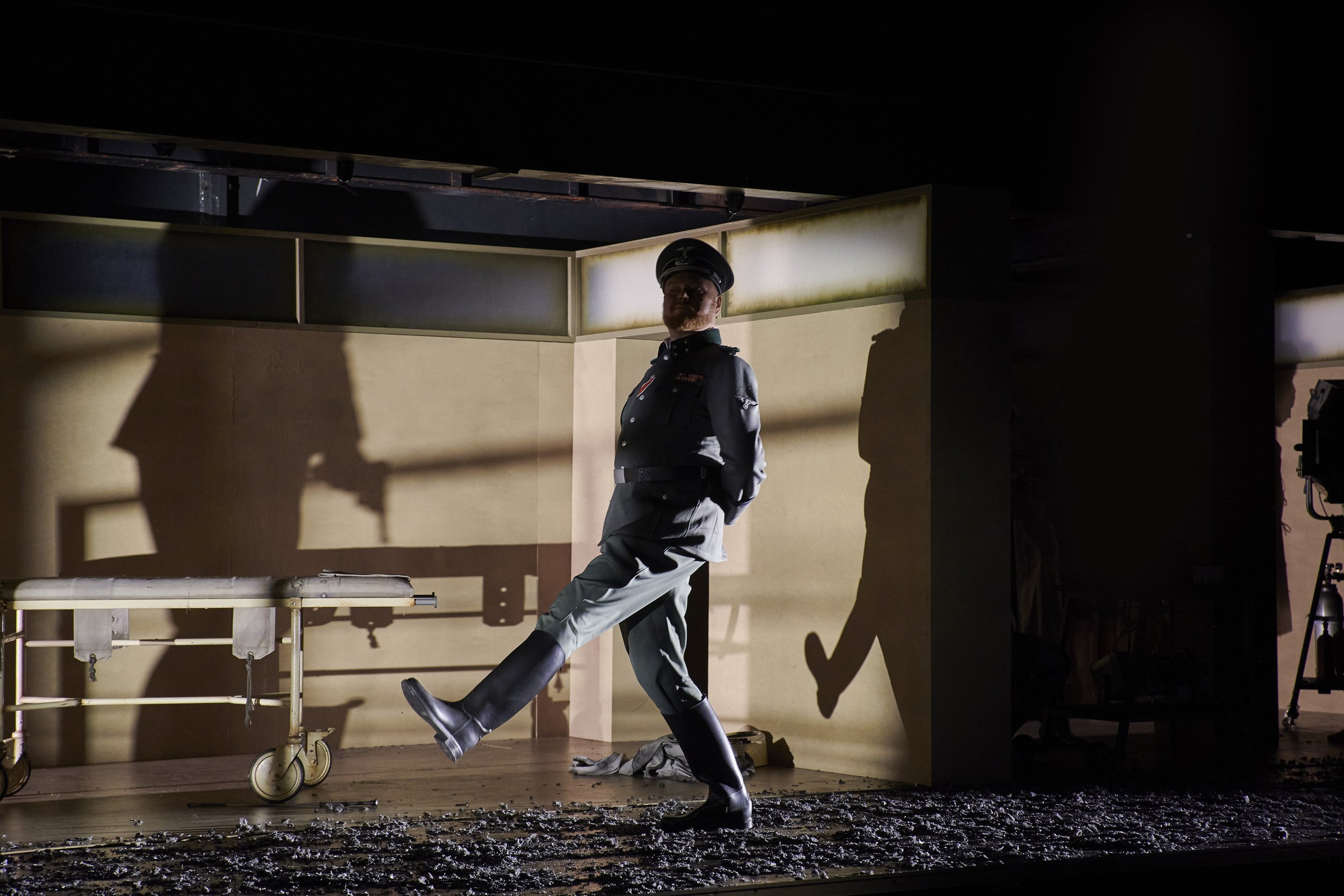
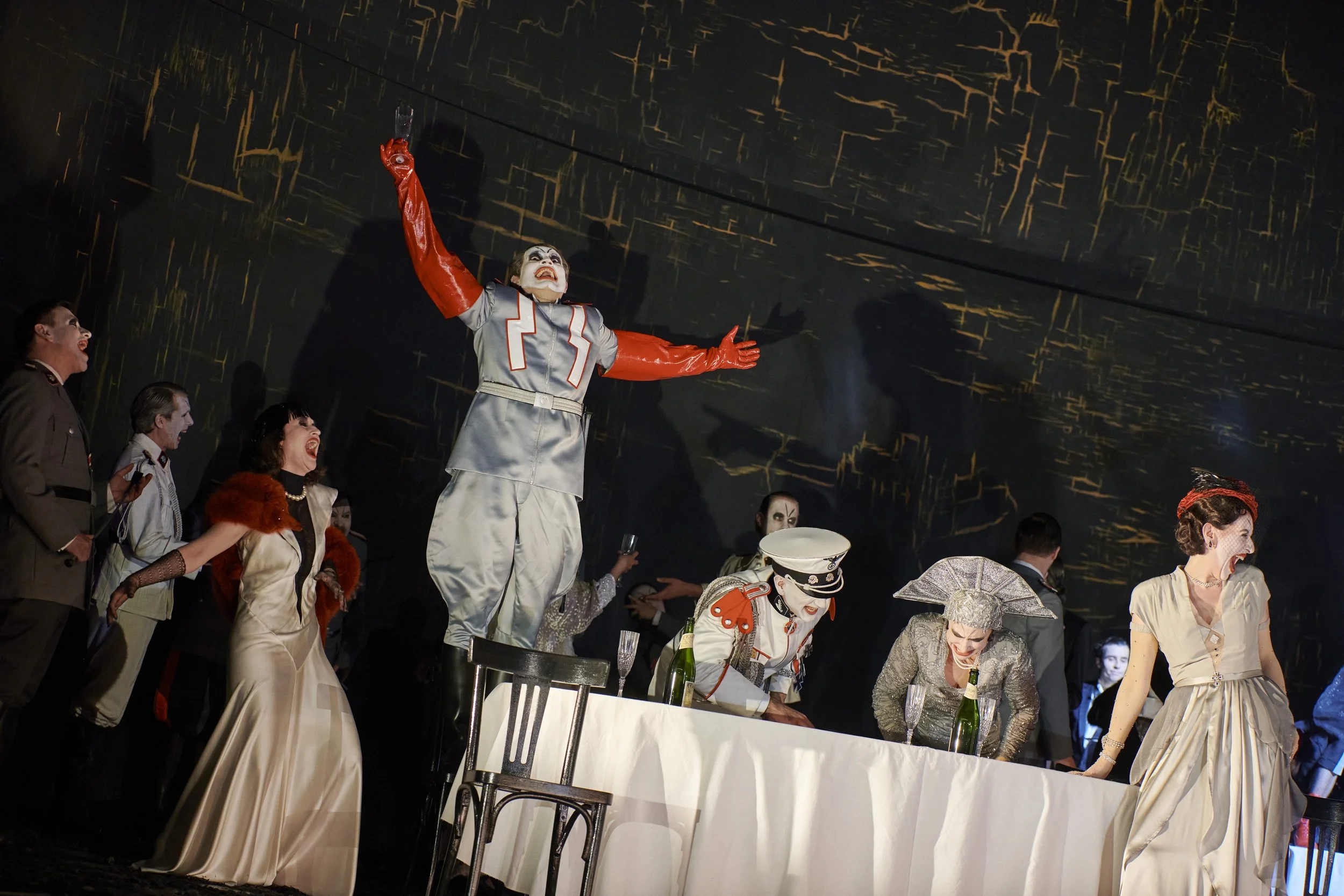
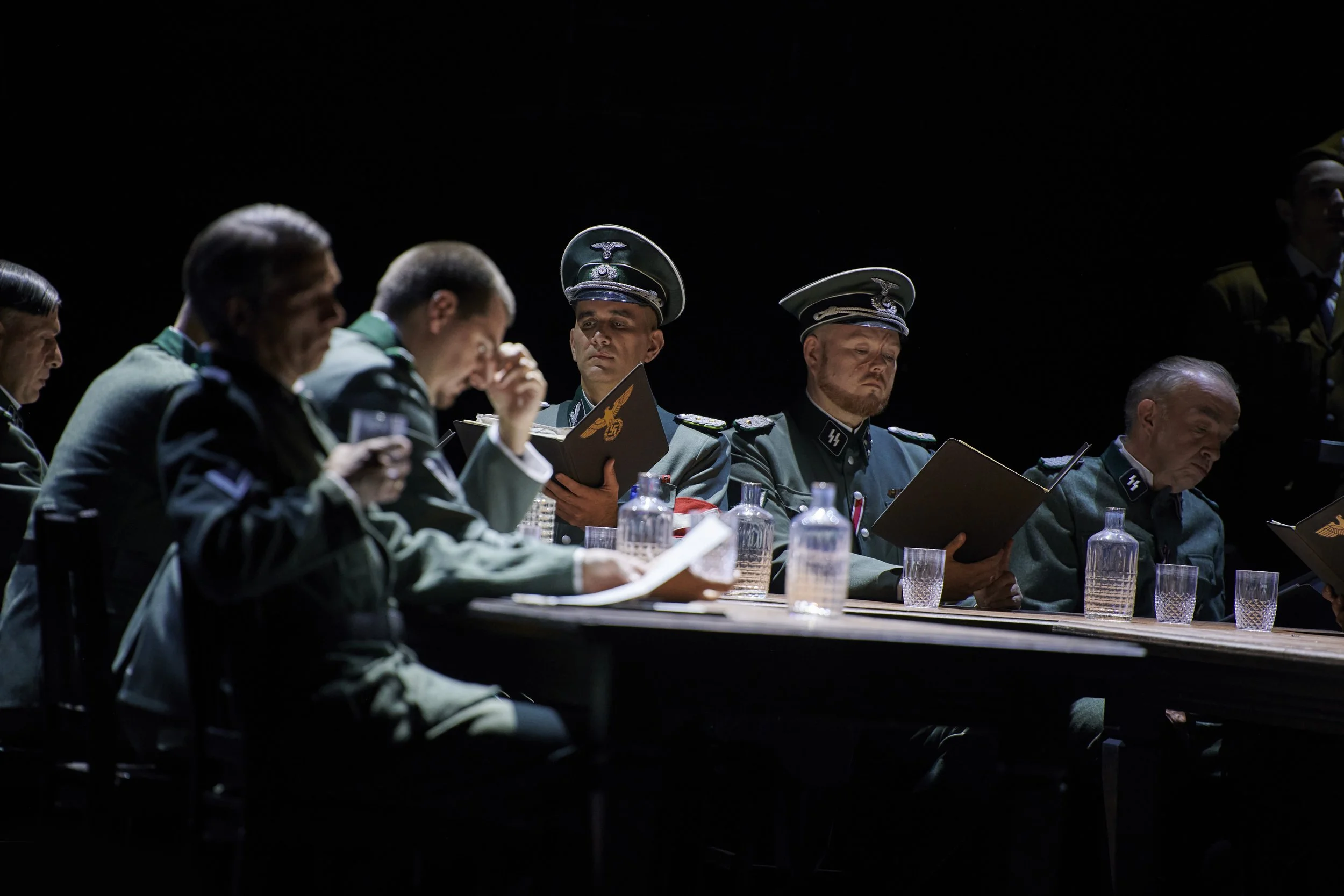
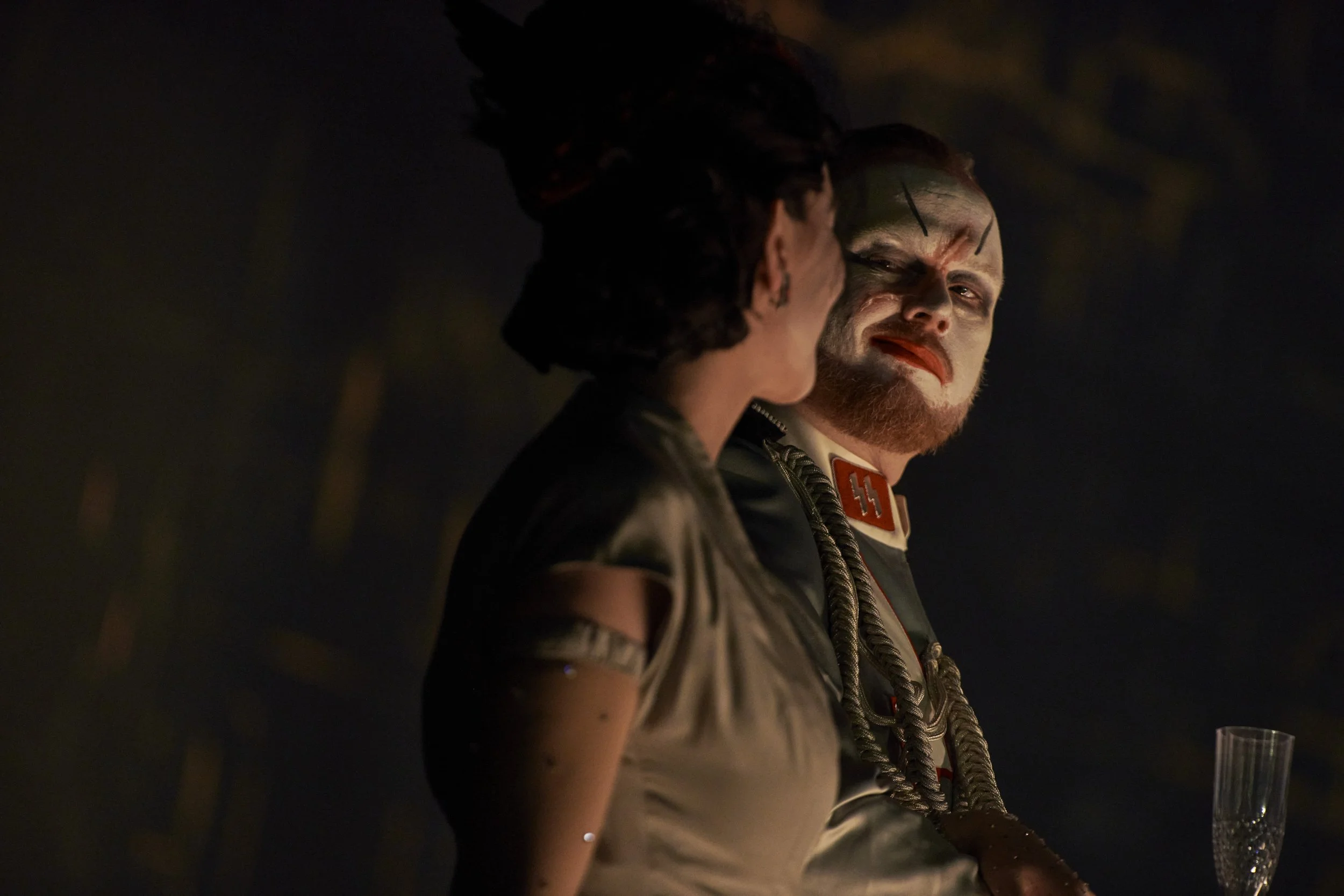
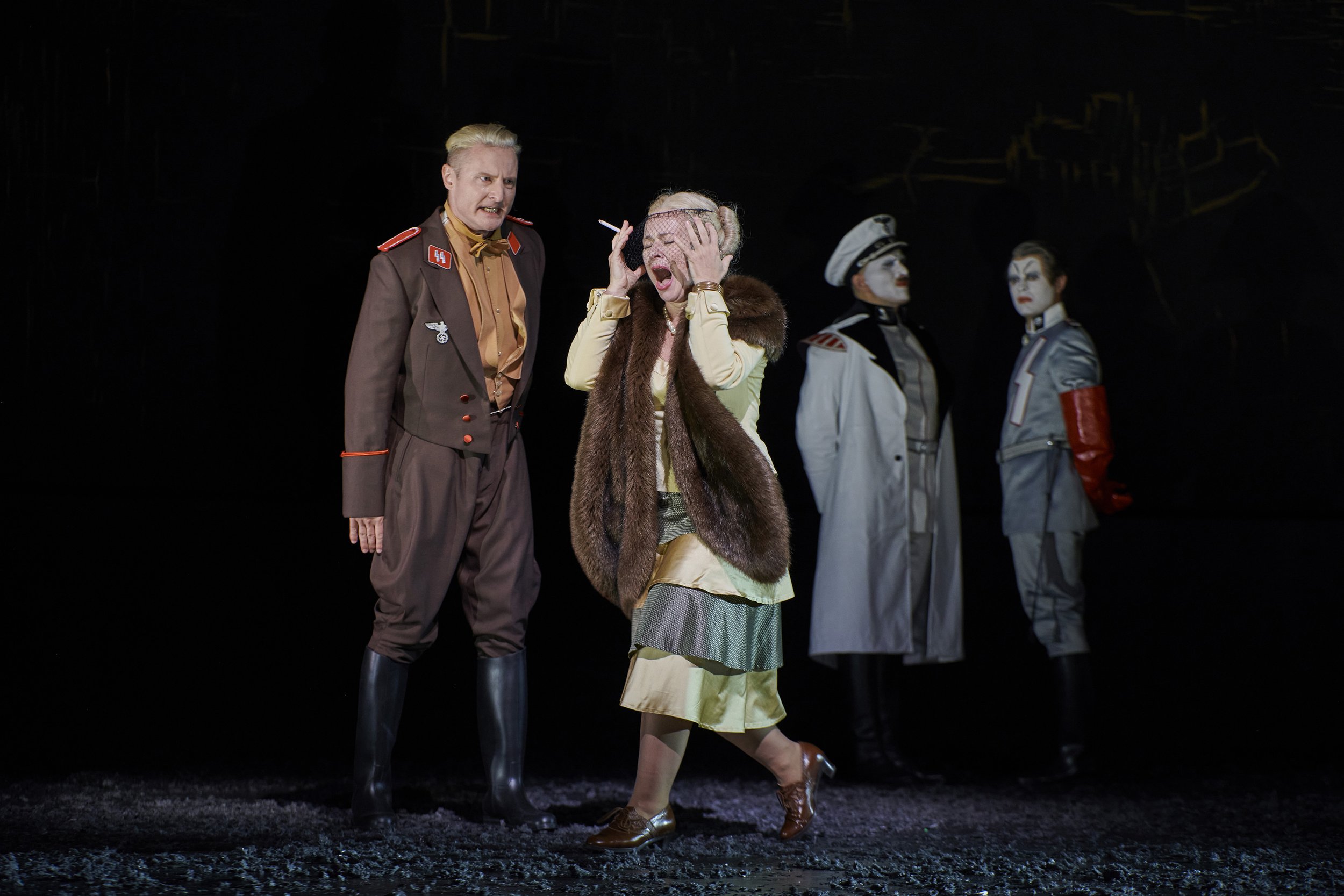
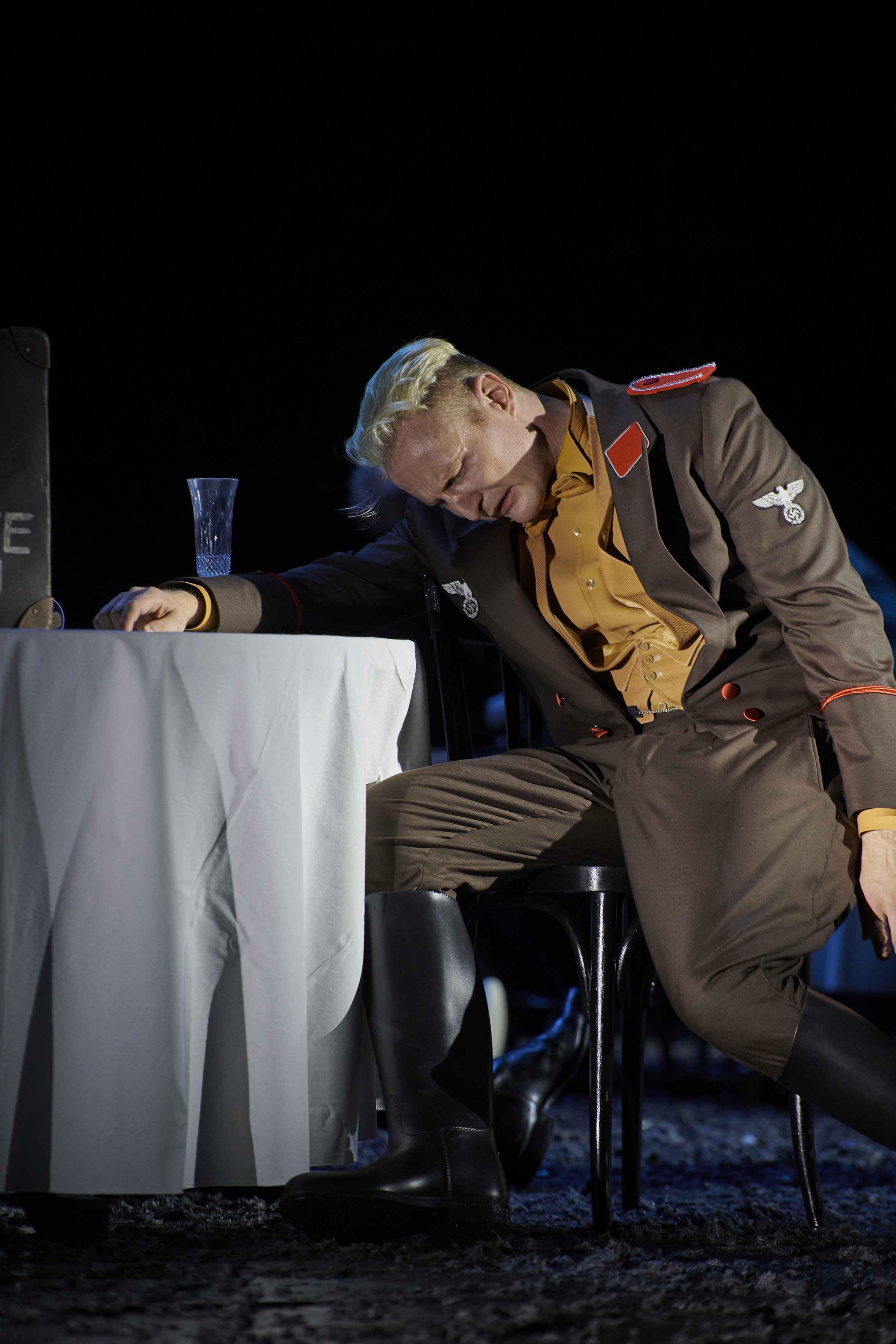
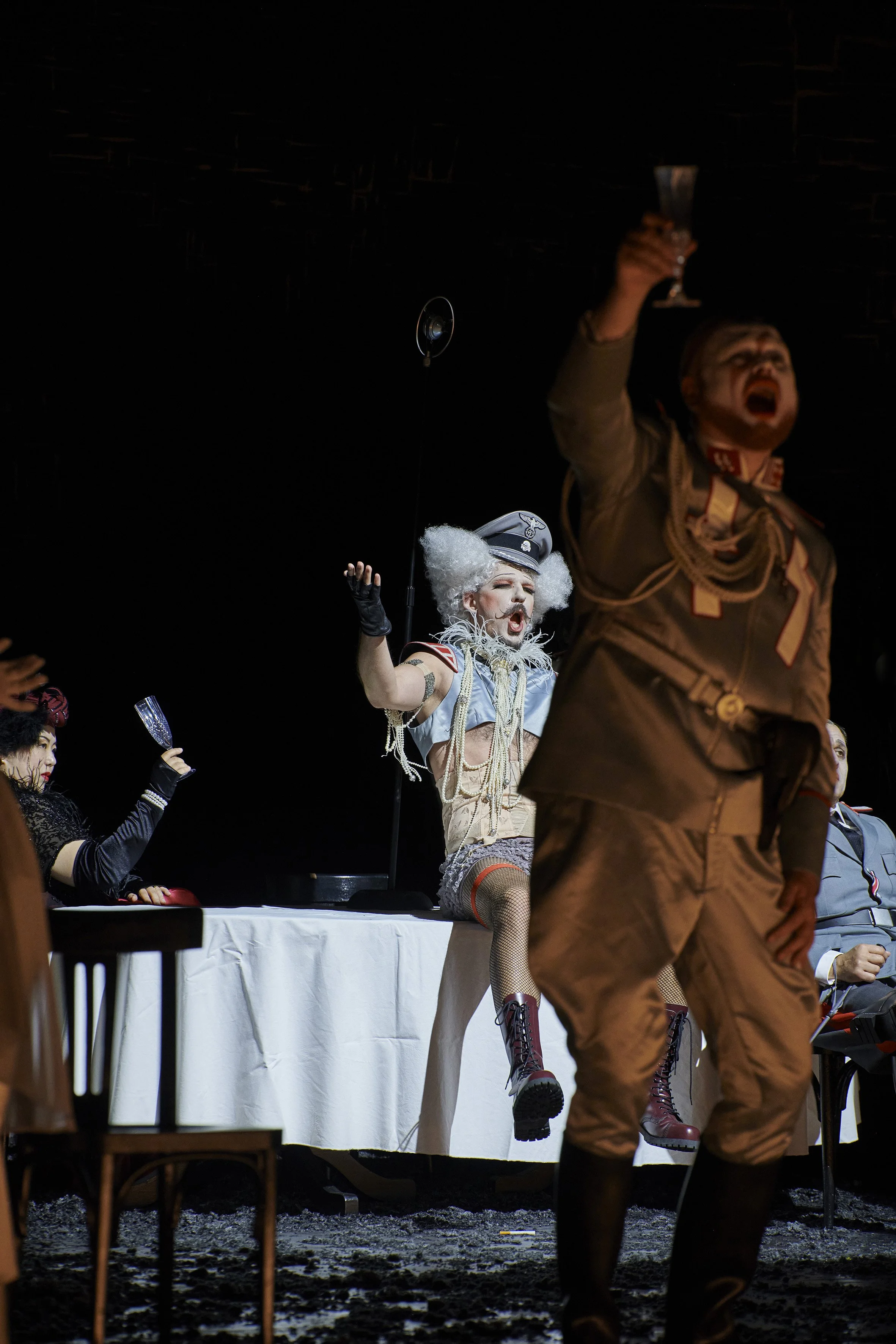
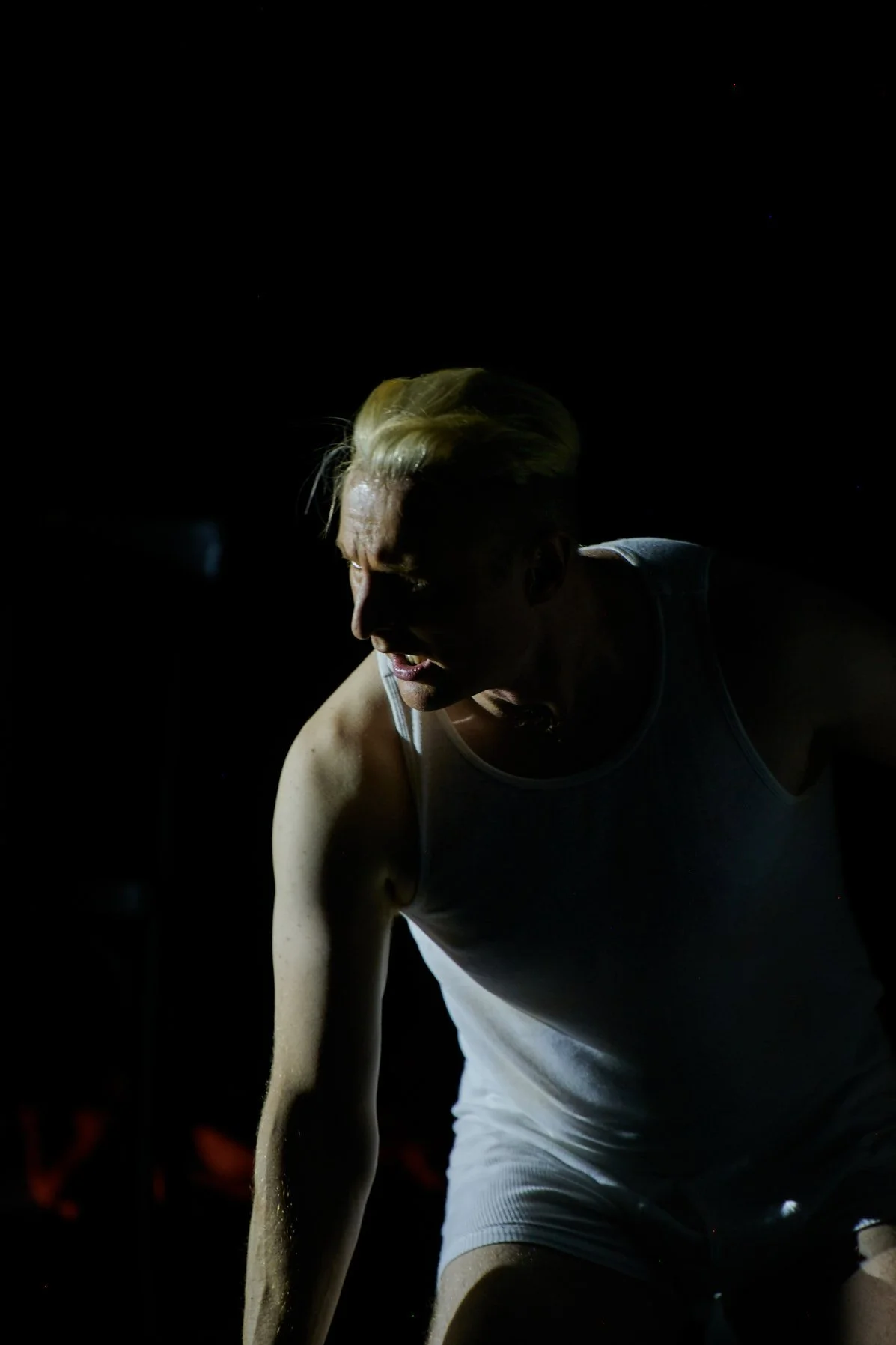
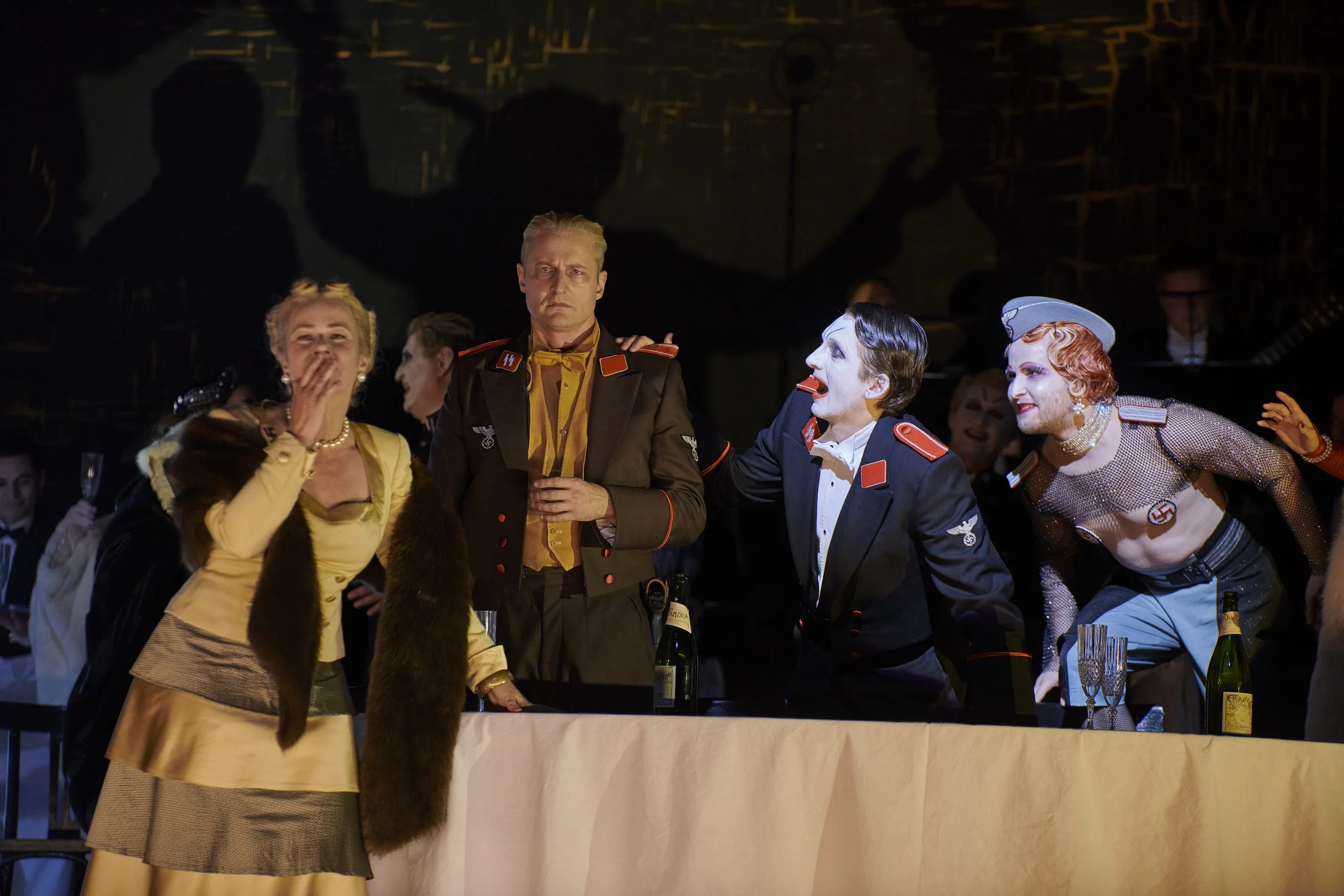
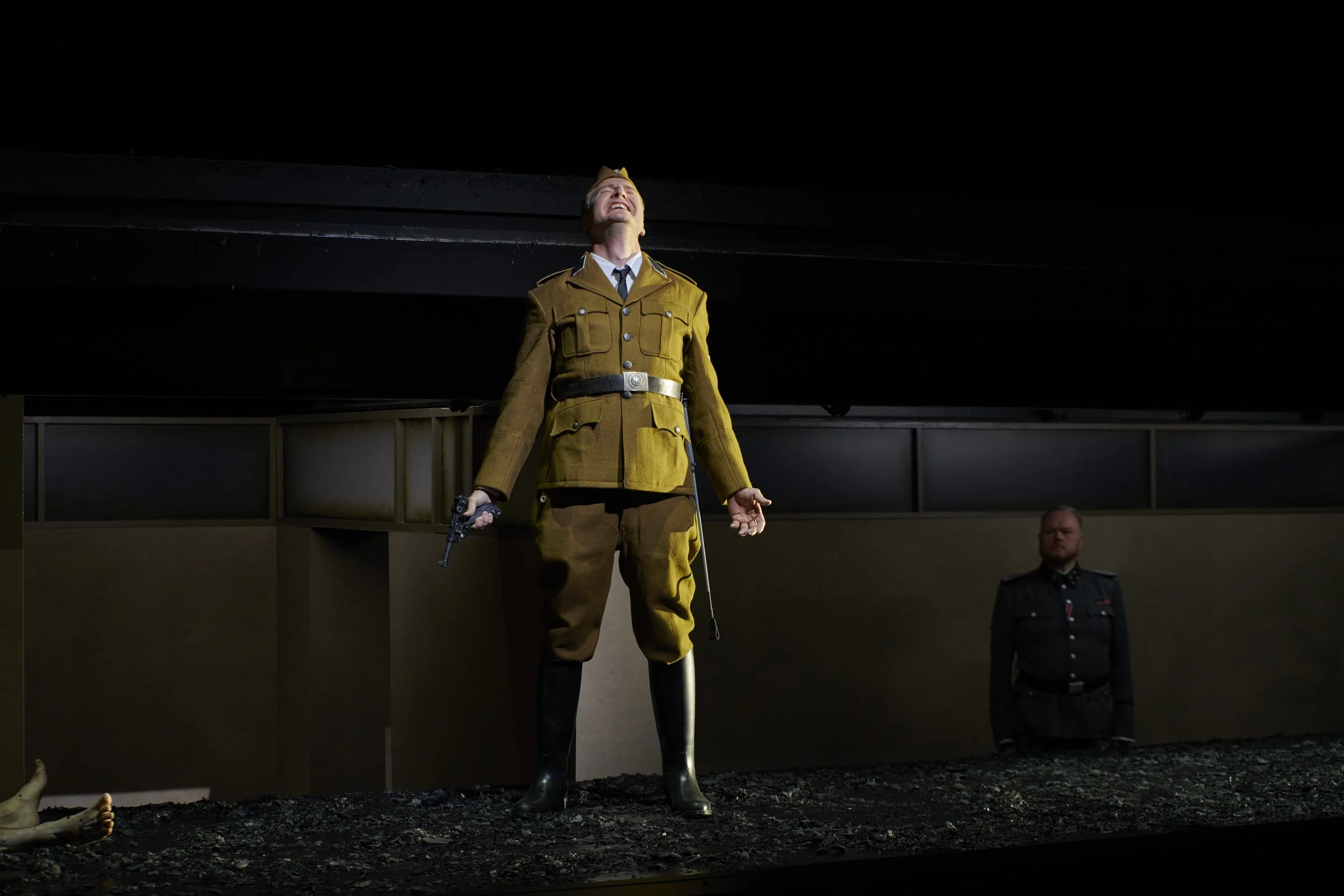
Lanzino sets the story firmly within the historical terror of National Socialism and deliberately breaks with the way the opera is usually understood. The heart of her staging is a complete rethinking of the title character. Wozzeck is not the naive, humiliated worker crushed by social conditions. He is an ambitious SS recruit who, driven by careerism and a determination to rise, is willing to do the regime's dirty work.
The entire MiR ensemble is carried by Lanzino's excellent direction of the actors. The production as a whole stands out for its meticulous research, its wealth of detail and its masterful adaptation of Büchner's play and Berg's opera. The ending is especially striking. (…) A stroke of genius in the direction."
O-Ton
„Is this man a victim? Far from it. At the Musiktheater im Revier (MiR) in Gelsenkirchen, the Italian director Ilaria Lanzino casts a sharpened new eye on Alban Berg's opera "Wozzeck." (…) A spectacular concept, indeed: hardly anyone has ever broken so rigorously with the cliché of the victim that already clung to Alban Berg's source, Georg Büchner's famous fragment "Woyzeck."
Ilaria Lanzino has moved it forward by a century into Germany's darkest time. (…) Wozzeck, the driven, restless prole, is an SS candidate in her production, a simple soldier. An accomplice, then. With this, the director sharpens the all-decisive question of every individual's responsibility. This look at humanity, morality and guilt is piercing.„
RZ
„Shattering Season Opening: Lanzino's "Wozzeck" Grips the Musiktheater im Revier
Ilaria Lanzino moves Alban Berg's "Wozzeck" to the final days of the Nazi regime. The Musiktheater im Revier delivers a powerful premiere.
Director Ilaria Lanzino gives the opera a whole new meaning. She sets the story in the final phase of the Nazi regime. What was a story of human misery ending in murder becomes a deeply disturbing exploration of guilt and responsibility.
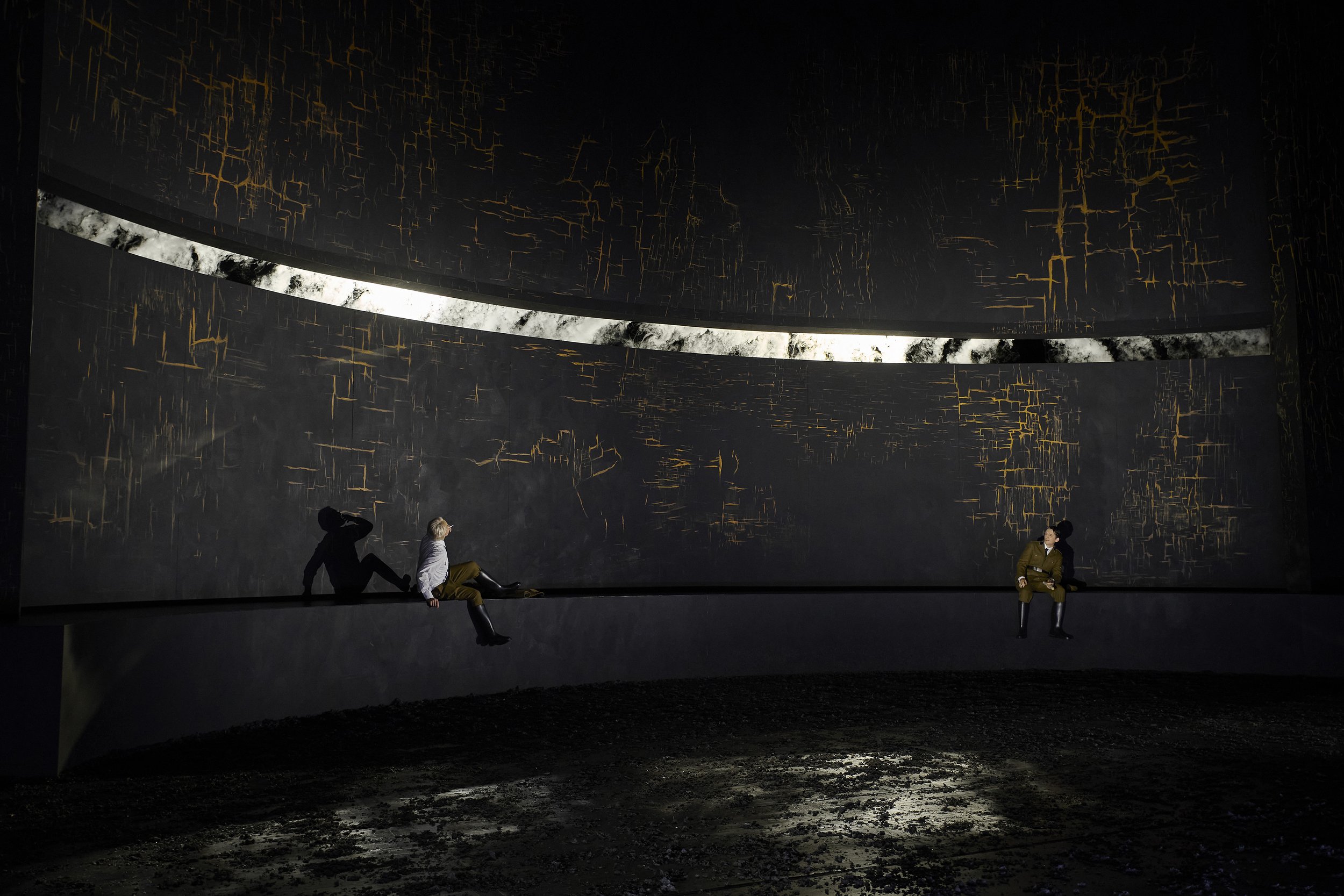
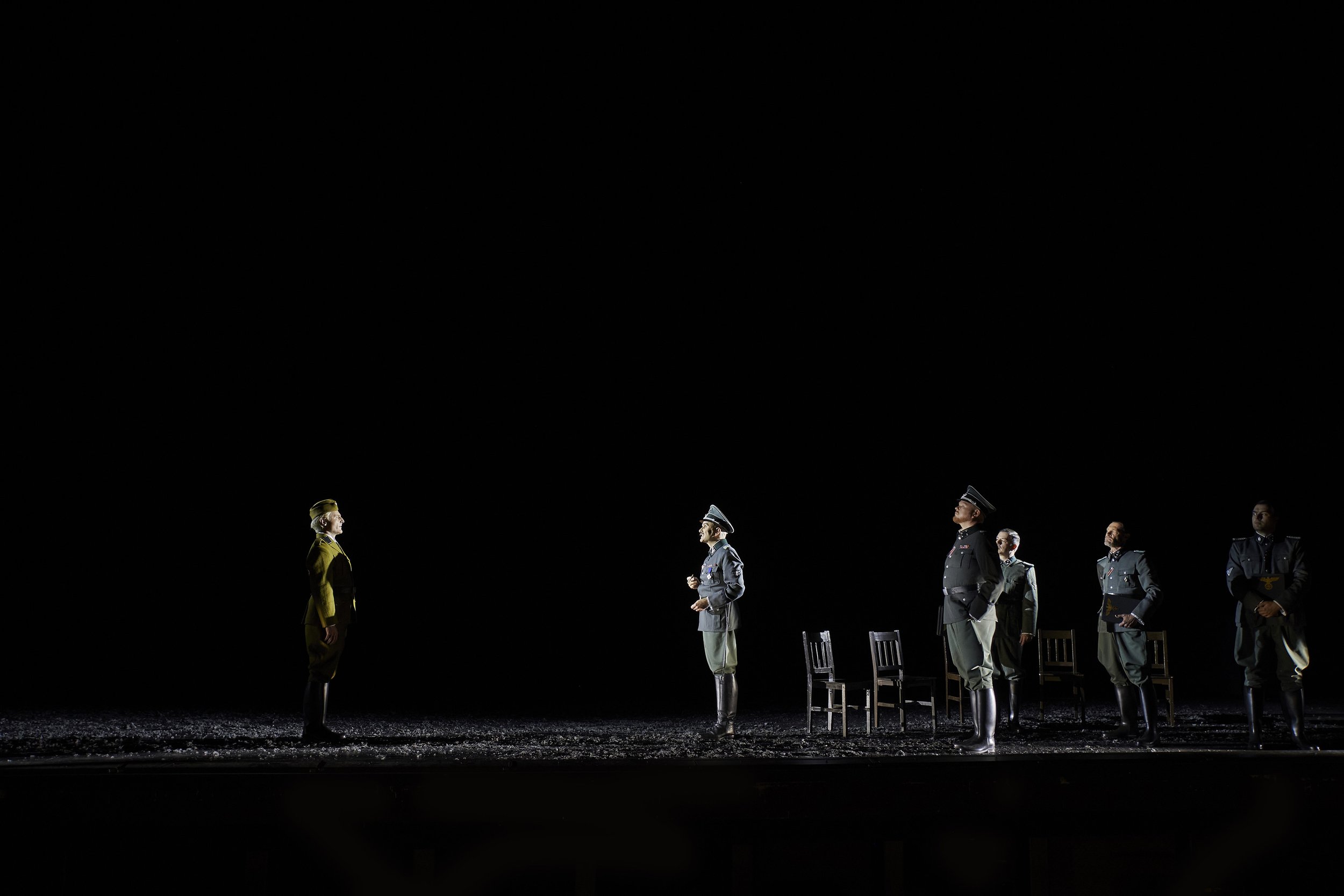
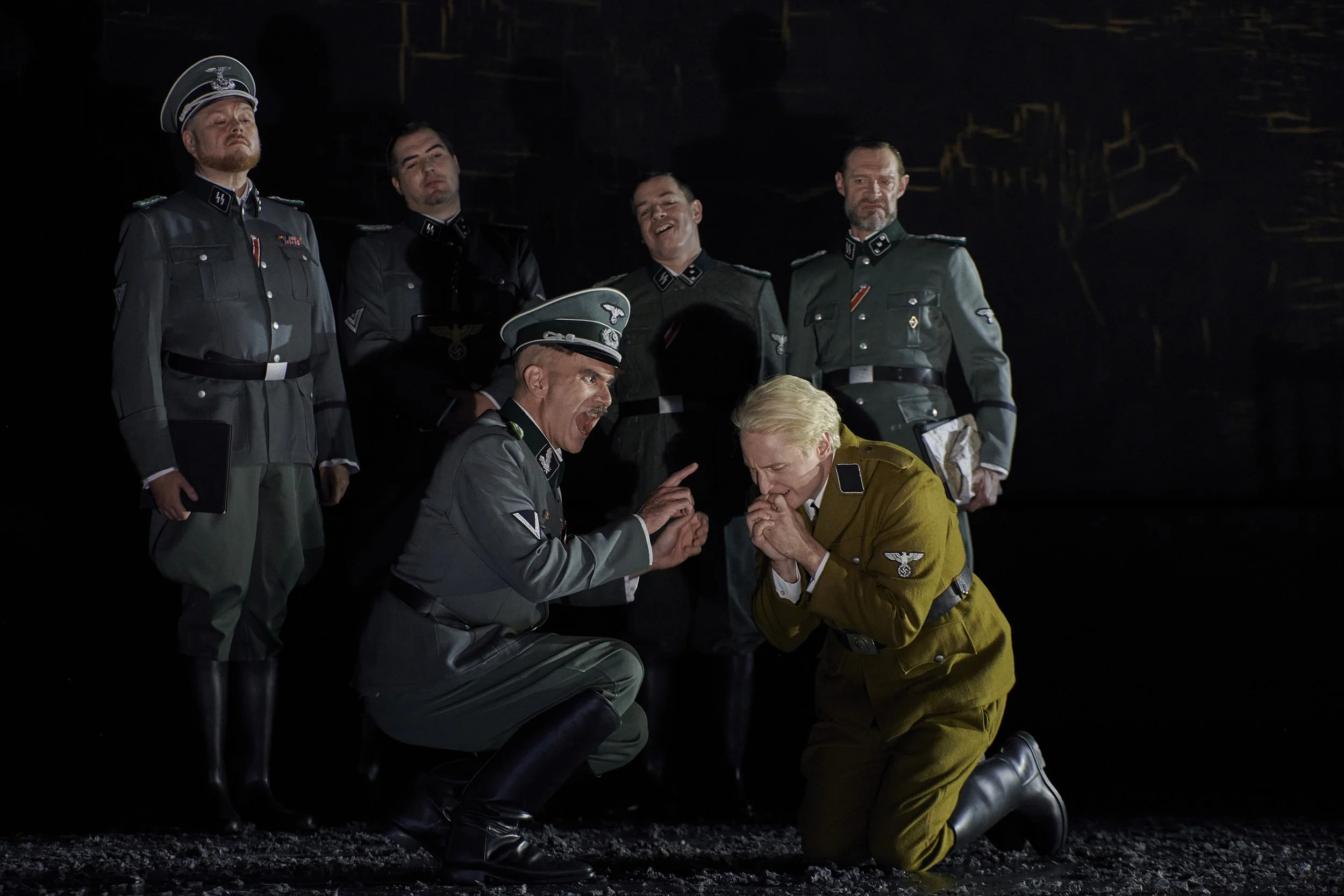
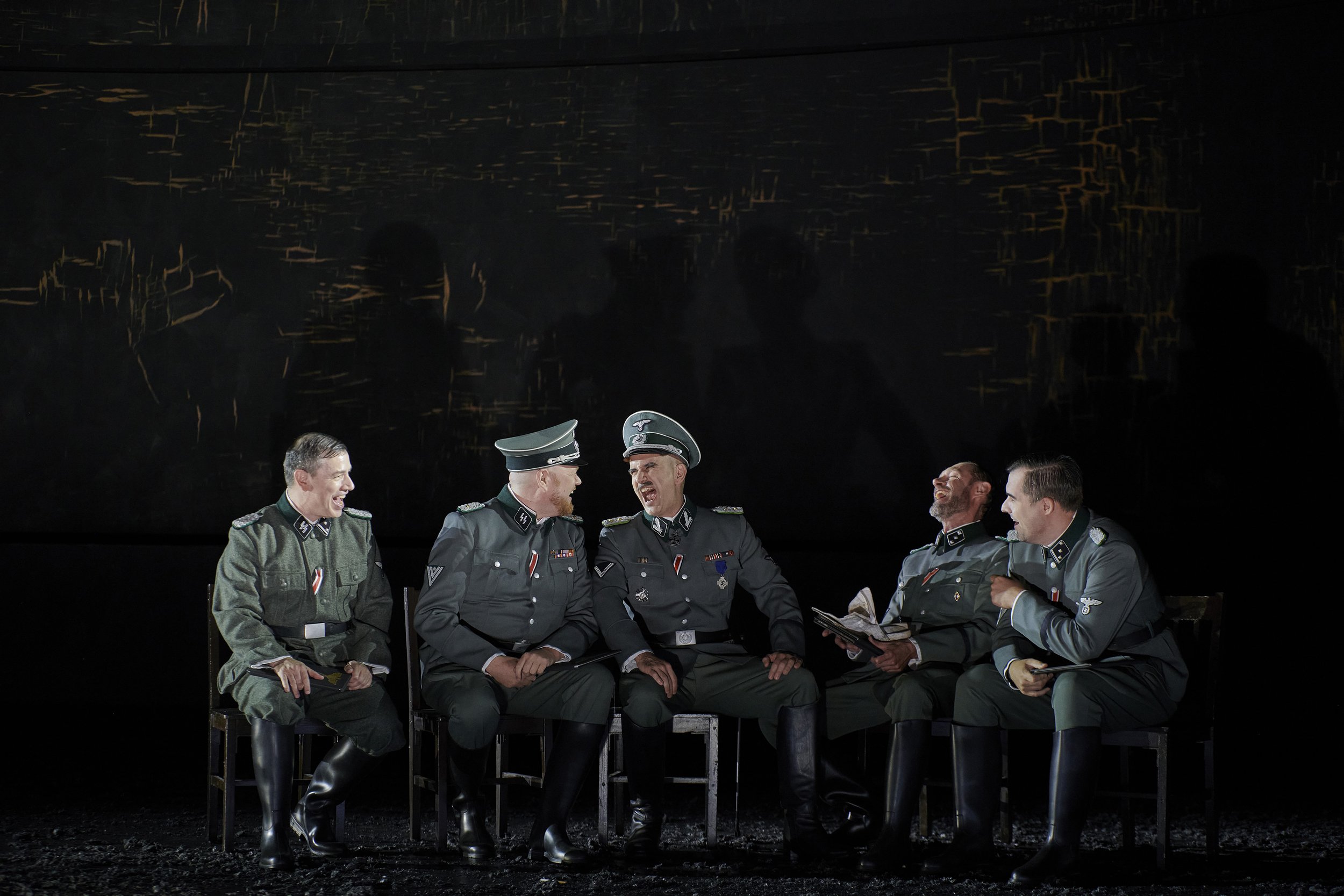
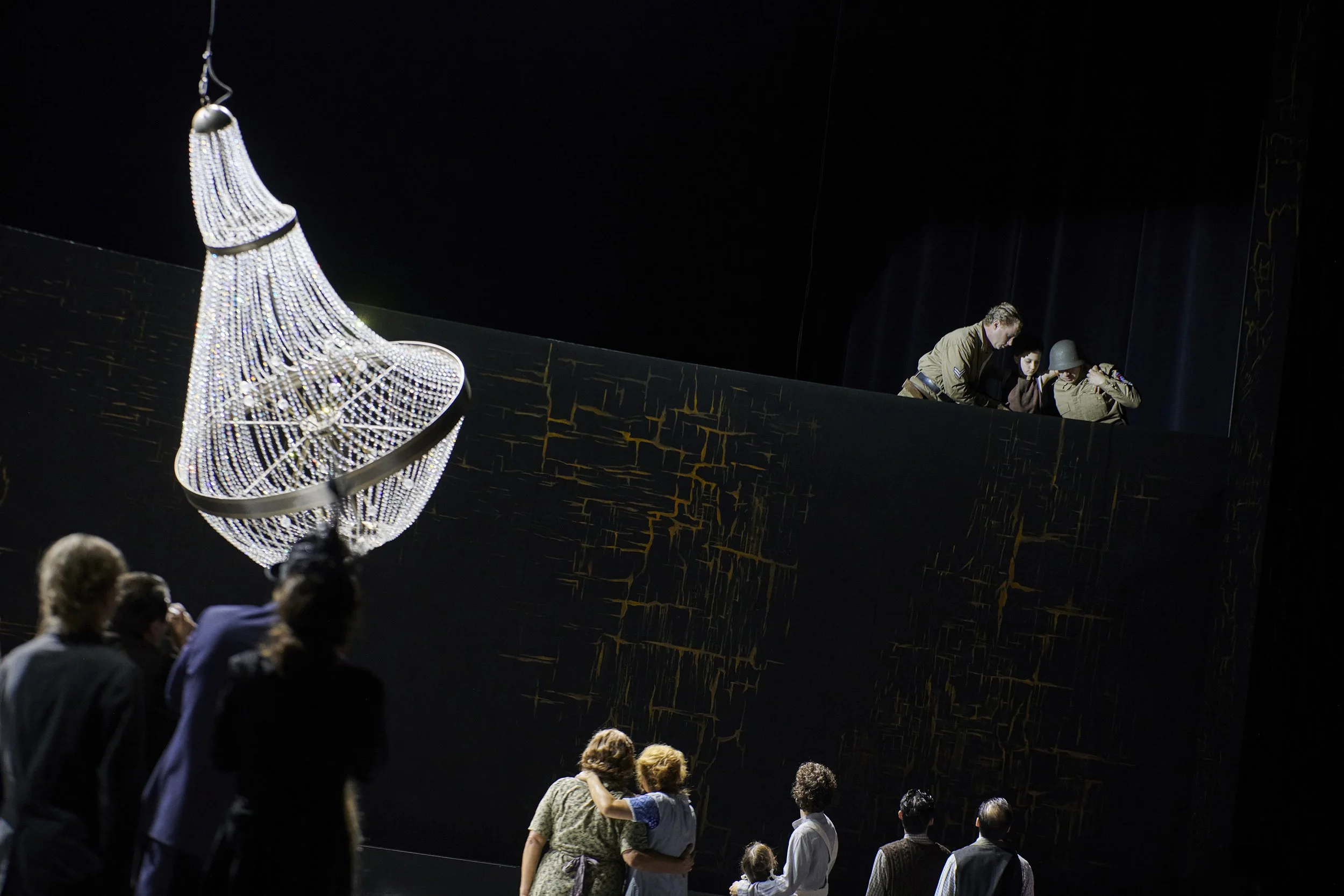
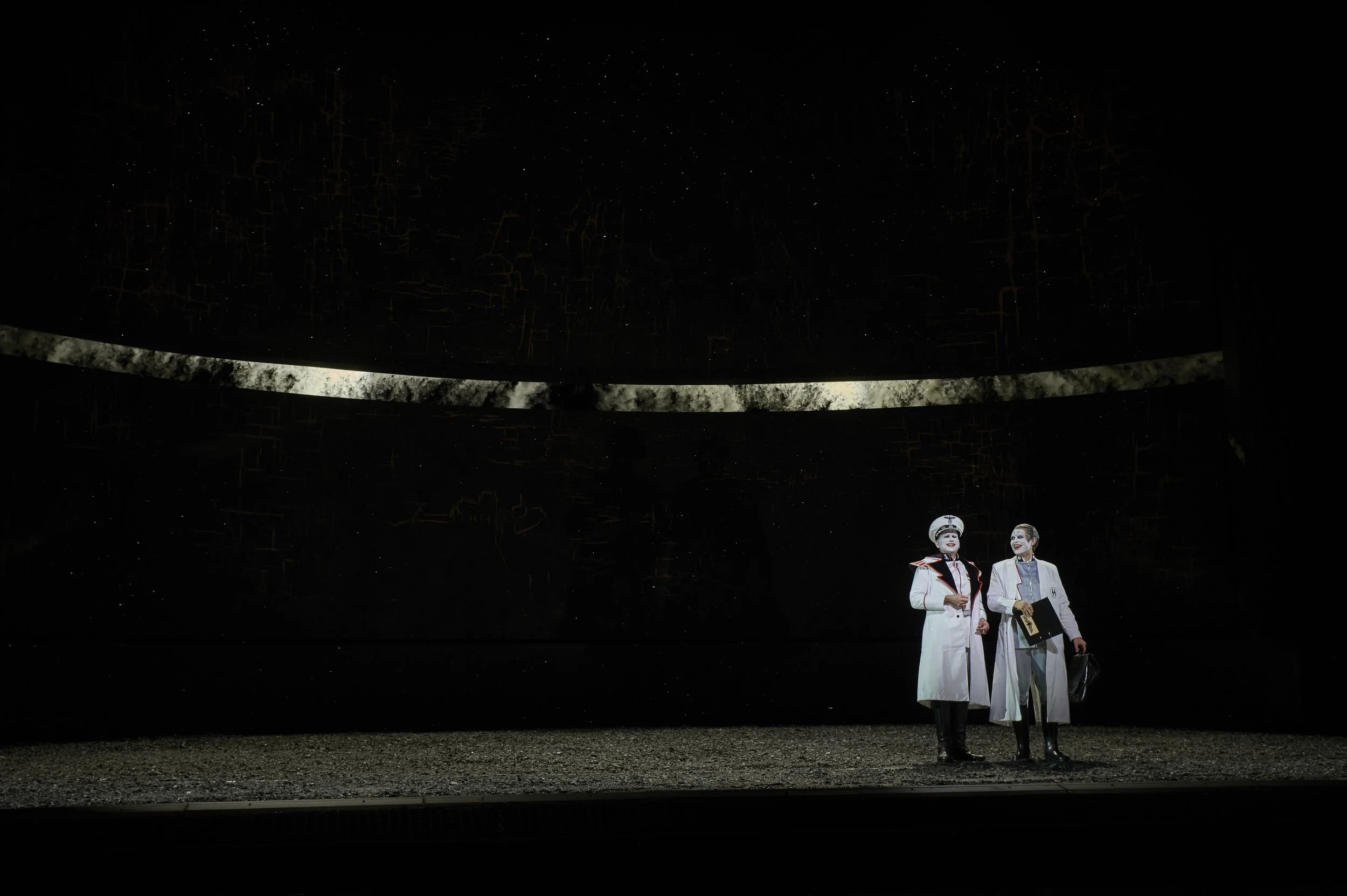
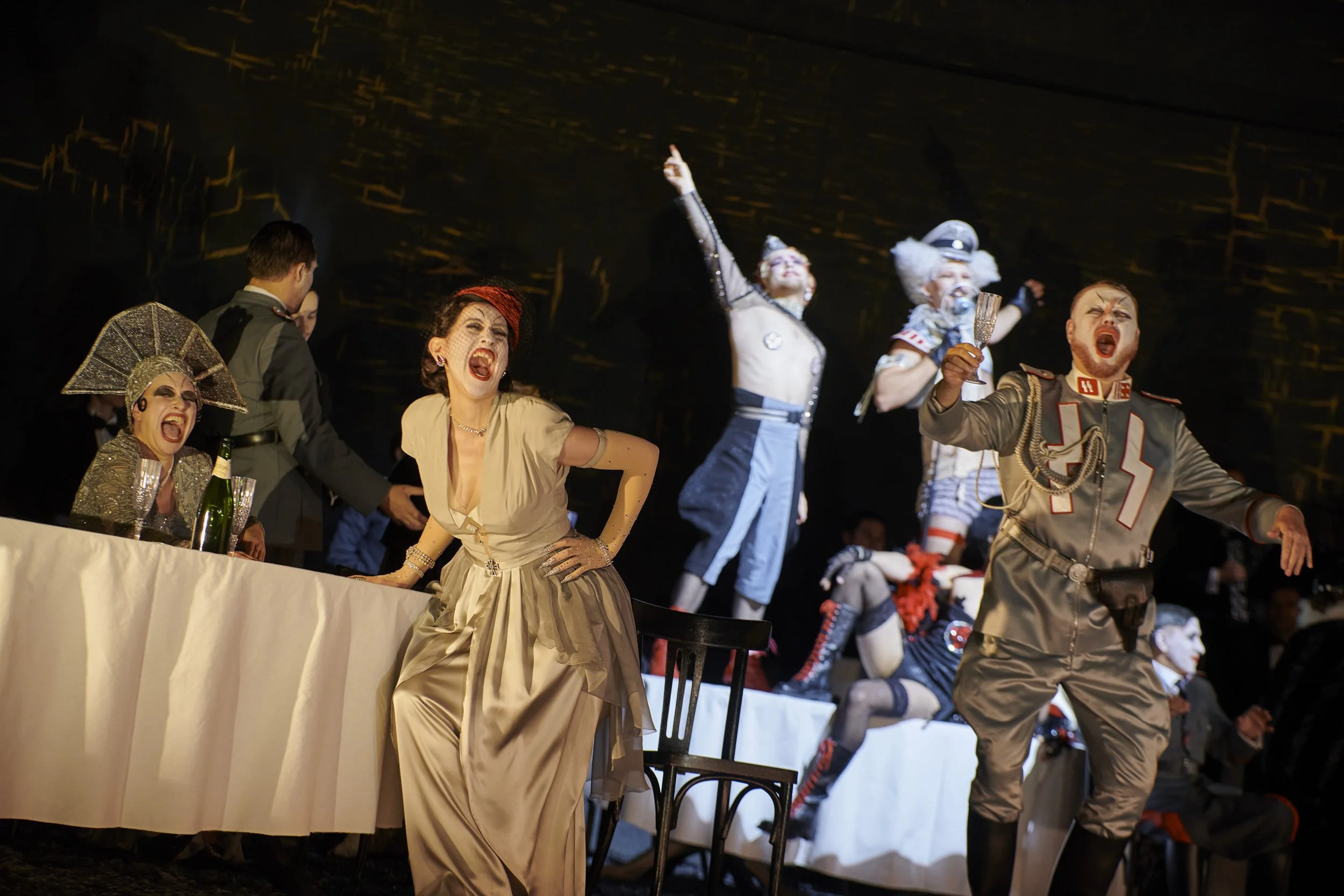
Here, Wozzeck is not humiliated in the Captain's room but in front of a whole group of soldiers. The next scene, in an open field, confirms the terrible suspicion. Light and fog come through a long, horizontal gap. Fog? "Zyklon B" is written on the crates being loaded. Very direct, very bold, and a real risk.
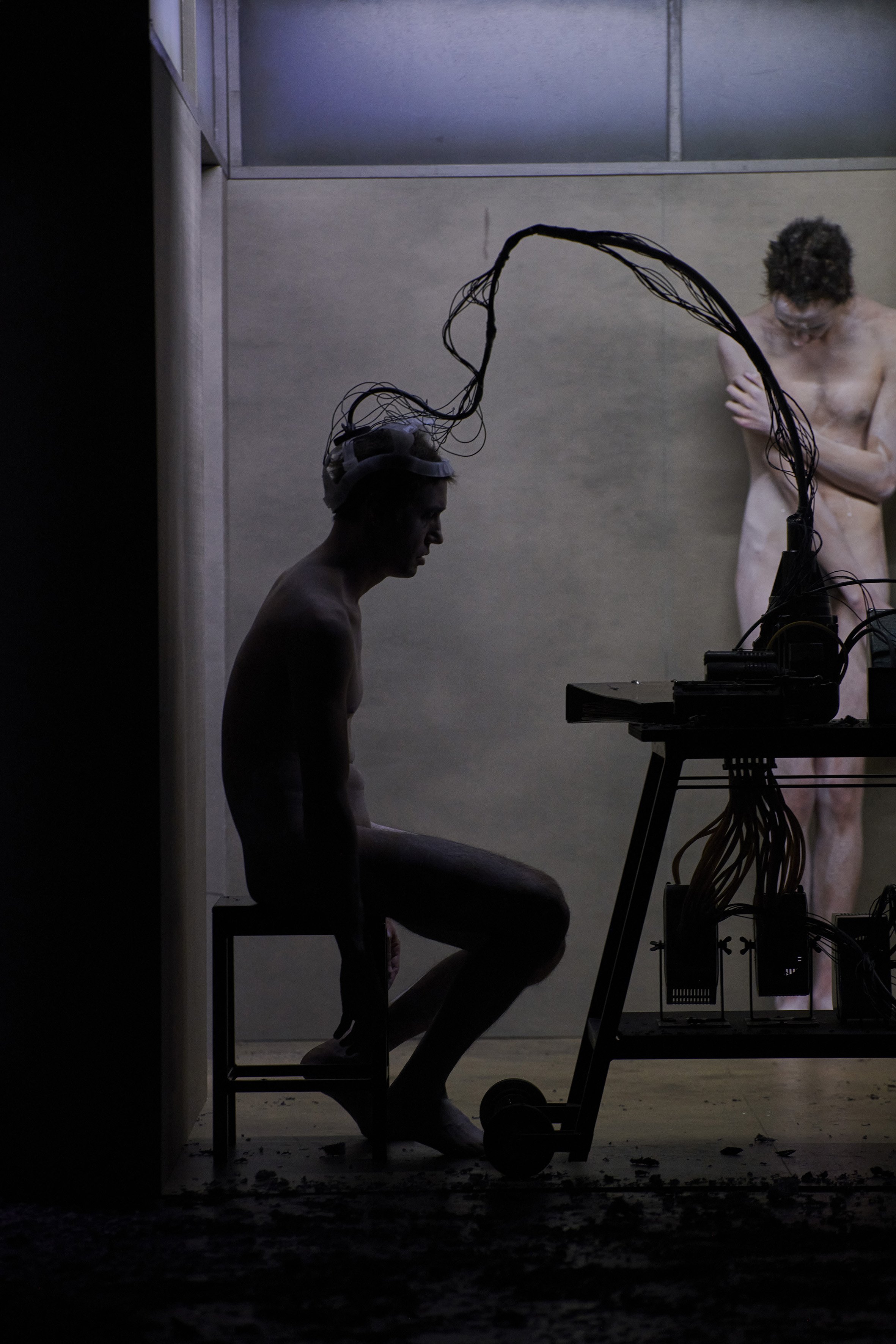
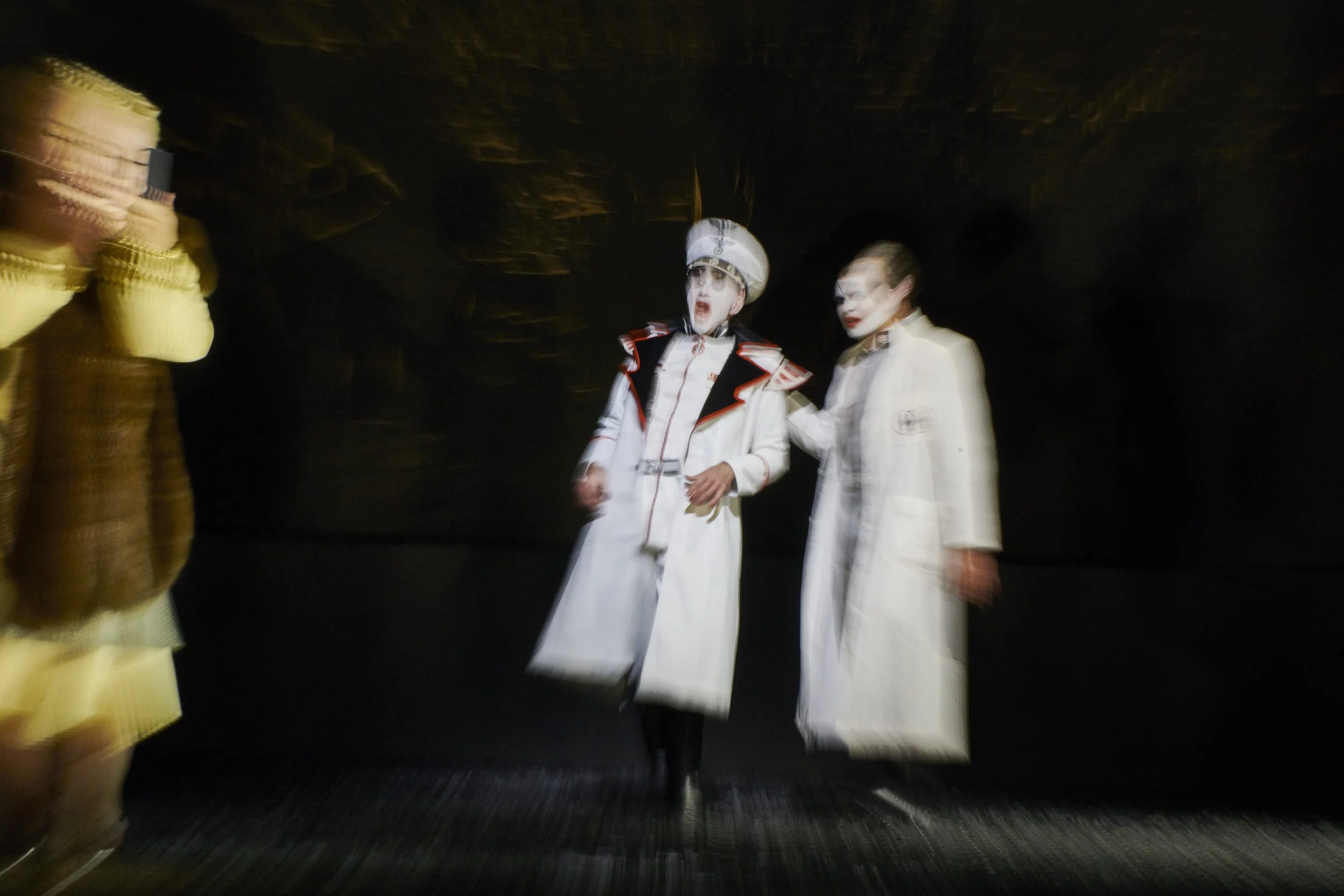
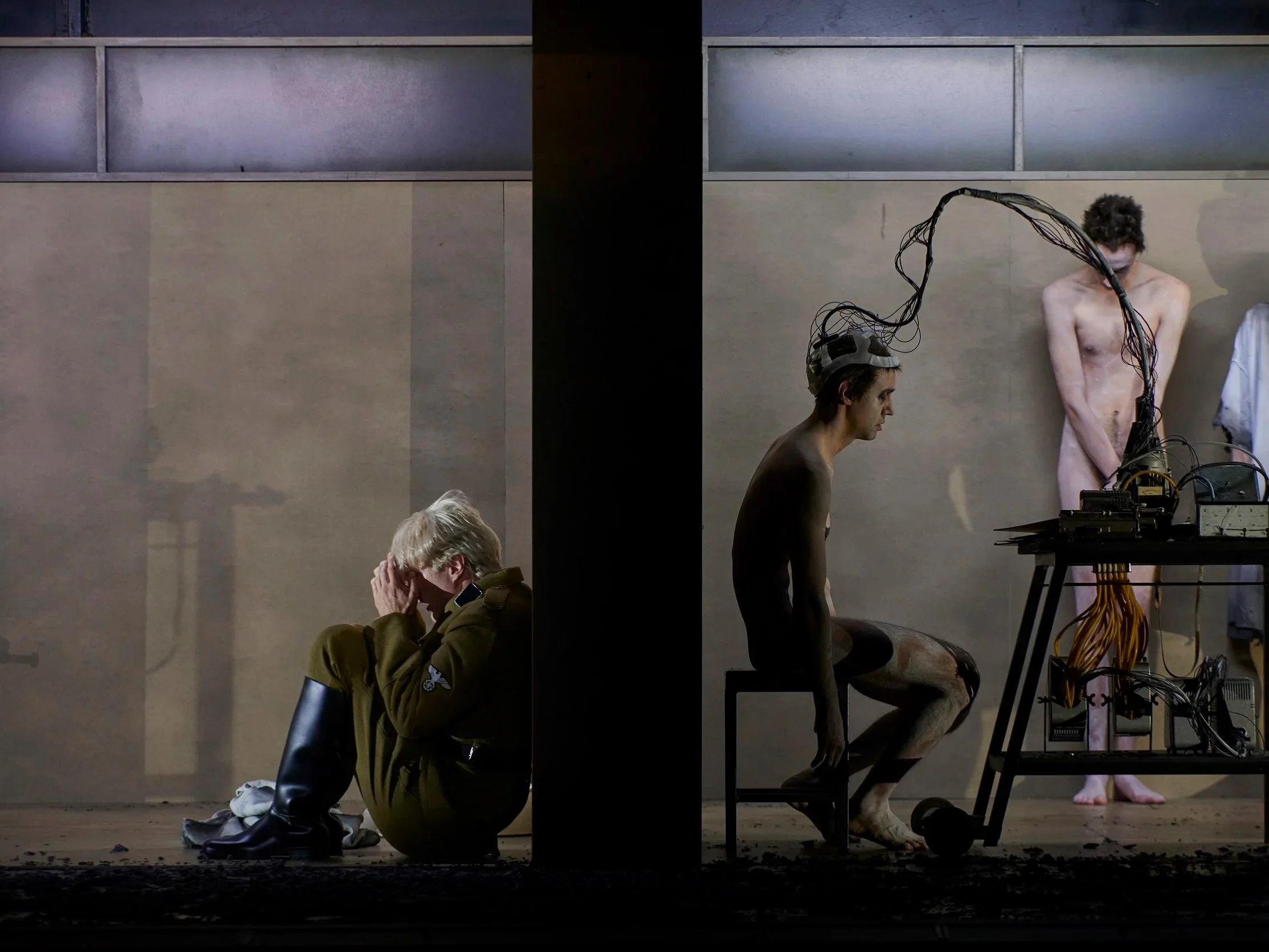
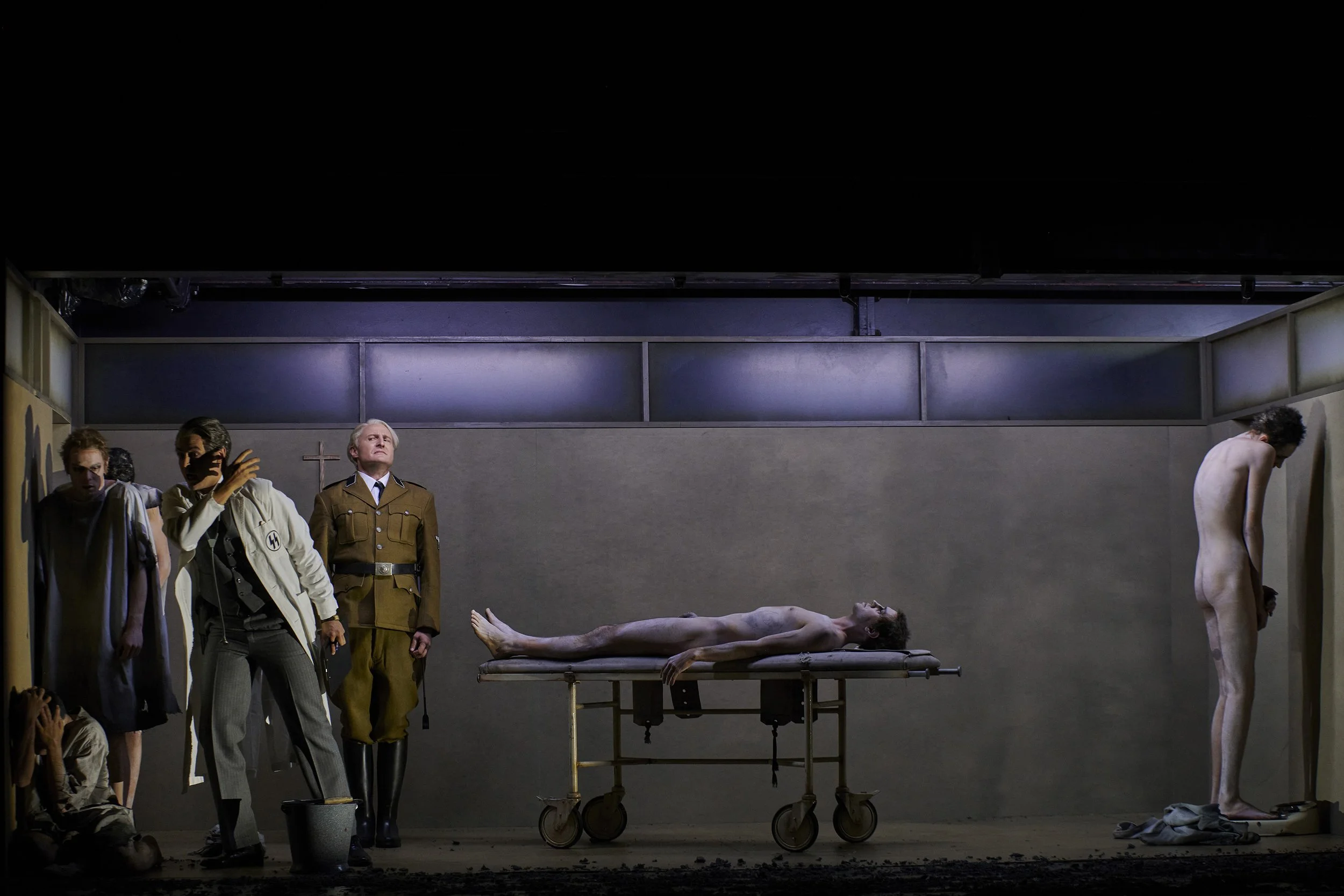
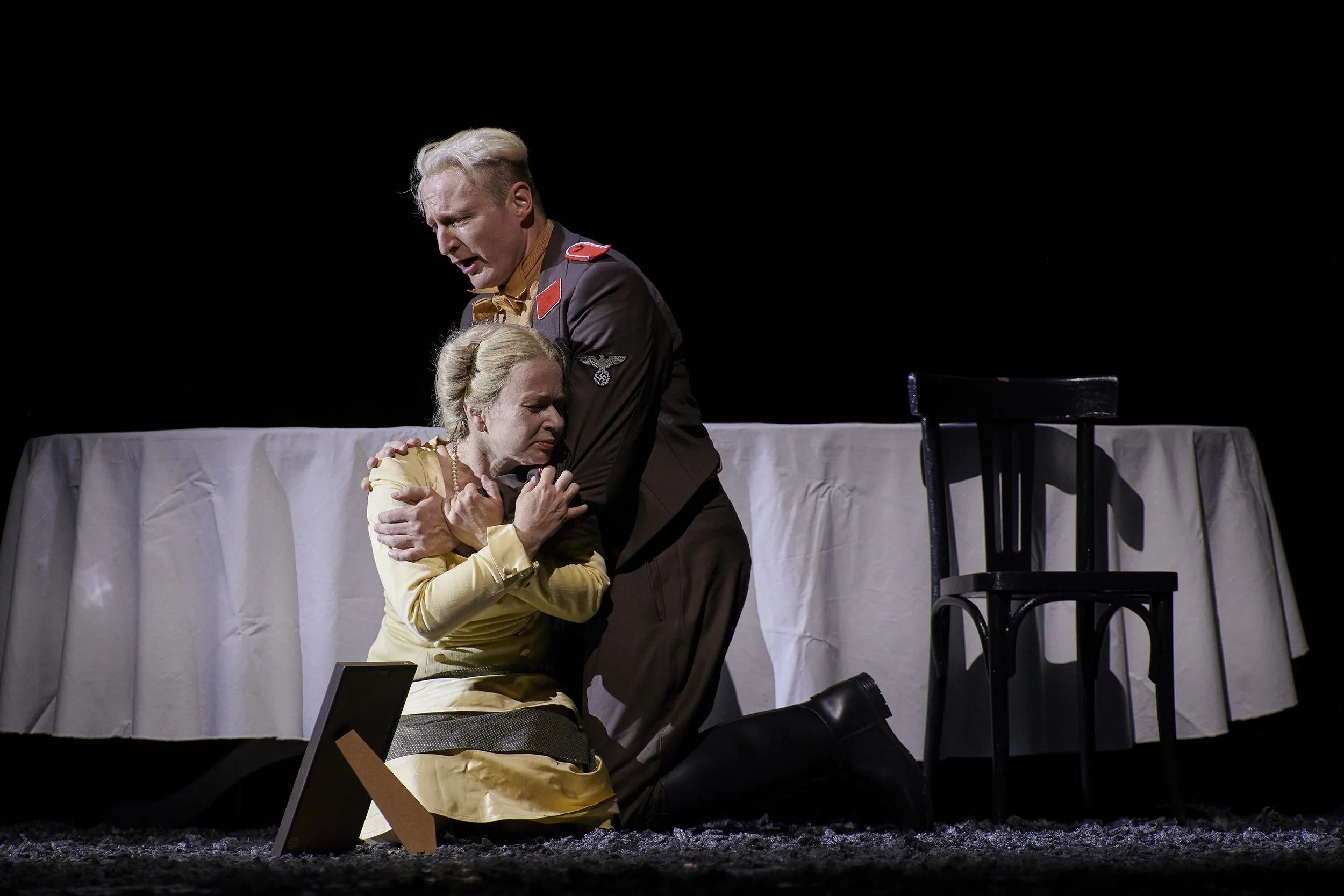
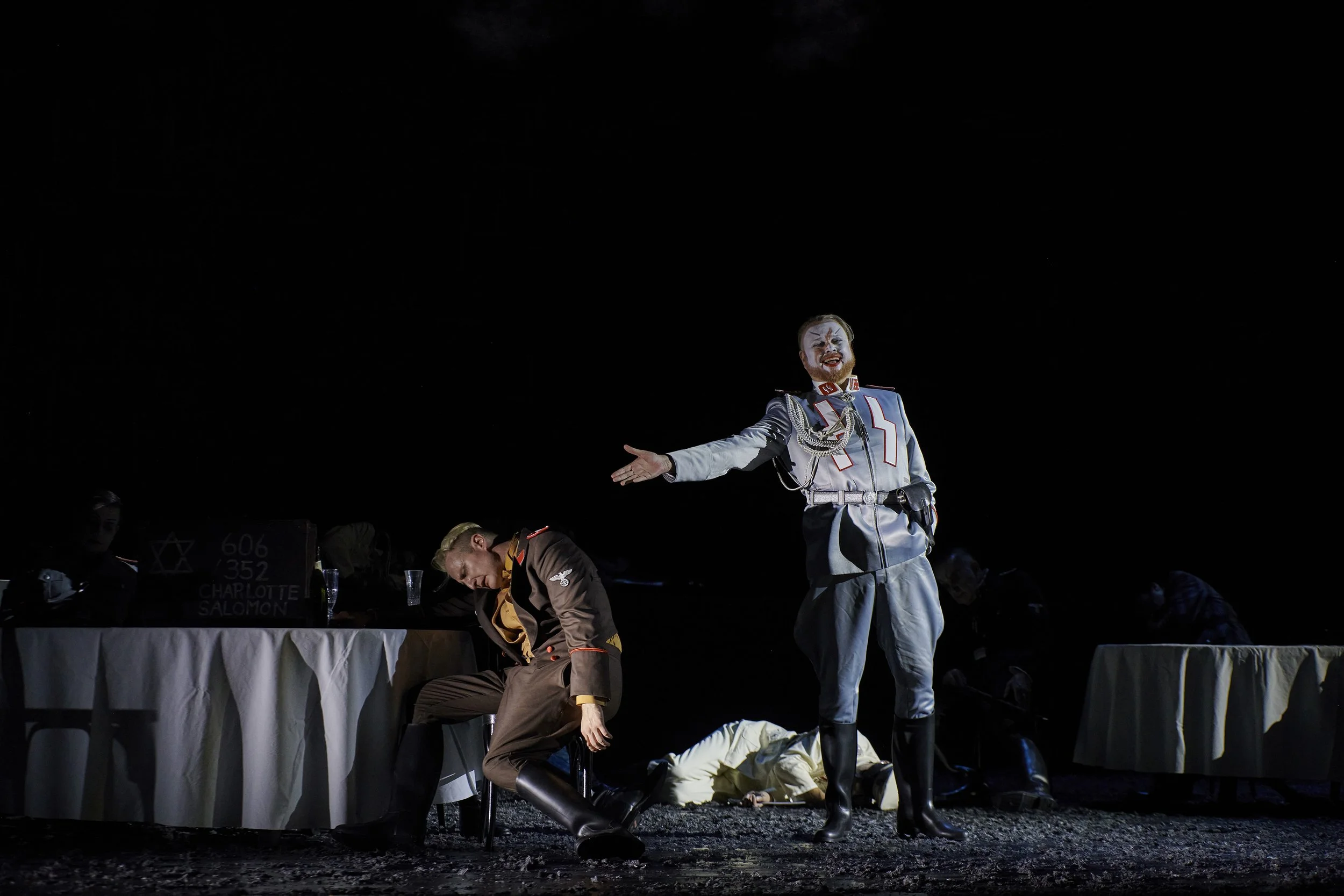
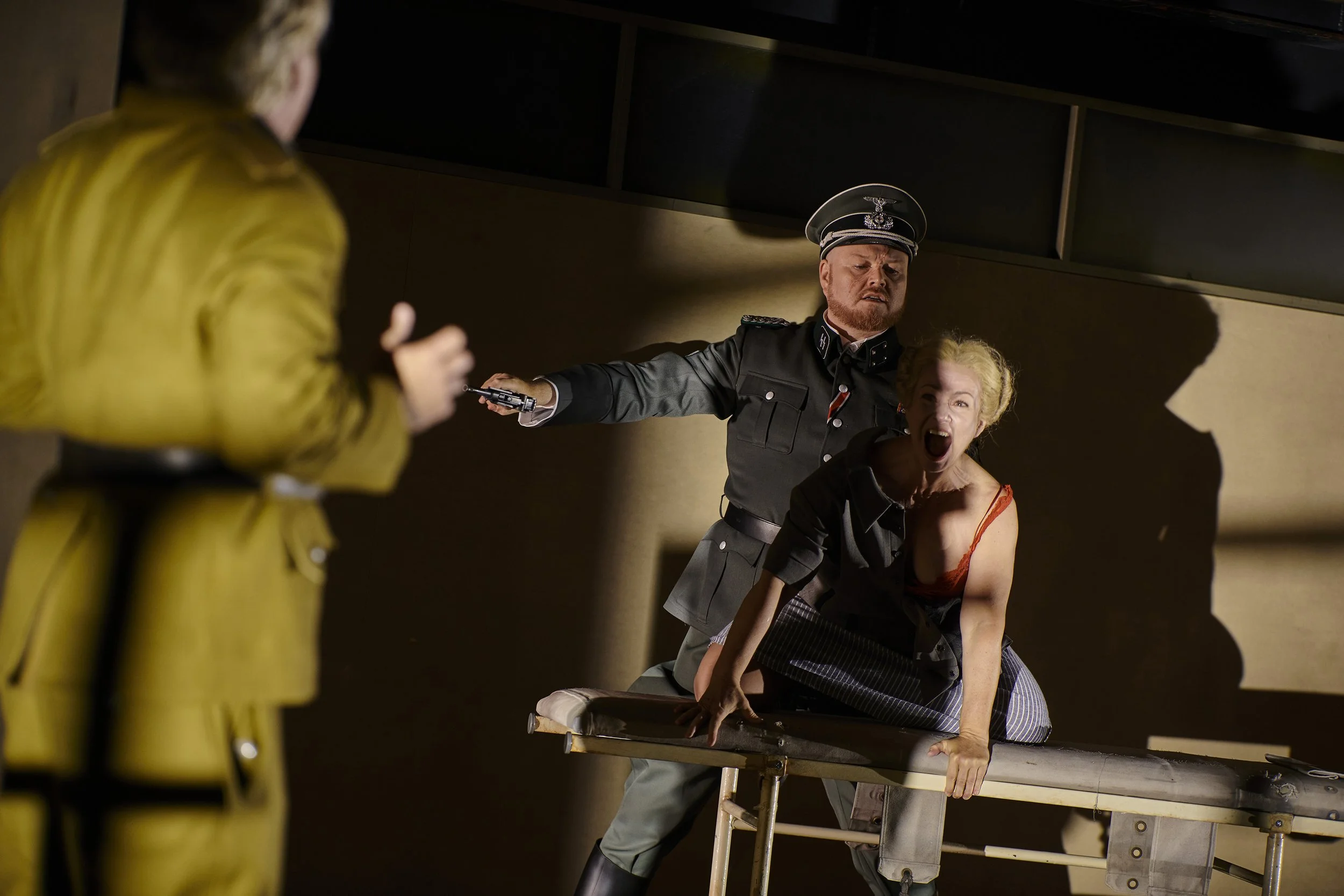
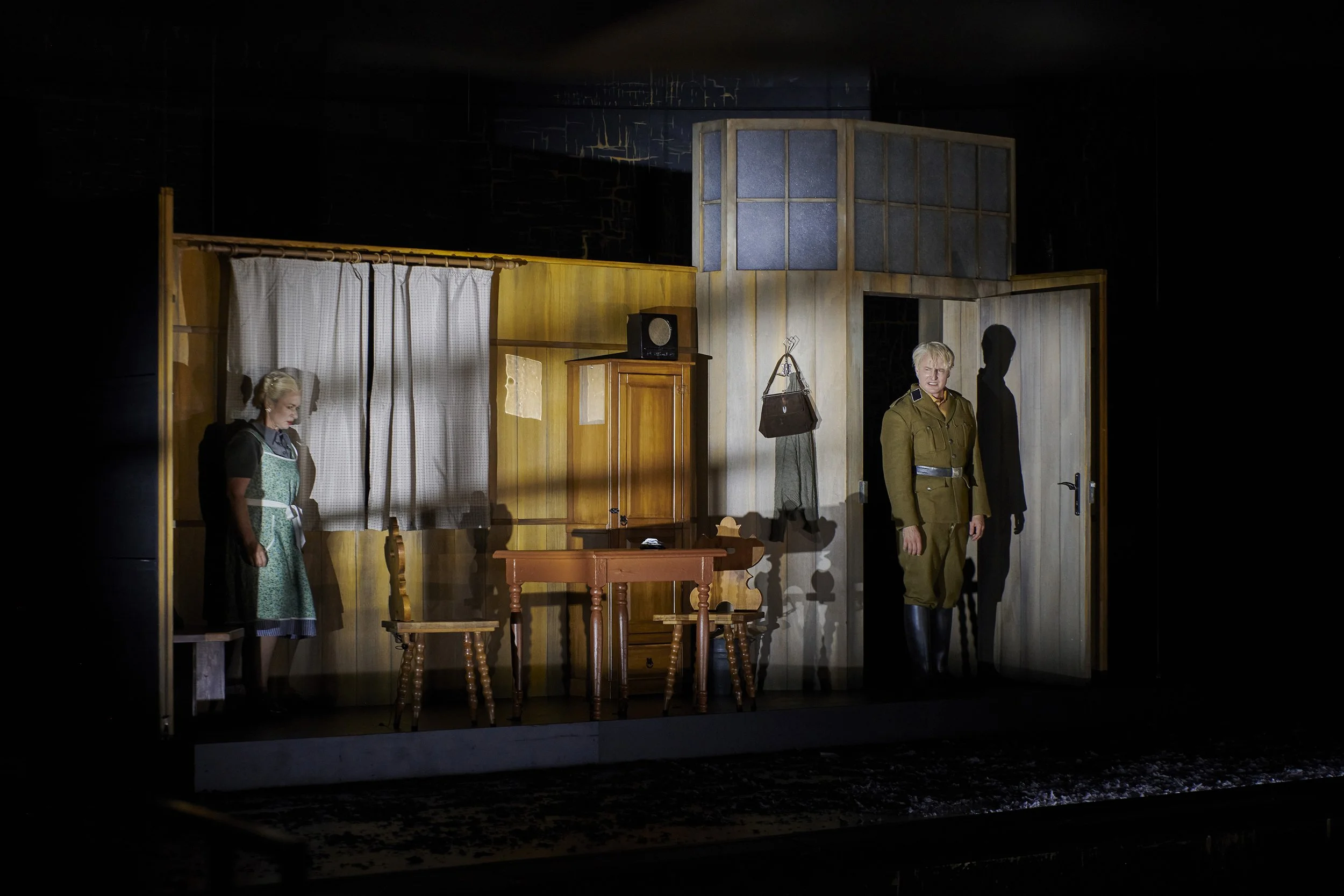
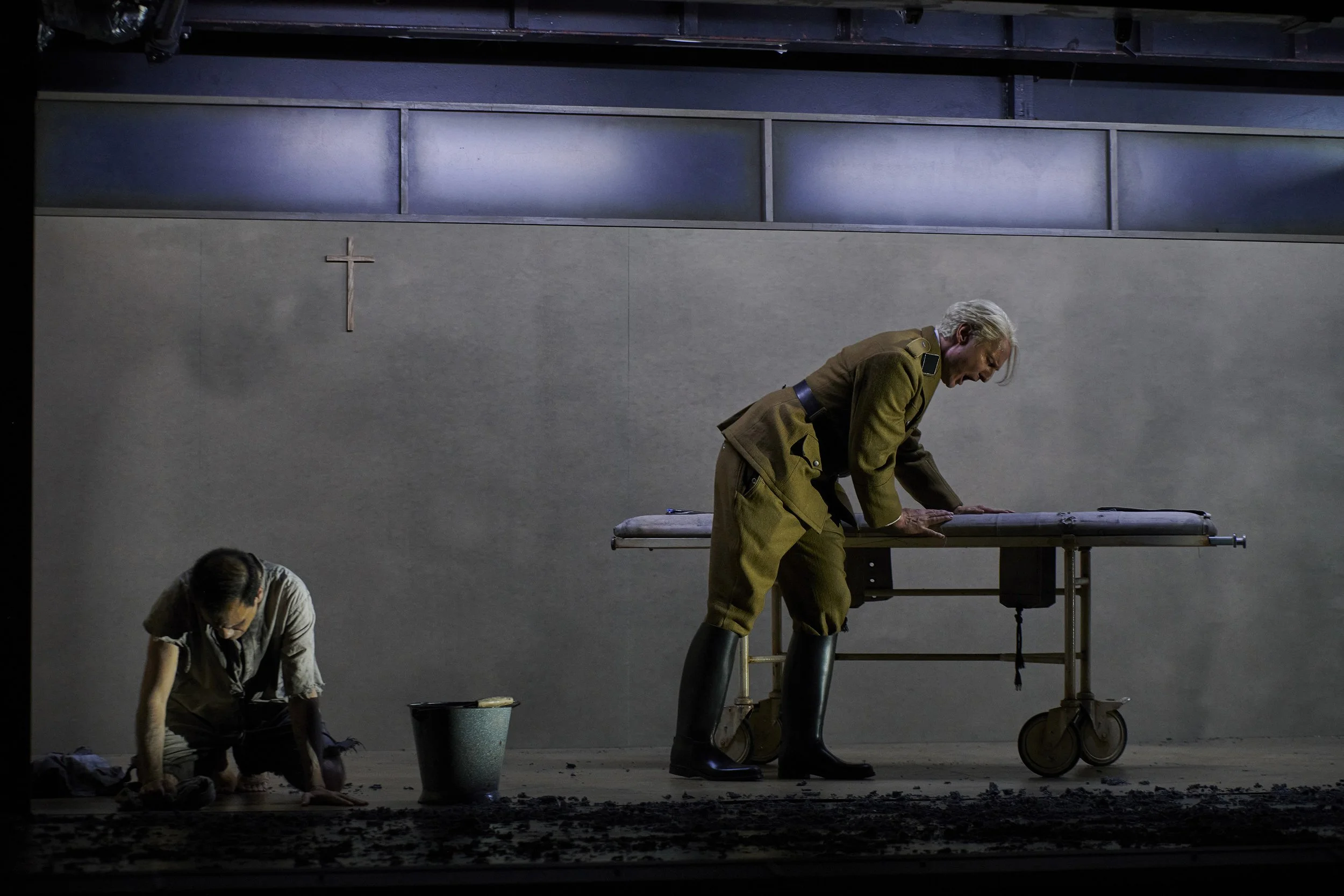
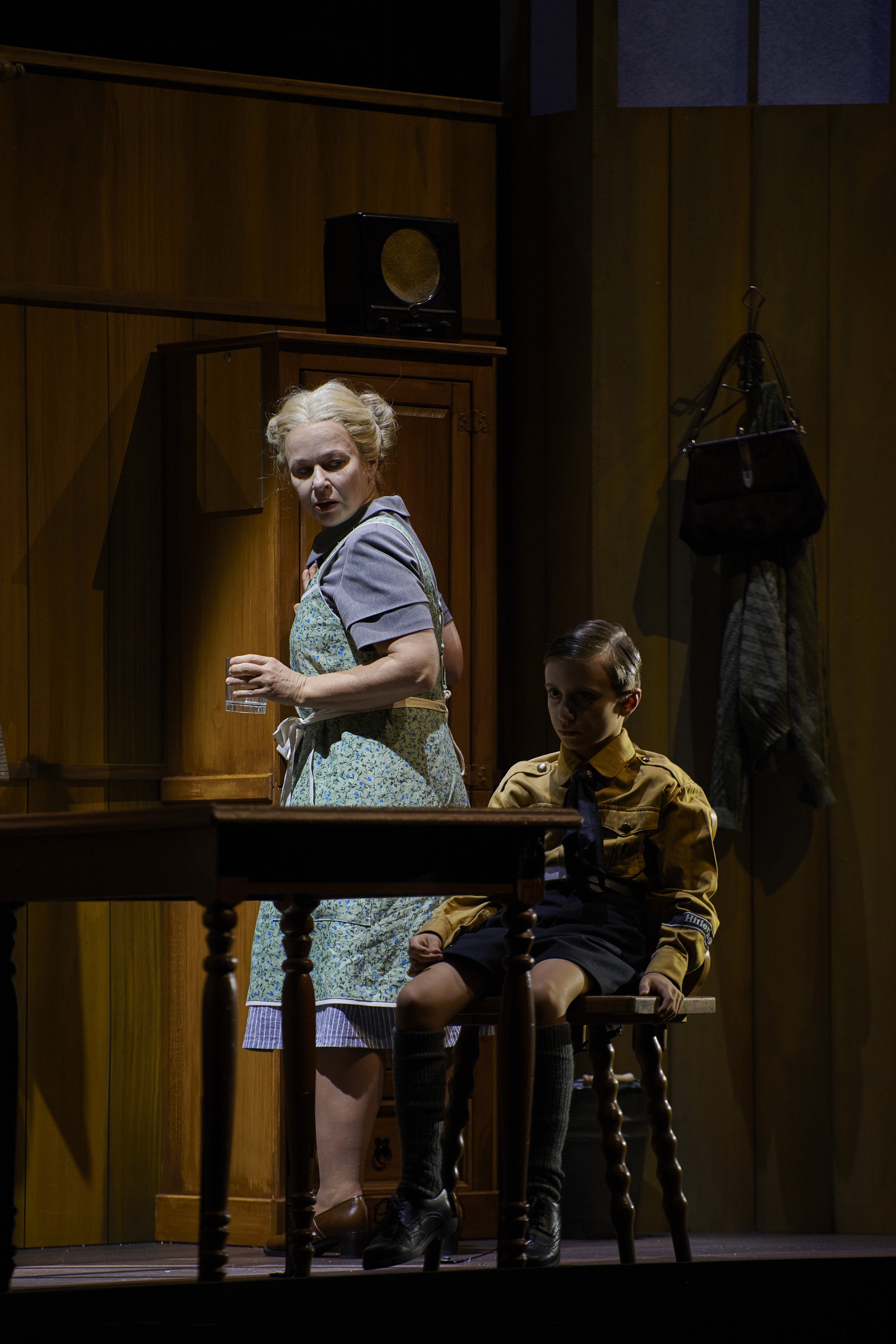
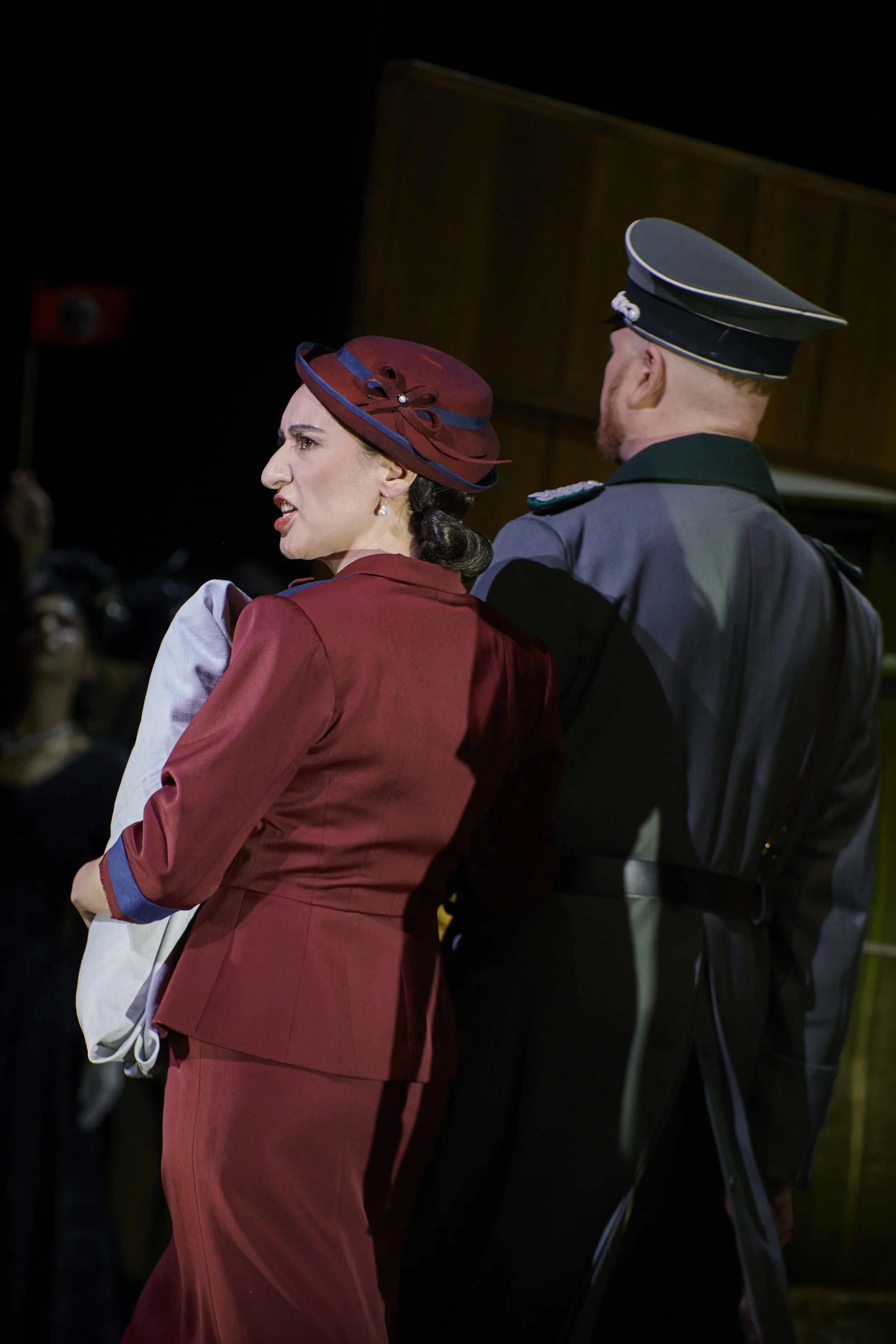
Lanzino follows the text of the opera closely. Even Wozzeck's visions take on a new meaning here: they become the voice of his conscience, calling out in vain for someone to stop. In the scene with the Doctor, Wozzeck is not the one who offers himself for experiments. He forces prisoners onto the tables. The tortured man becomes the torturer. It is no surprise that Marie's home looks neat and orderly, like a respectable middle-class household, rather than poor and rundown. It also fits that the earrings do not come from the Drum Major but from the belongings of Jews who have fled.
Thunderous applause for a thrilling season opener that leaves the audience shaken.„
WAZ
“At first glance, Lanzino tells a different story from Büchner and Berg. A dark, gripping story that works astonishingly well for a long time and yet picks up much of what is laid out in the libretto and music. The militarization of society, the brutality of the powerful toward the weak, the price of Marie's social ascent: all of this is sharpened here with images that at times push the limits of what is bearable. (…) A radical interpretation. (…) This is disturbing, but also illuminating."
OMM
„Ilaria Lanzino relocates Alban Berg's opera at the Musiktheater im Revier to the Third Reich, raising the question of personal guilt in an entirely new way.
Lanzino, who will make her debut next year with "Lohengrin" at the Bayreuth Festival, thus poses the question of personal responsibility within a system of oppression in an extremely pointed and political sharpen way in Gelsenkirchen. Until now, the matter seemed clear: the poor, small soldier Wozzeck (like Woyzeck in Büchner's source text) was seen primarily as the victim of a society that humiliated and abused him. He was, in effect, made into a criminal.
With Lanzino, he now has a certain chance to show courage, because the director promotes him to SS-candidate with a wife, child and cozy home. Her Wozzeck no longer has delusions that cast doubt on his sanity; instead, he is the one who, unlike the others, sees through the inhuman system. While his fellow soldiers dutifully haul crates labeled "Zyklon B," he sees the poison gas drifting on the horizon and shudders.
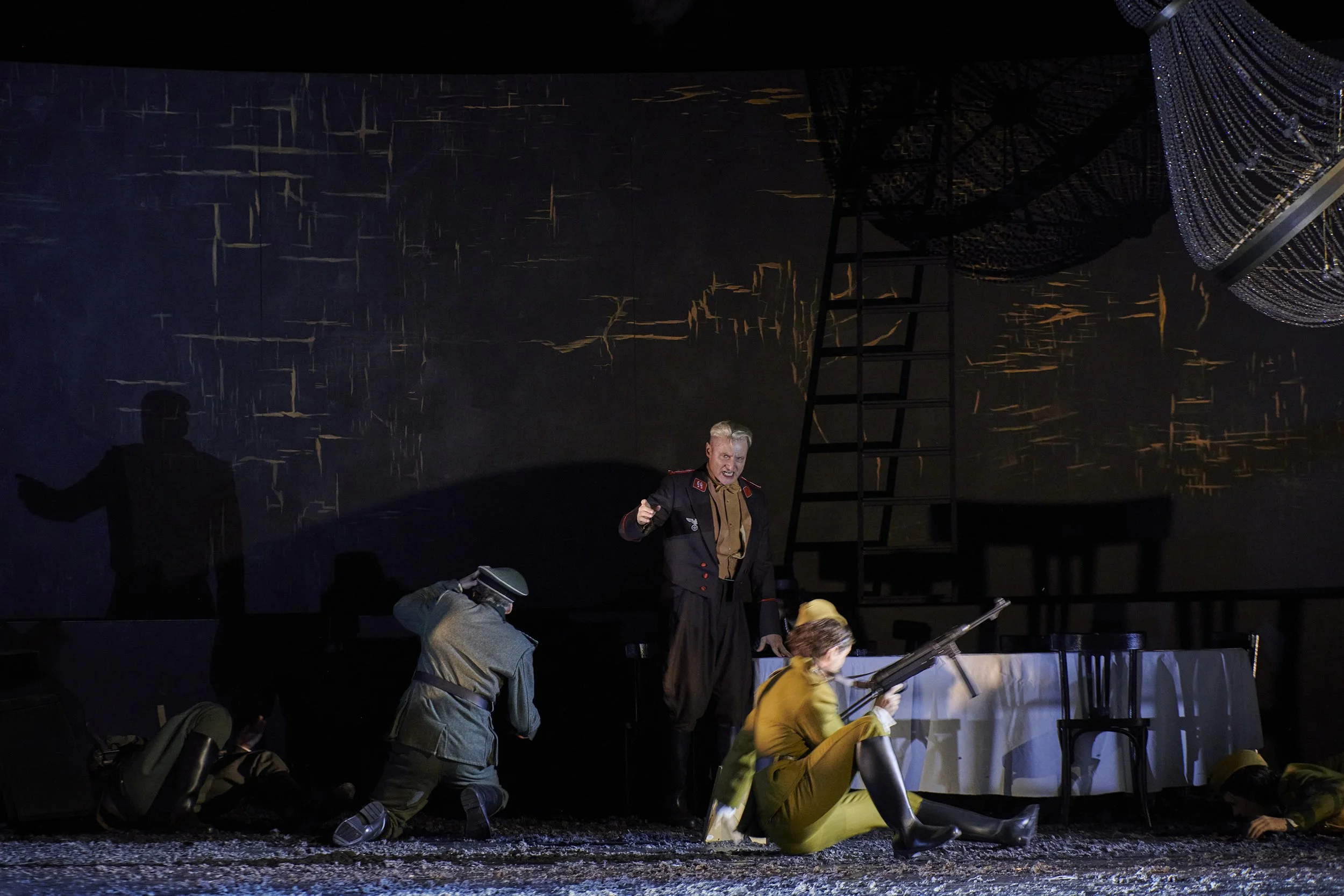
But in the end he remains the conformist follower who makes resistance only timidly, for instance when he is supposed to shoot one of the starved prisoners used for experiments at the Doctor's. And he survives when the American liberators arrive at the end. He does not commit the femicide of his Marie here either. Instead, she shoots herself. After coming into possession of the jewelry of a Jewish concentration camp victim, this woman, emotionally cold toward her own son, is tormented by severe pangs of conscience. (…) A gripping scenic reinterpretation“
RZ
"The Musiktheater im Revier opens its new artistic directorship with an extremely radical and at the same time sophisticated reinterpretation of Alban Berg's Wozzeck. (…) One can only hope that the MiR will continue to stage productions as ambitious and innovative as this one. (…) The Italian director Ilaria Lanzino has opted in Gelsenkirchen for a radical reinterpretation of Wozzeck, setting it in National Socialist Germany and turning him into a man who is partly responsible for the Holocaust. The overall effect differs so much from that of Büchner and Berg that one could speak of the emergence of an entirely new work. And yet, and this is precisely the magic of opera direction, libretto and music remain largely untouched. To fully appreciate the radicalism and sophistication of Lanzino's production, it is useful to briefly outline the plot of the original. The title character, a being harassed and bullied by the military and medical regime, stands at the lowest rung of society. Through the figures of the Captain and the Doctor, he is constantly humiliated and robbed of his humanity: for the Doctor he serves as a guinea pig for experiments meant to examine how much a human being can endure.
Moreover, he is constantly tormented by apocalyptic hallucinations and delusions. His partner Marie, with whom Wozzeck has an illegitimate child, deceives him with the Drum Major, from whom she receives earrings as a gift. Wozzeck notices the new earrings and becomes consumed by jealousy. While Marie regrets her betrayal of Wozzeck, her partner decides to kill her. After the murder with a knife, however, blood remains on his right hand, which gives him away as the perpetrator. Wozzeck's suicide follows.
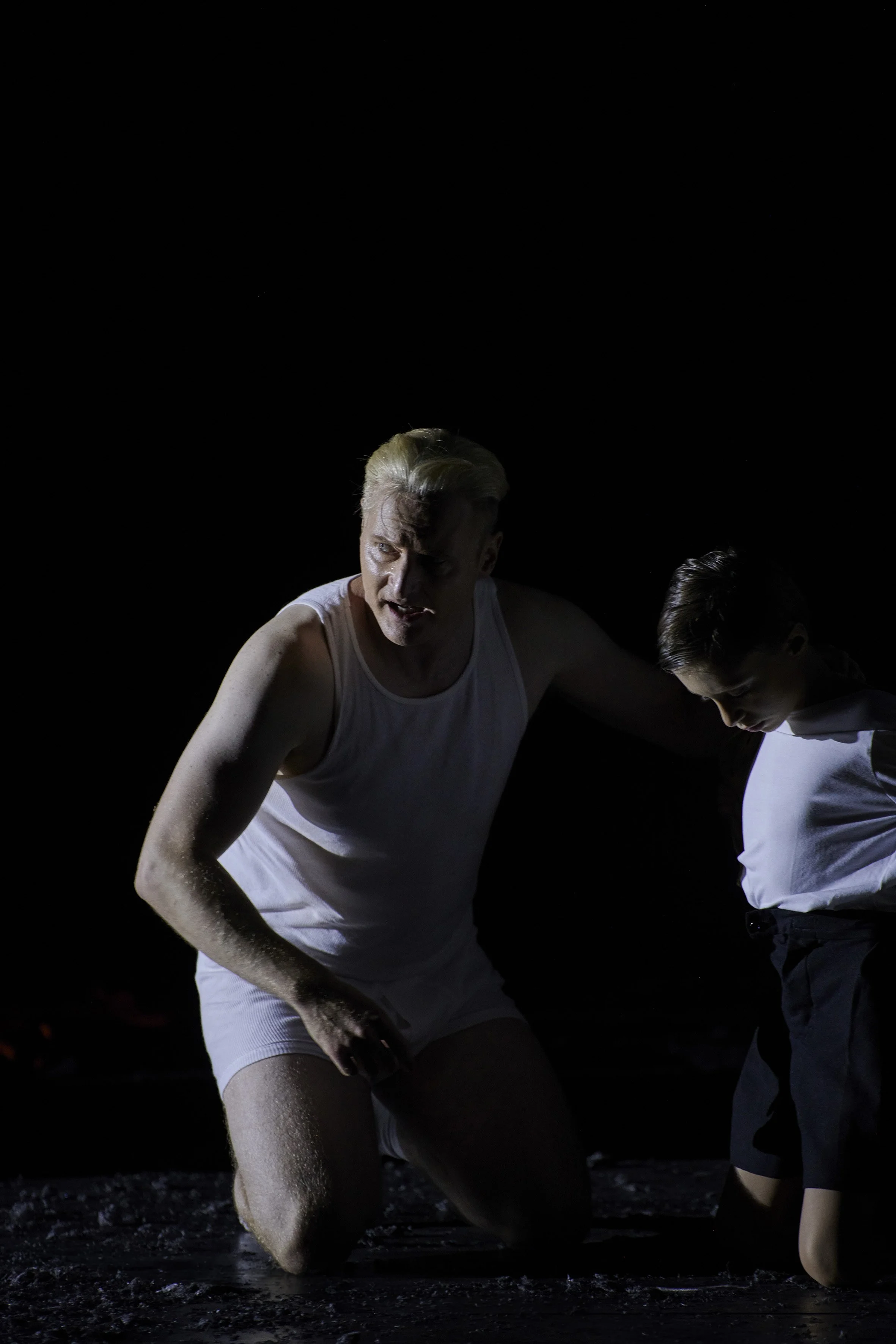
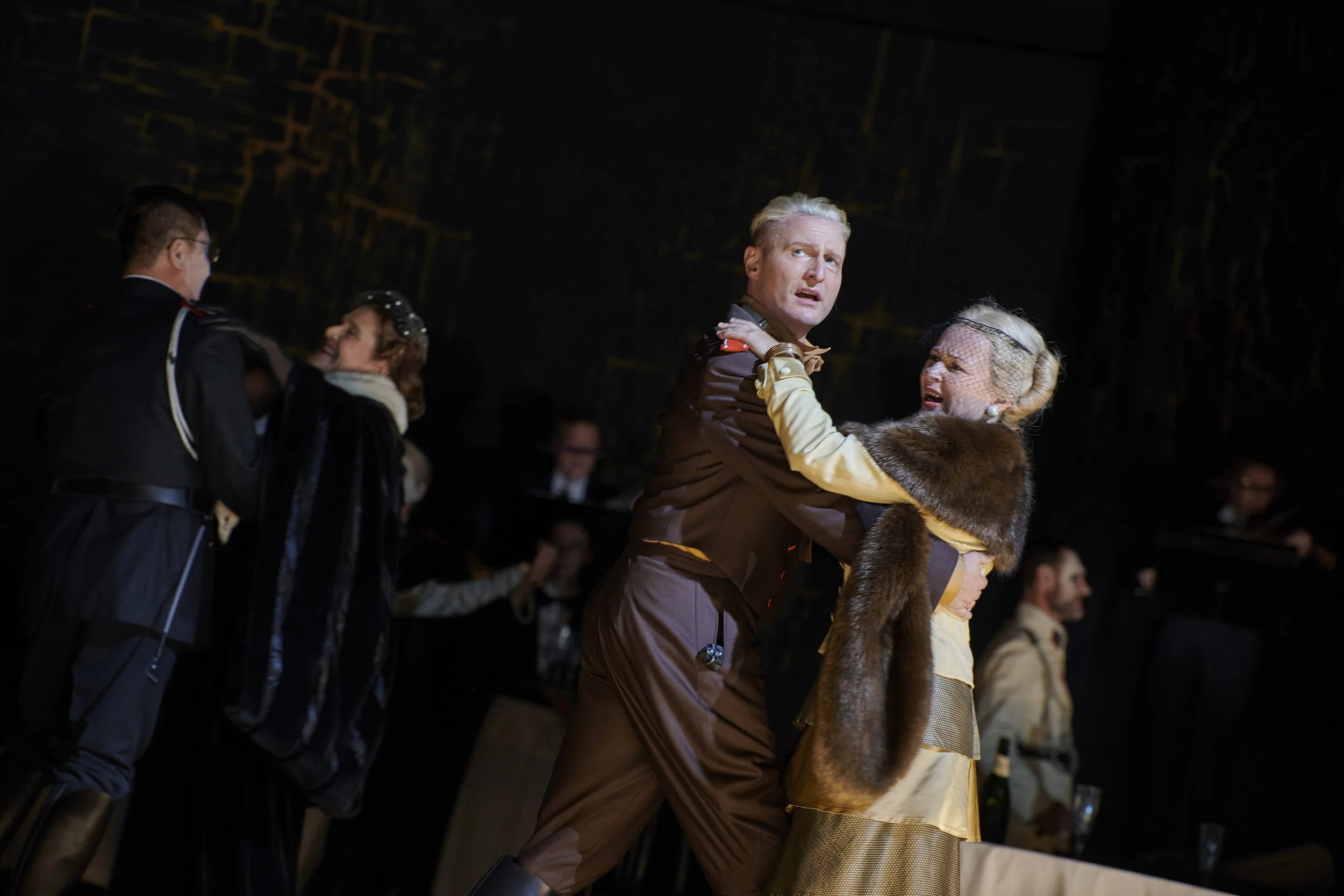
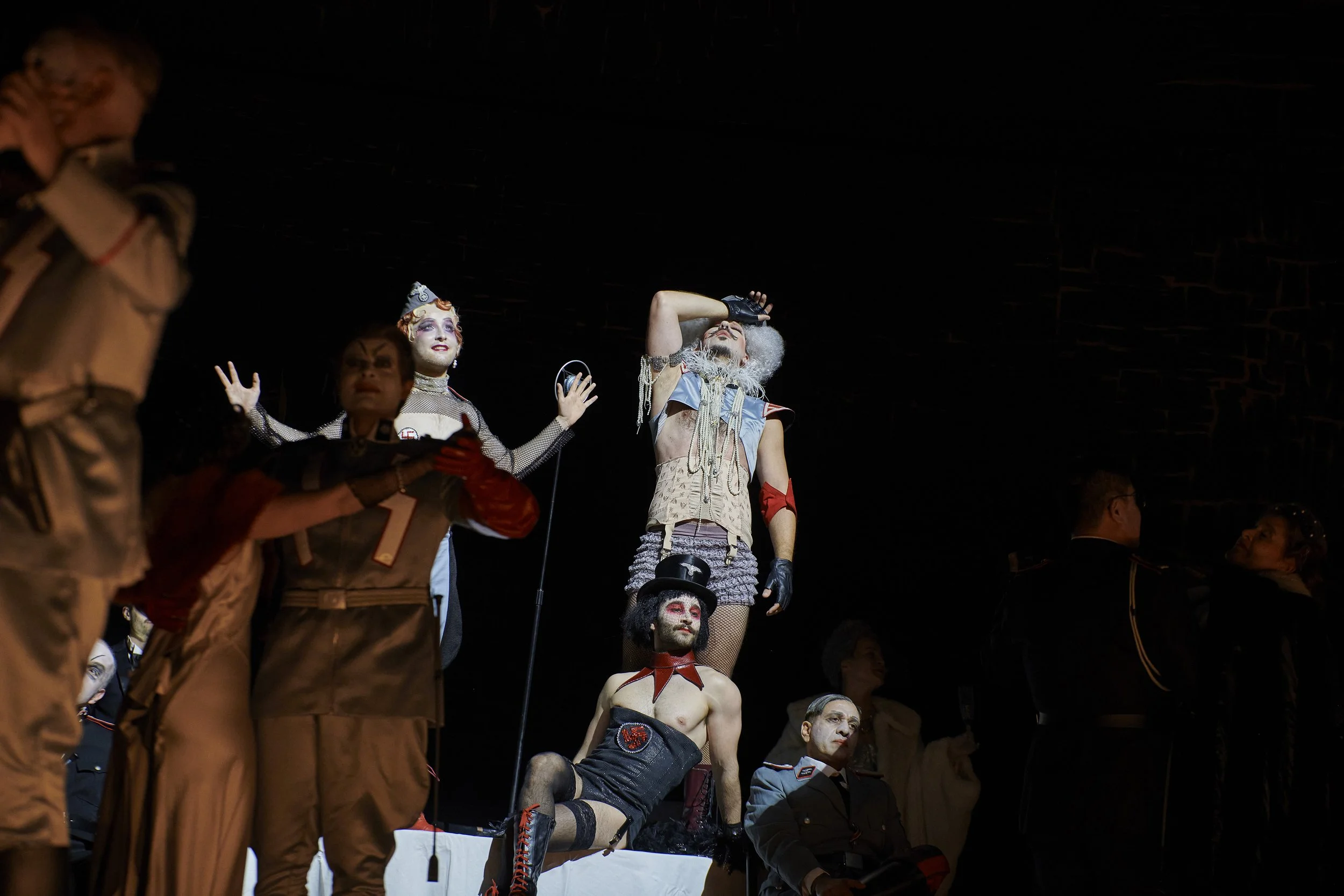
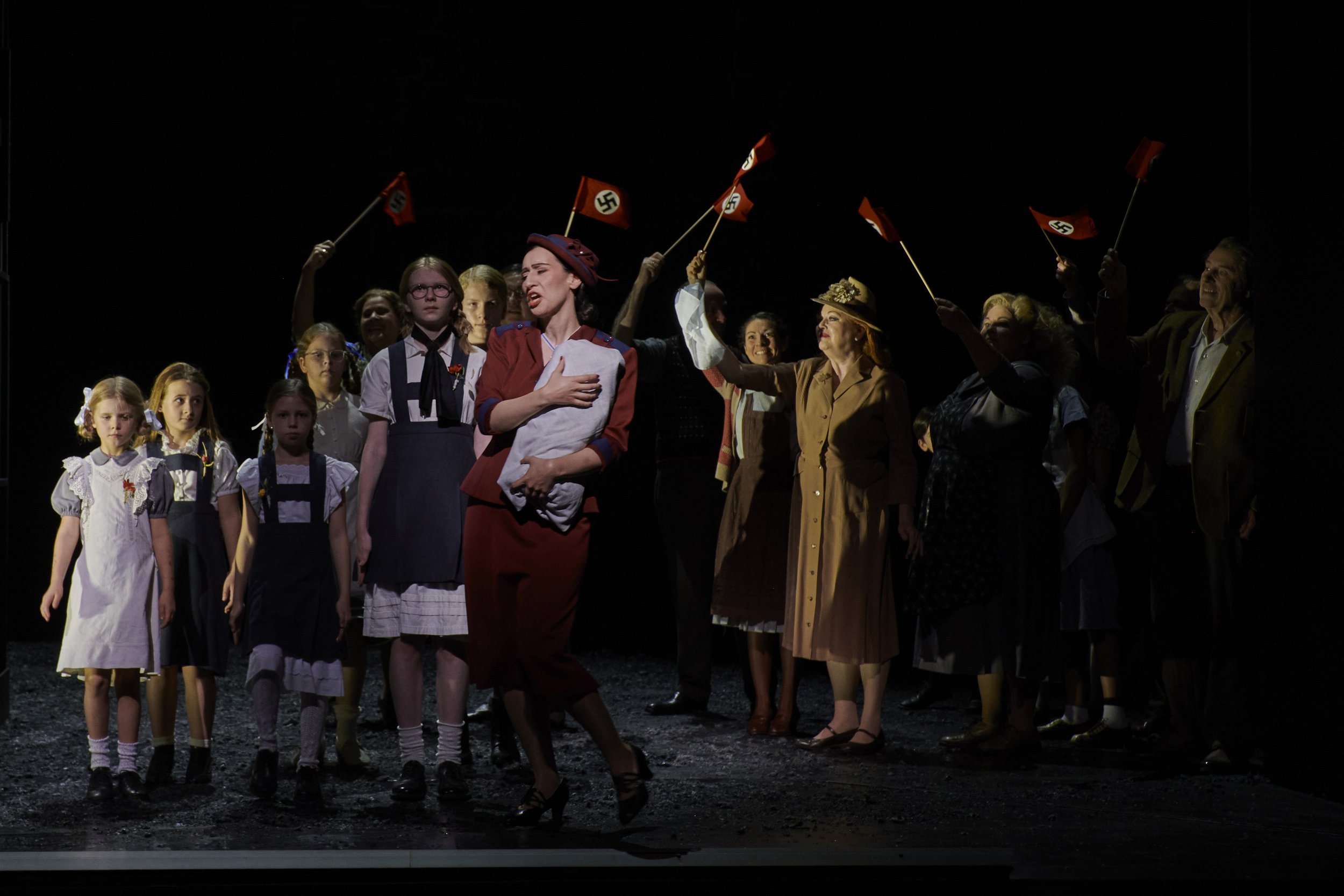
In the Gelsenkirchen production, Wozzeck is part of the hierarchy of the industrialized mass murder of the Jews. In the opera's first scene, from which Lanzino has omitted the Captain's shave entirely, which constitutes a considerable departure from the libretto, the bullied Wozzeck fantasizes himself into violent scenes in which he is the master and not the victim: in a moment of daydreaming, he takes the SS cap and the whip from the Captain and imagines whipping a person who is even more wretched and humiliated than himself. The Doctor conducts experiments on Jewish prisoners, and Wozzeck receives a wage for assisting him. Marie does not receive the earrings from the Drum Major but takes them from the suitcase of a deported Jewish woman. In all these cases, Lanzino's aim is to transform Wozzeck from the story of an individual into a story about society as a whole. In the production there is no lone madman; rather, the whole of society is part of a mad machinery. Not only Wozzeck is guilty of the Holocaust, but, through the fascist structure, everyone.
This reinterpretation succeeds with astonishing ease and little effort. To do so, the libretto must be read literally in its metaphorical passages and metaphorically in its literal ones. When Wozzeck says, for example, "The smoke rose from the land, like smoke from a furnace," it is not hard to imagine the smoke from the chimneys of the concentration camps. Likewise, the libretto can be connected to the Holocaust when Wozzeck says to Marie: "A sin so thick and broad must stink enough to smoke the angels out of heaven." Or when Marie frightens her son with a song saying that the "Gypsy boy" will come and take him to "Gypsy land," this fits the racist notions of National Socialism.
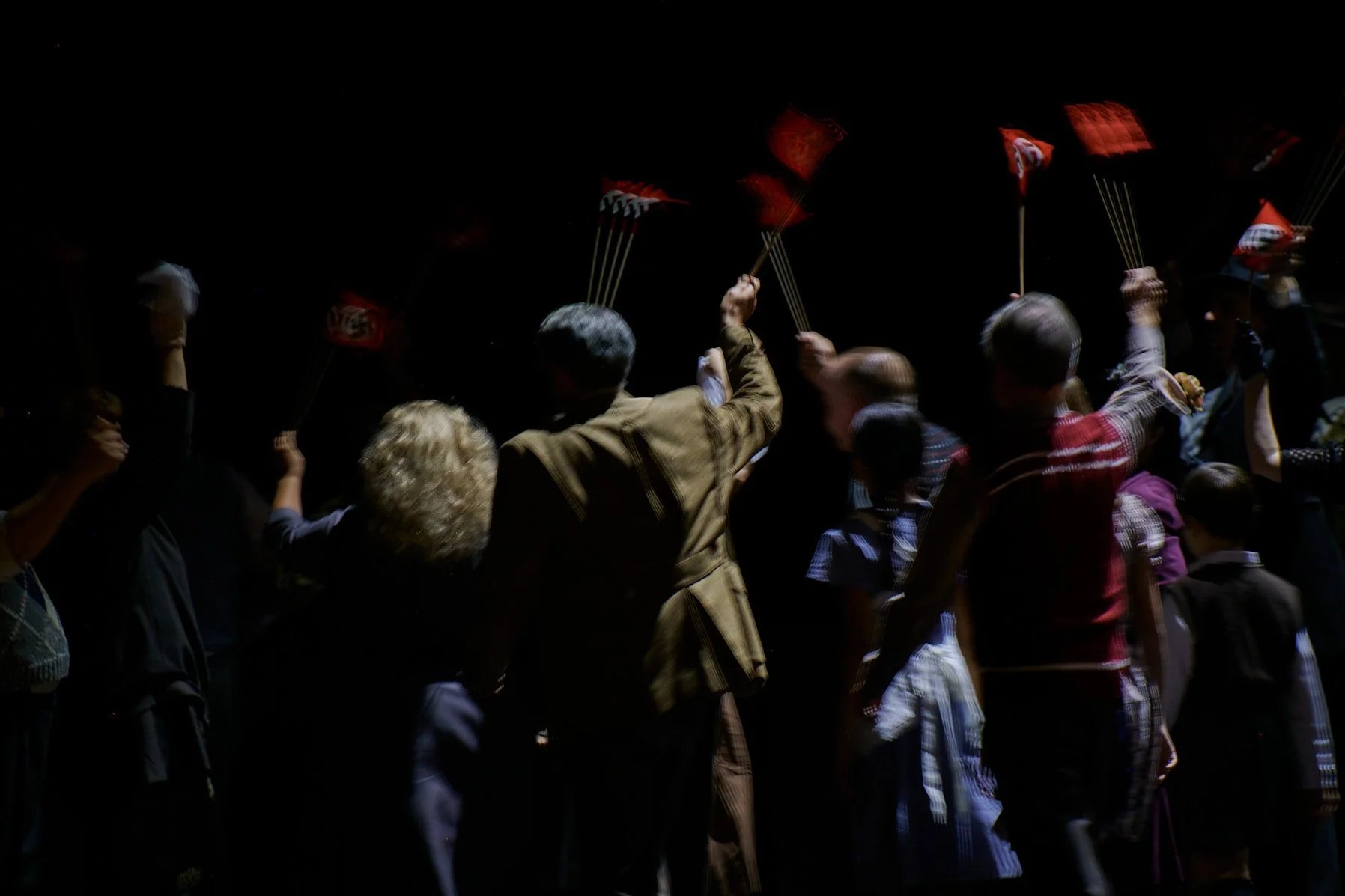
The most sophisticated reinterpretation, it seemed to me, was that of the blood on Wozzeck's right hand after Marie's murder: at this moment the individual characters begin to give the Hitler salute with their right hands. "Having blood on one's hands" thus becomes a concrete image of collective guilt. Not only Wozzeck has blood on his hands. The whole of society is implicated. (…) A furious event."
Der Opernfreund
““Lanzino’s thought-provoking Wozzeck. Gelsenkirchen’s Wozzeck is the most recent production by Ilaria Lanzino, who has been making a name for herself over the past few seasons across Germany. Her work is known for its original interpretations, consistent within themselves and illuminating the opera’s plot and characters. In addition, she has been working with design teams confident in using the size and technical opportunities of large opera stages in ways that are in line with the directorial concept and not merely visually impressive. (…) This was a very successful start to the season at Musiktheater im Revier in Gelsenkirchen under the artistic leadership of Frank Hilbrich.”
Seen and Heard
Stage direction: Ilaria Lanzino
Stage design: Martin Hickmann
Costume design: Melchior Silbersack
Light design: Patrick Fuchs
Fotos: Björn Hickmann