Mary, queen of scots
Thea Musgrave
Oper Leipzig
„Superb Theatre (...) The best theater always arises from the intensity of the people. This intensity was extraordinarily high at the Premiere of this sustainable production at the Oper Leipzig. (...) Even the few idyllic moments, from which further tragic blooms sprout into a Machiavellian garden of torments, are given a ruthless edge by Ilaria Lanzino. The premiere was met with great, jubilant success.”
Die Deutsche Bühne
"A intriguing production, (...) the ending was also effective (...) not only in this scene does this spectacularly directed and visually powerful evening unfold an enormous pull.”
Die Opernwelt
"High level Brutality. Italian director Ilaria Lanzino dissected power-thrill drama and ethical peril at Leipzig Opera in a magnificent black-and-white theater of cruelty. (...) A spectacular result (...) Huge applause.”
Kunst und Technik
"Great applause for the Leipzig Opera (...) Director Ilaria Lanzino brought this to the stage with great confidence.”
MDR
"The Leipzig production is of great dramatic power. (...) Lanzino's energy floods the entire production, carrying the confidently led ensemble as well as the choir. (...) The audience cheers, often standing.”
Leipziger Volkszeitung
"The well-deserved success for one of the most exciting productions at Leipzig Opera in a long time was unanimous. (...) An intense, stirring, and thrilling performance that had been missing for a long time in the city of music."
Neue Musikzeitung
”This production is a right royal success. (…) a terrific performance”
seenandheard International
“The Leipzig production is of great dramatic power. (…) Lanzino’s energy floods the entire staging, carrying the confidently led ensemble as securely as the chorus. (…) One cheers, overwhelmed, gladly rising to one’s feet.”
Leipziger Volkszeitung
“successful, convincing, worthwhile in every respect”
Freie Presse
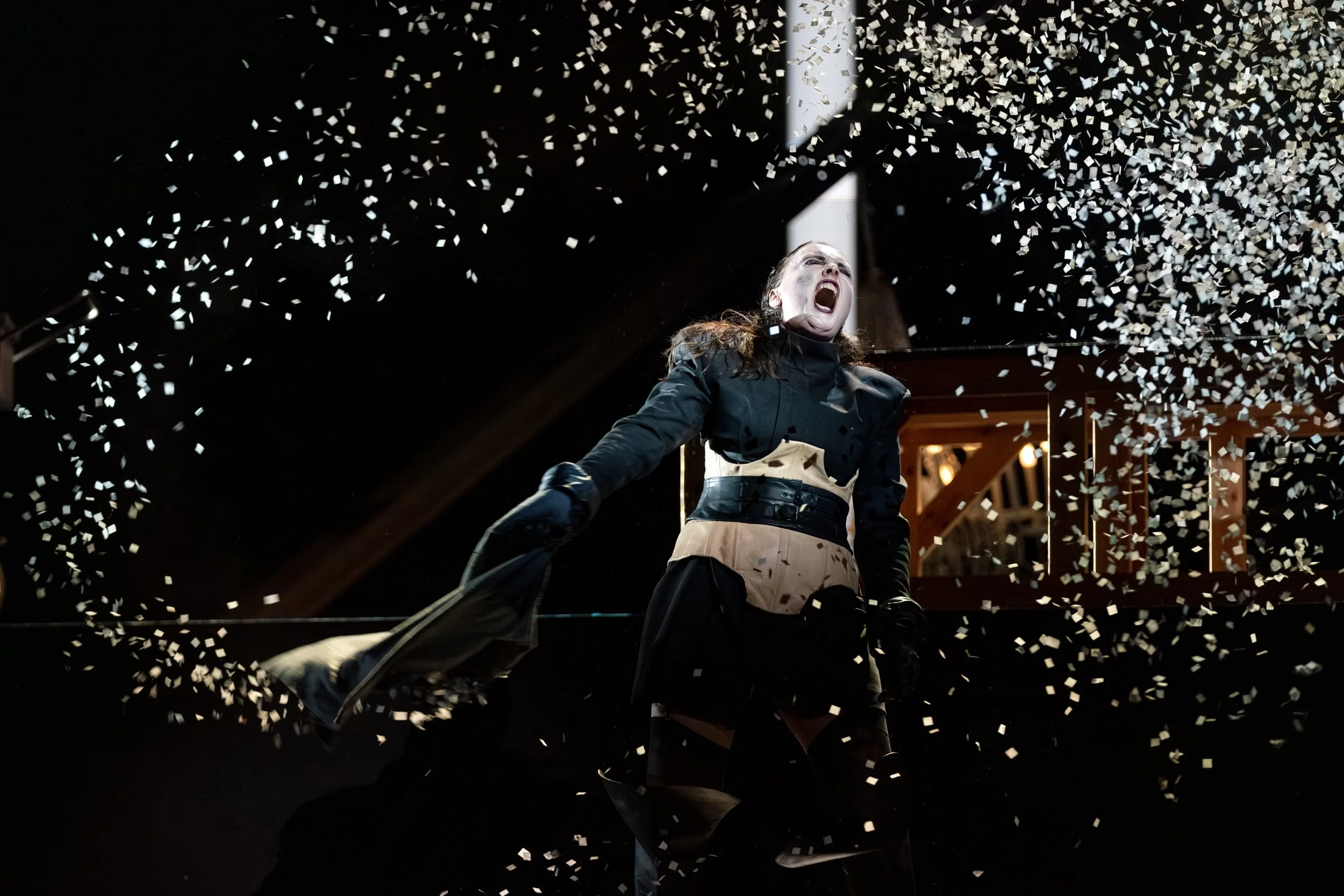
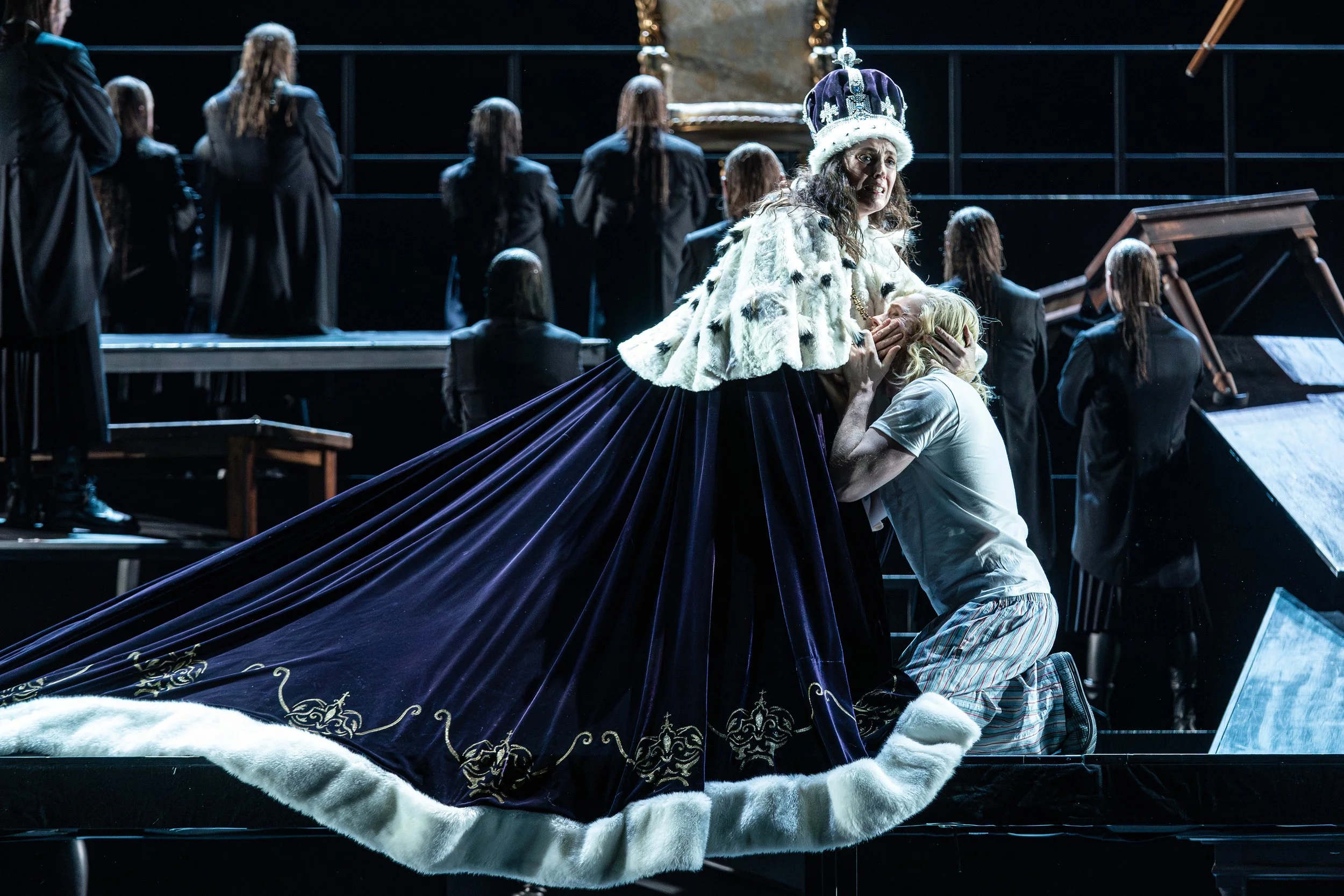
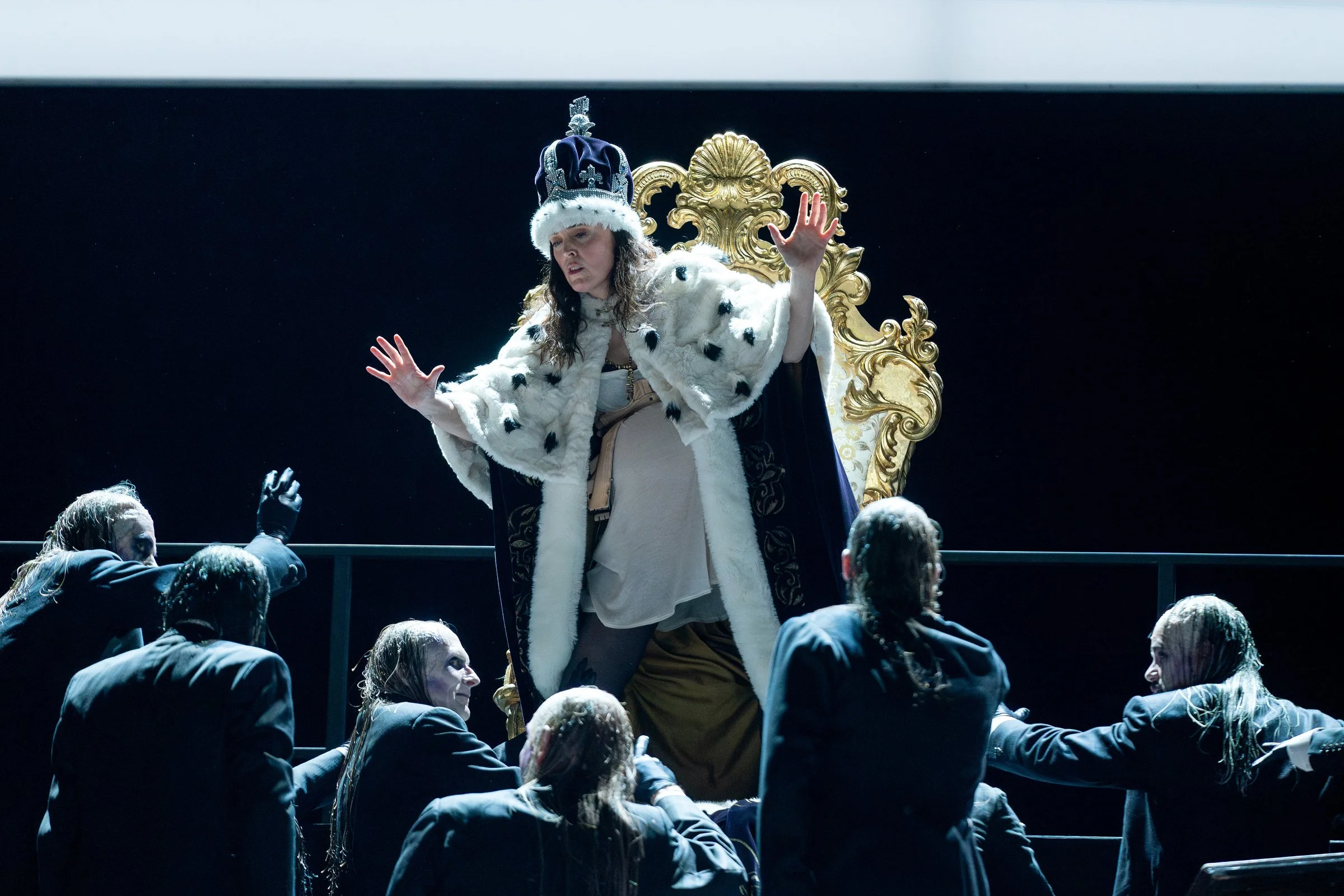
“Lanzino recounts the monarch’s downfall as compellingly as she does consistently: the idealistic spirit of departure with which she begins her reign—seeking to govern people and country in an anti-authoritarian, transparent, liberal way—gives way to the calculating mindset of a power strategist when she realizes that apparent allies can quickly turn into adversaries. At the end, before her death at the throne transformed into a stake, Mary’s mind too has been dissolved in the acid of intrigue; madness spreads, sparing not even her own offspring. Seen in this light, the animalistic final cries of the chorus sound like harbingers of a better future. Lanzino did not want to reduce Mary to a victim of a patriarchal system. Instead, she casts a harsh light on her darker sides.”
Opern.News
“A clever production (…) The direction gives all the characters their reasons. (…) A fascinating performance”
nd-aktuell
“With Thea Musgrave’s Mary, Queen of Scots, staged by Ilaria Lanzino, the Leipzig Opera achieves a convincing end to the year. Impressive. Definitely worth it on every level.”
Klassikinfo
“The staging by Ilaria Lanzino truly hit the mark”
Robert Hughill, composer
“A successful direction in a stark, brutal aesthetic.
Major opera directors such as Peter Konwitschny might have refused the ending, might not have shown death and the devil but instead an escape, a hope. But that was the eighties and nineties. Director Lanzino is merciless. The Leipzig Opera has brought a great work to the stage in a great production (…) with many young faces in the audience and truly tremendous jubilation at the end.”
Kreuzer
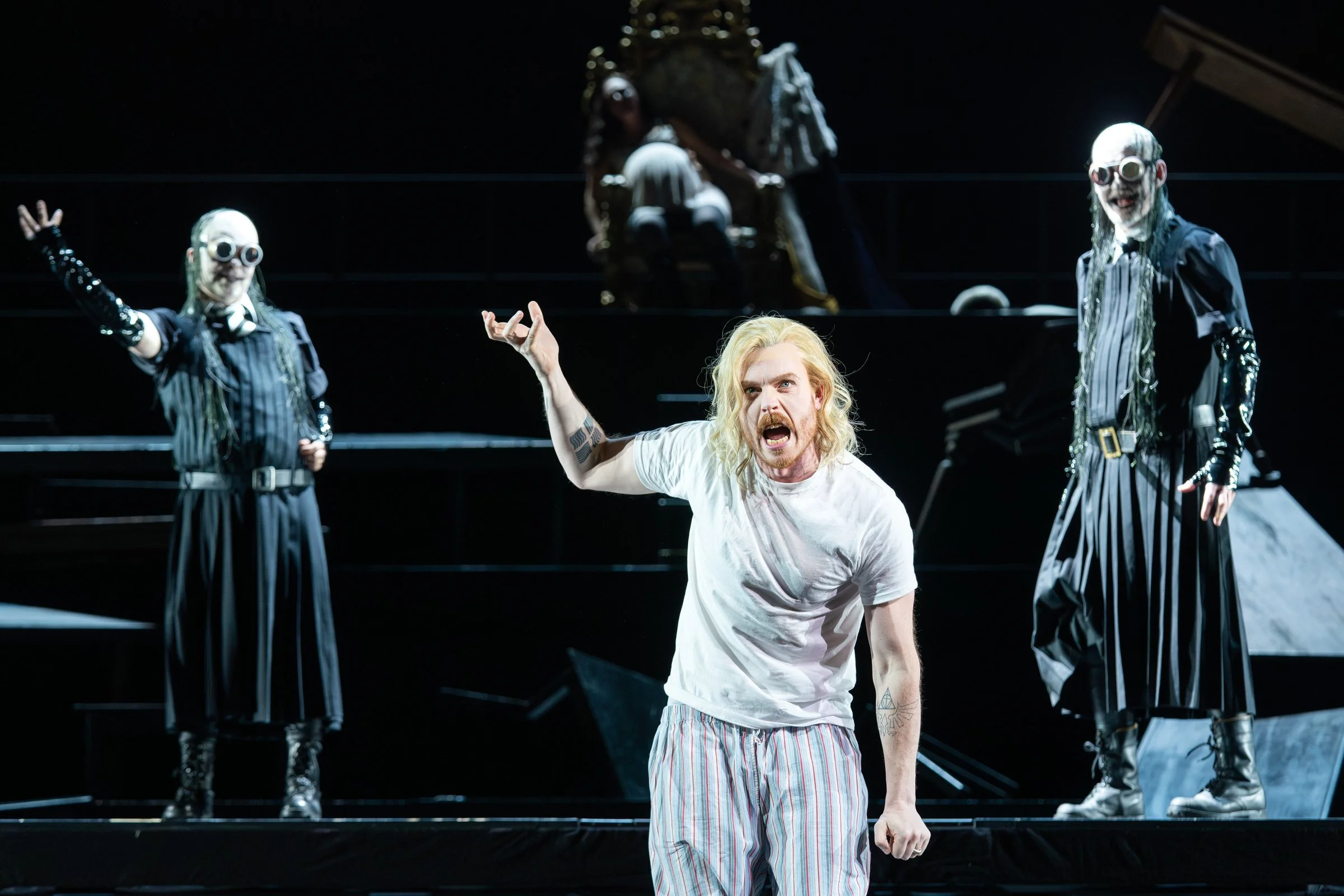
“Director Ilaria Lanzino skillfully avoids the danger of seeing the Scottish queen merely as a victim (…) Although the rough Bothwell, the half-brother James Stewart aspiring to the royal title, and her good-for-nothing husband Darnley all subject her to persistent and harsh pressure, Lanzino nevertheless underscores those—utopian—moments in which the queen seeks to exercise her rule by renouncing violence and intrigue. Even though the high nobility keeps the monarch under constant surveillance, Lanzino repeatedly lets her struggle for intimacy and privacy. Yet even in such situations, the aristocratic male society insists on dictating her conversation and dance partners.”
Concerti
“The realization of a sustainable production was a success. The opera team put together a piece that lacked nothing and worked very well even without elaborate custom-made elements or new acquisitions. Mary, Queen of Scots is Leipzig—young, unvarnished, socially critical, and free of frills. Thus, the protagonist Mary dances on stage in a negligee and Doc Martens with a beer, instead of dazzling in a sparkling ball gown.”
luhze
“The drama unfolds in a continuous escalation toward the climax of the finale. Amid false friendship, murder, betrayal, religious disputes, and rape. One understands that the ultimately addressed production could not skip stages and had to hold something back in order to keep developing and gaining energy, with surprising effects that elicited astonished ‘oh!’s in the auditorium.”
musicologie.org
“A dark theater of power. Lanzino handles the scenes based on the play Moray by Amalia Elguera in her direction far more drastically than the now 95-year-old composer. In the end, an unsettling performance is celebrated.”
Orpheus Magazin
Stage direction: Ilaria Lanzino
Stage design: Dirk Becker
Costume design: Annette Braun
Light Design: Steffo
Fotos: Tom Schulze