Hamlet
After William Shakespeare
With music by Francesco Gasparini
Musiktheater an der Wien
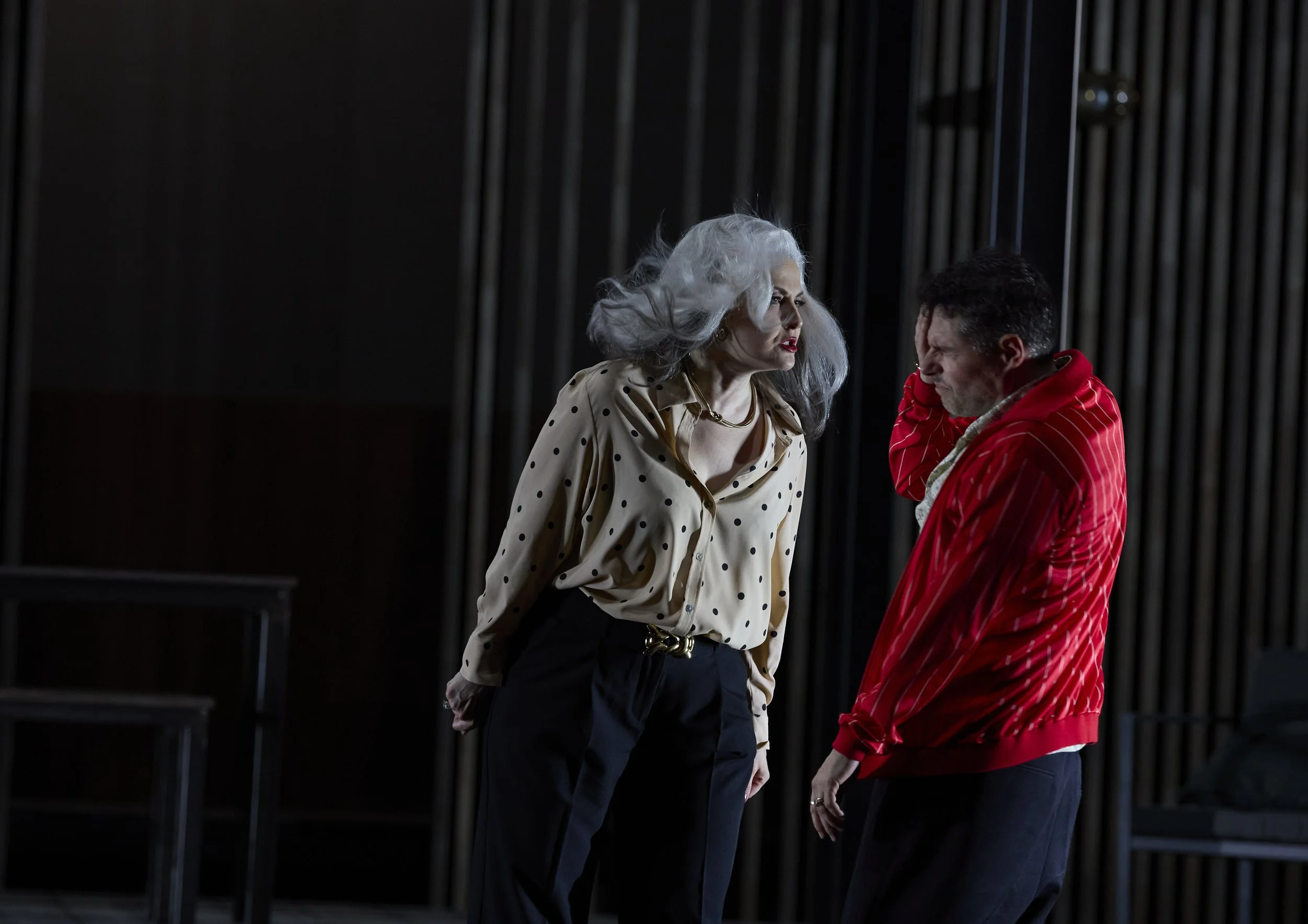
“Ilaria Lanzino turns Gasparini’s baroque Ambleto at the MusikTheater an der Wien into a modern psychological thriller. You couldn’t stage it any more boldly or uncompromisingly even as a play: Out of jealousy over his mother Gertrude’s remarriage, Hamlet drags the entire family into the abyss. Unlike Shakespeare’s version, there is no fratricide, nothing to uncover, and no revenge to take. But Hamlet cannot accept his mother’s newfound happiness with Claudius. And the cast performs with gripping intensity.
A powerful production.”
Oper! Magazin
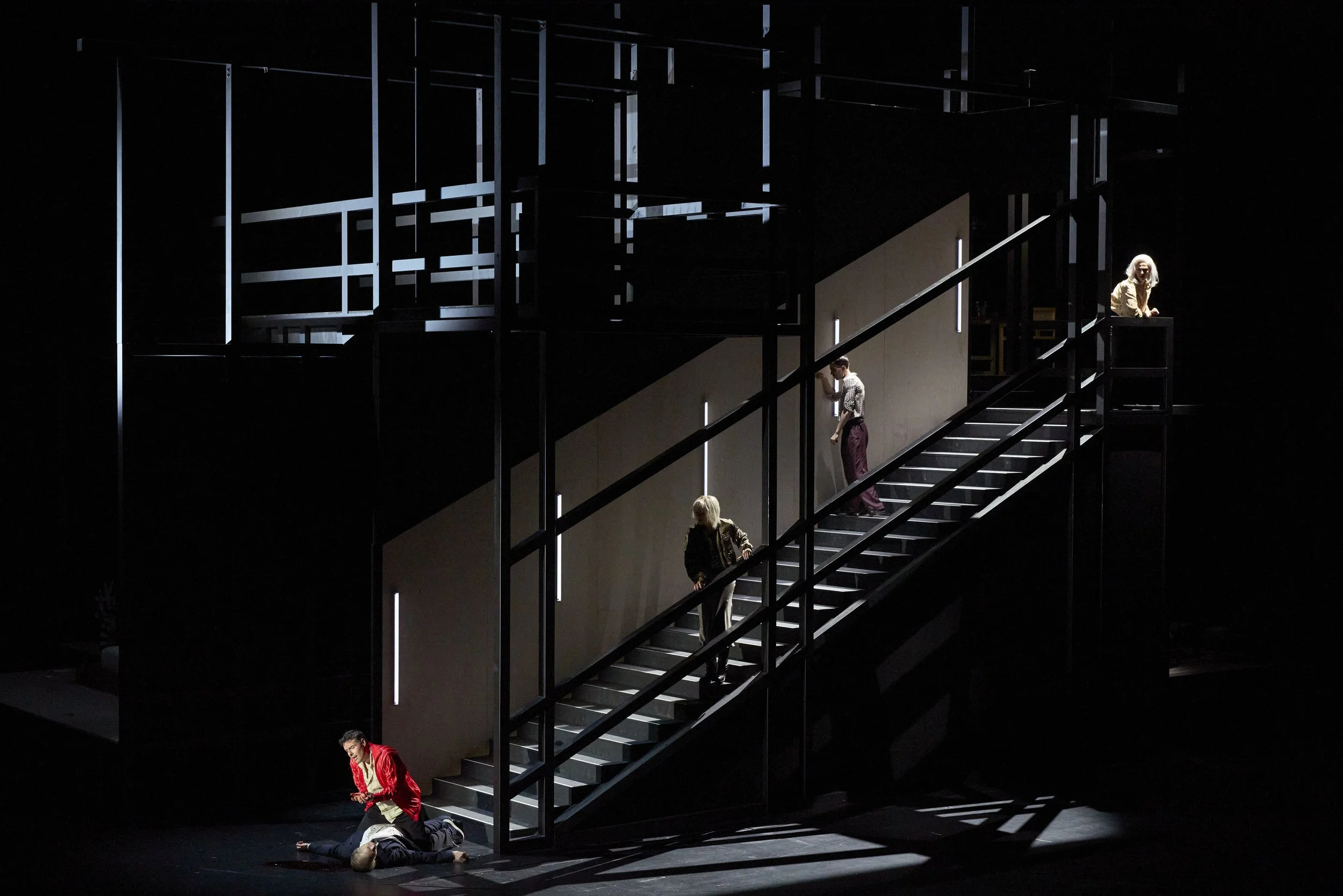
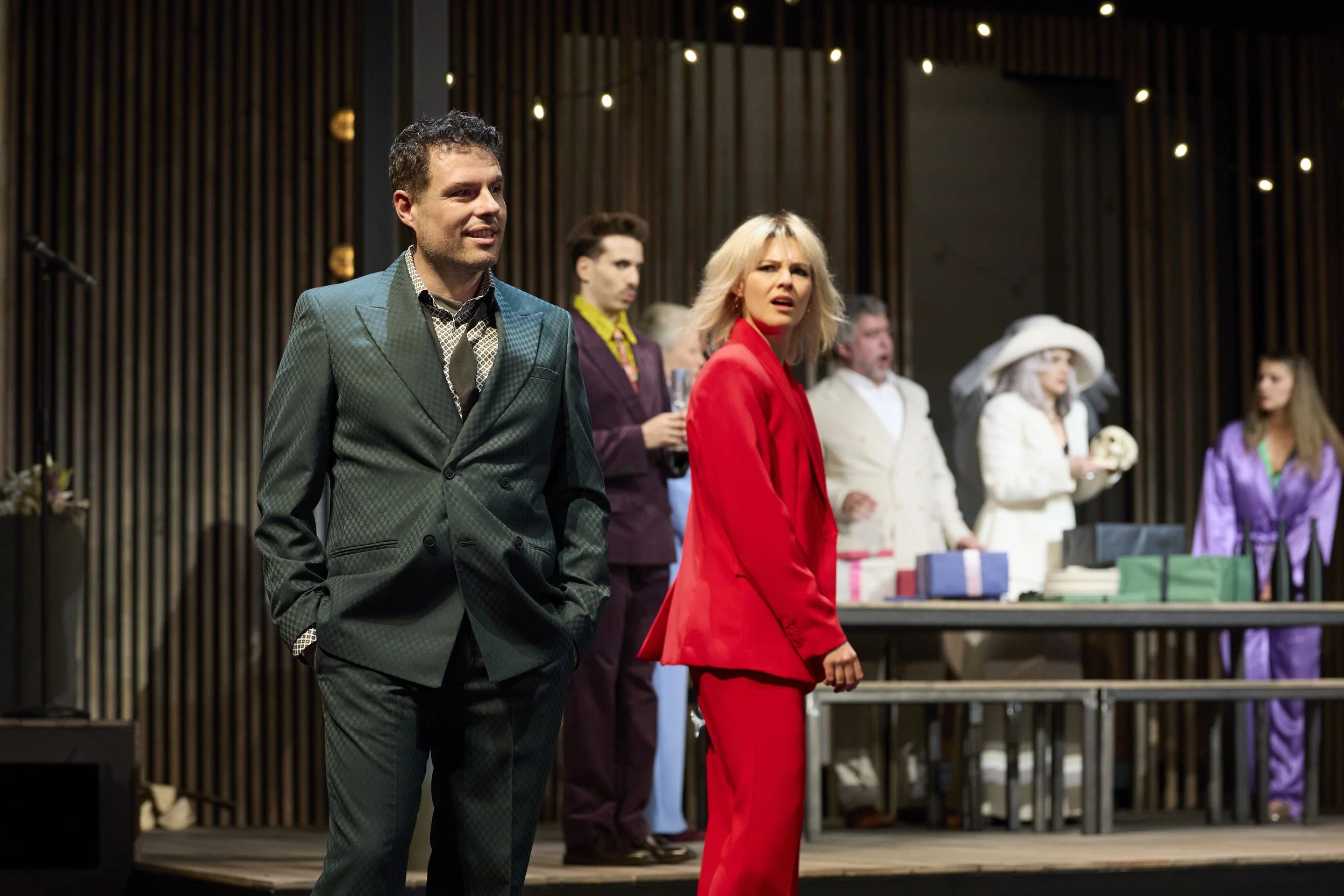
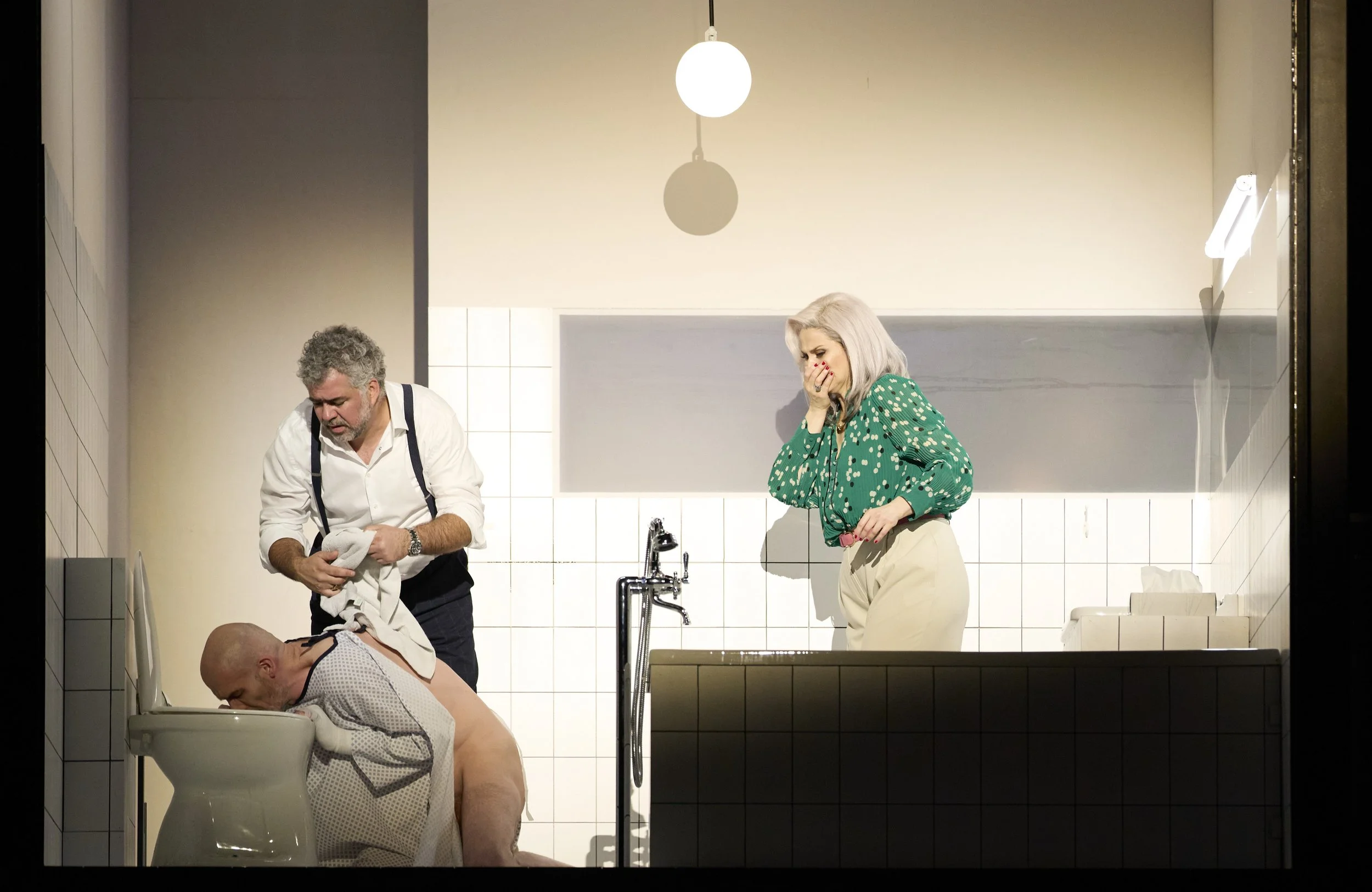
“Honestly, who hasn’t checked the time during the umpteenth repetition of an aria in a Baroque opera? You won’t do that during Francesco Gasparini’s Ambleto at the Theater an der Wien. Guaranteed. What director Ilaria Lanzino makes out of this 1705 Hamlet opera is as thrilling as a Hitchcock film and as bloody as a crime novel by Scandinavian master of horror Jo Nesbø. (…) Lanzino reconstructs the action from the surviving arias. The lost recitatives are replaced with adapted fragments from Shakespeare’s Hamlet, reworked by Lanzino herself. Each character has their own offstage speaking voice. The concept works very well theatrically. The setting is a modern house (set design: Martin Hickmann). Lanzino directs her characters with precision. (…)
A phenomenal music theatre experience.”
Kurier
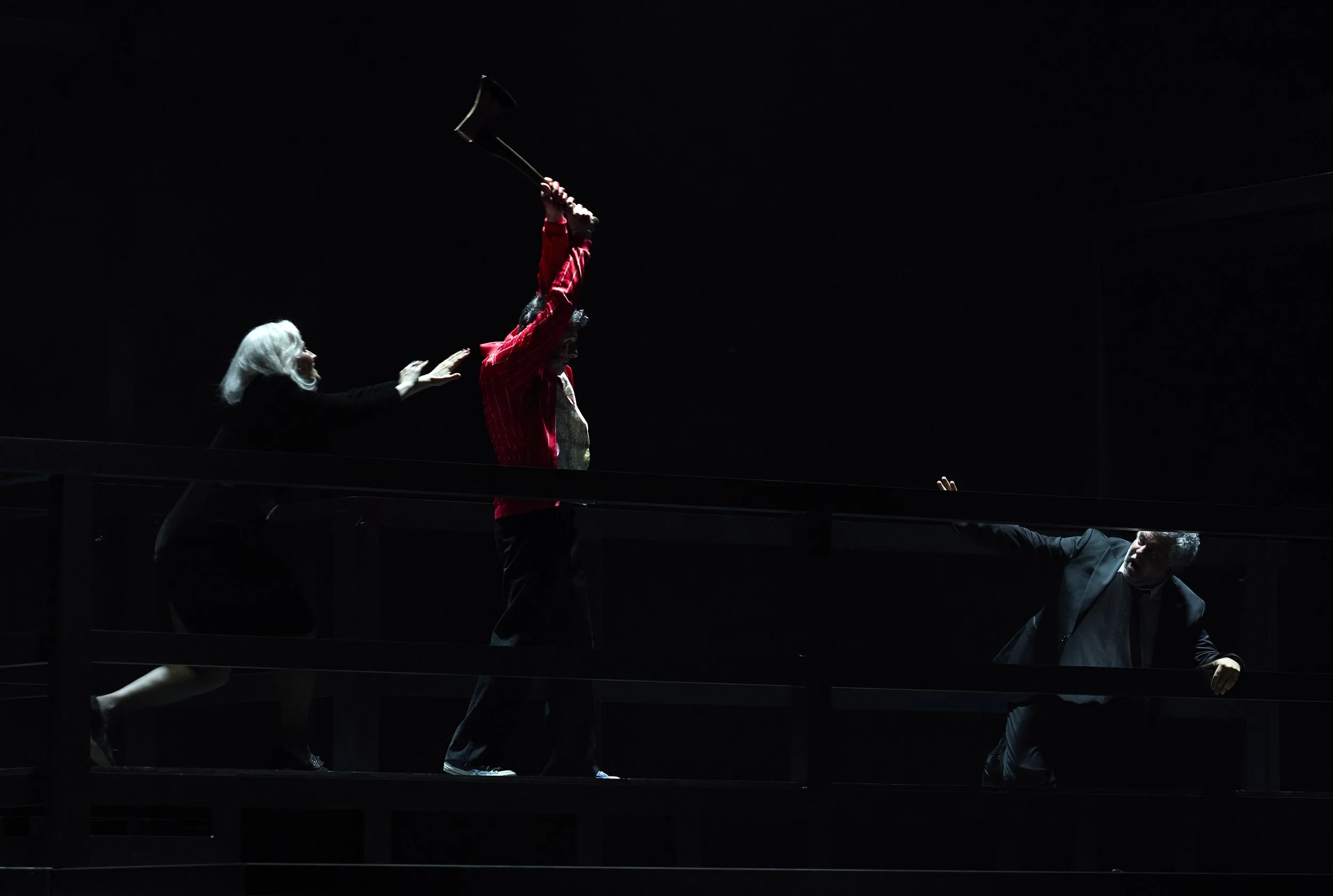
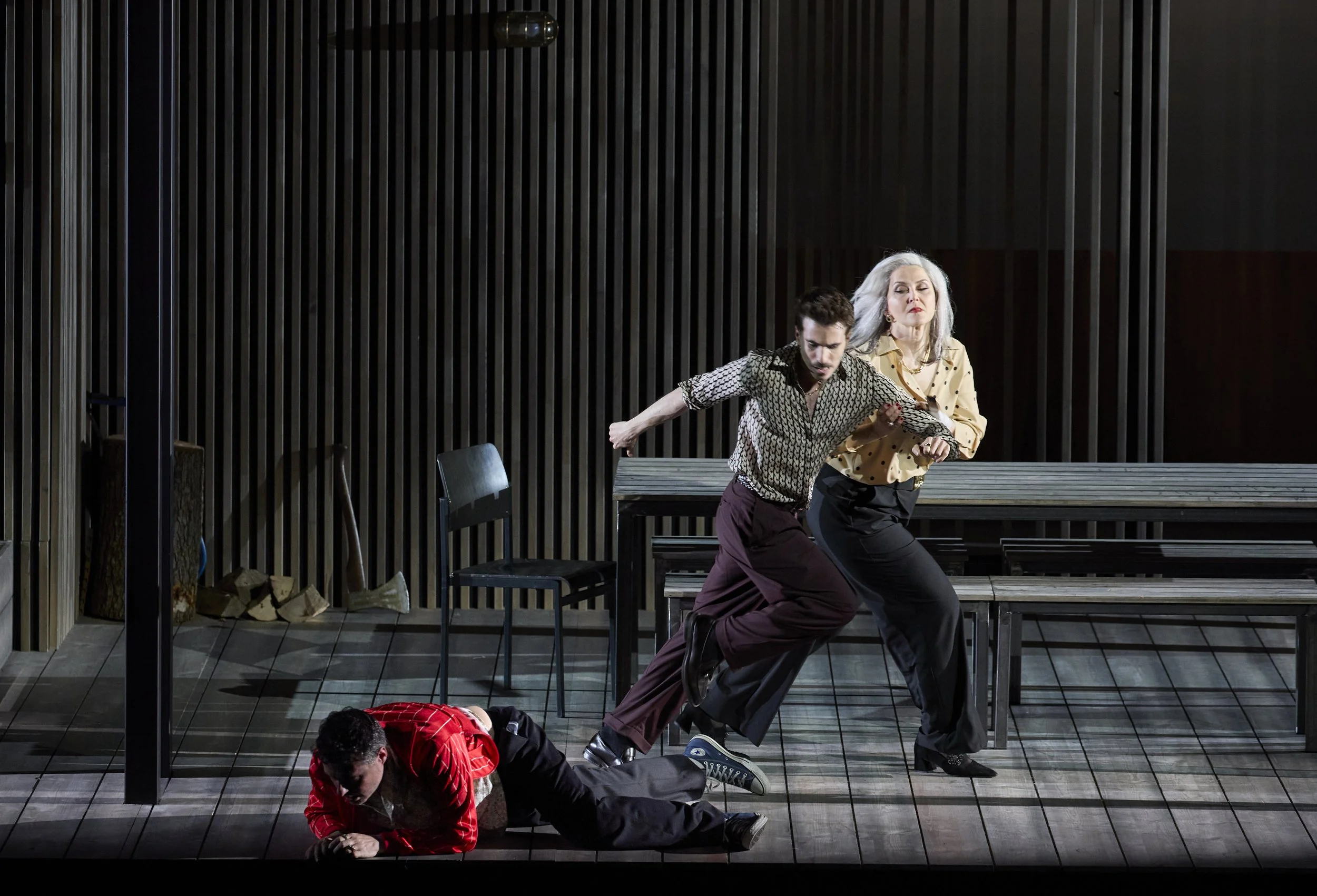
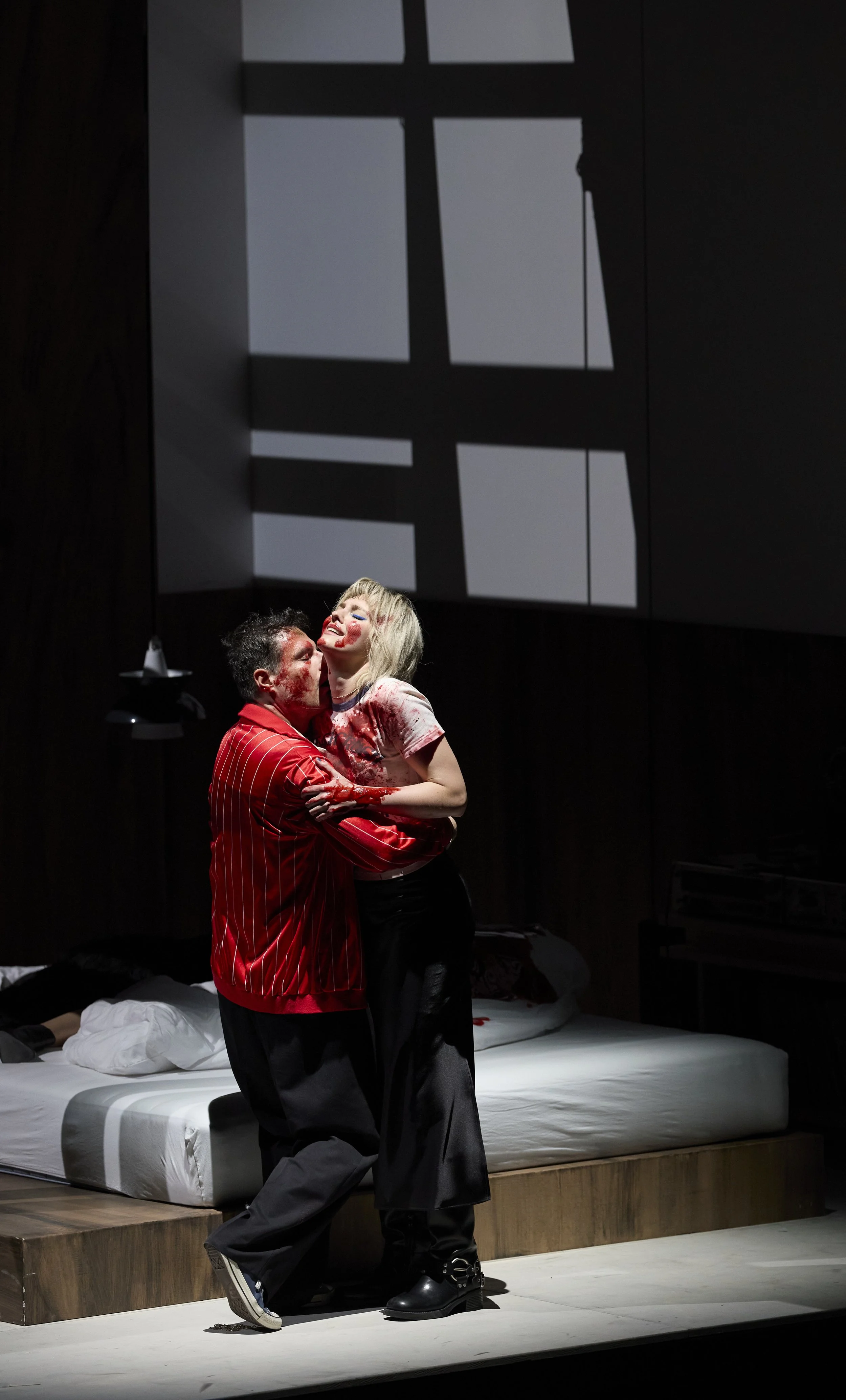
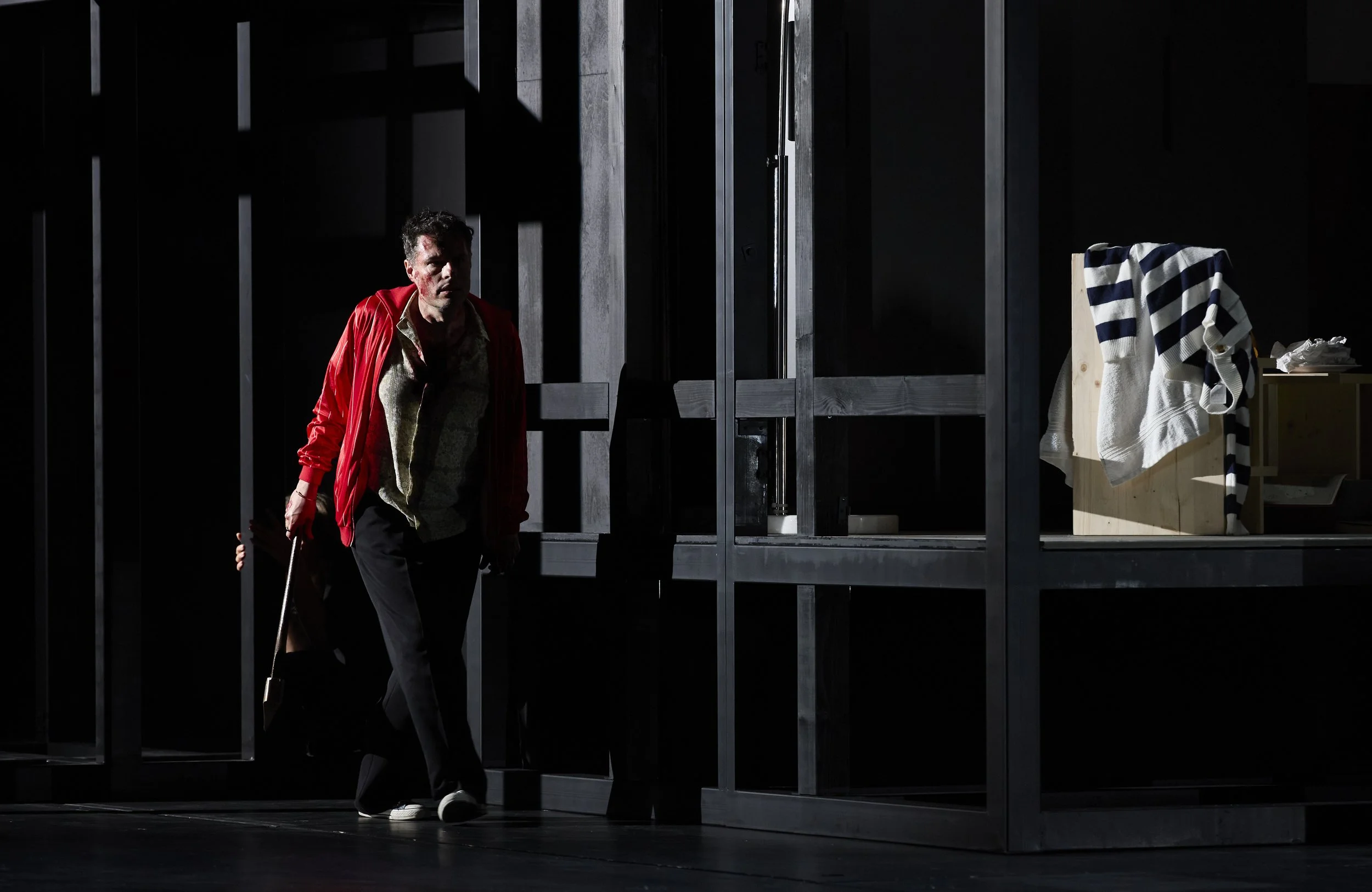
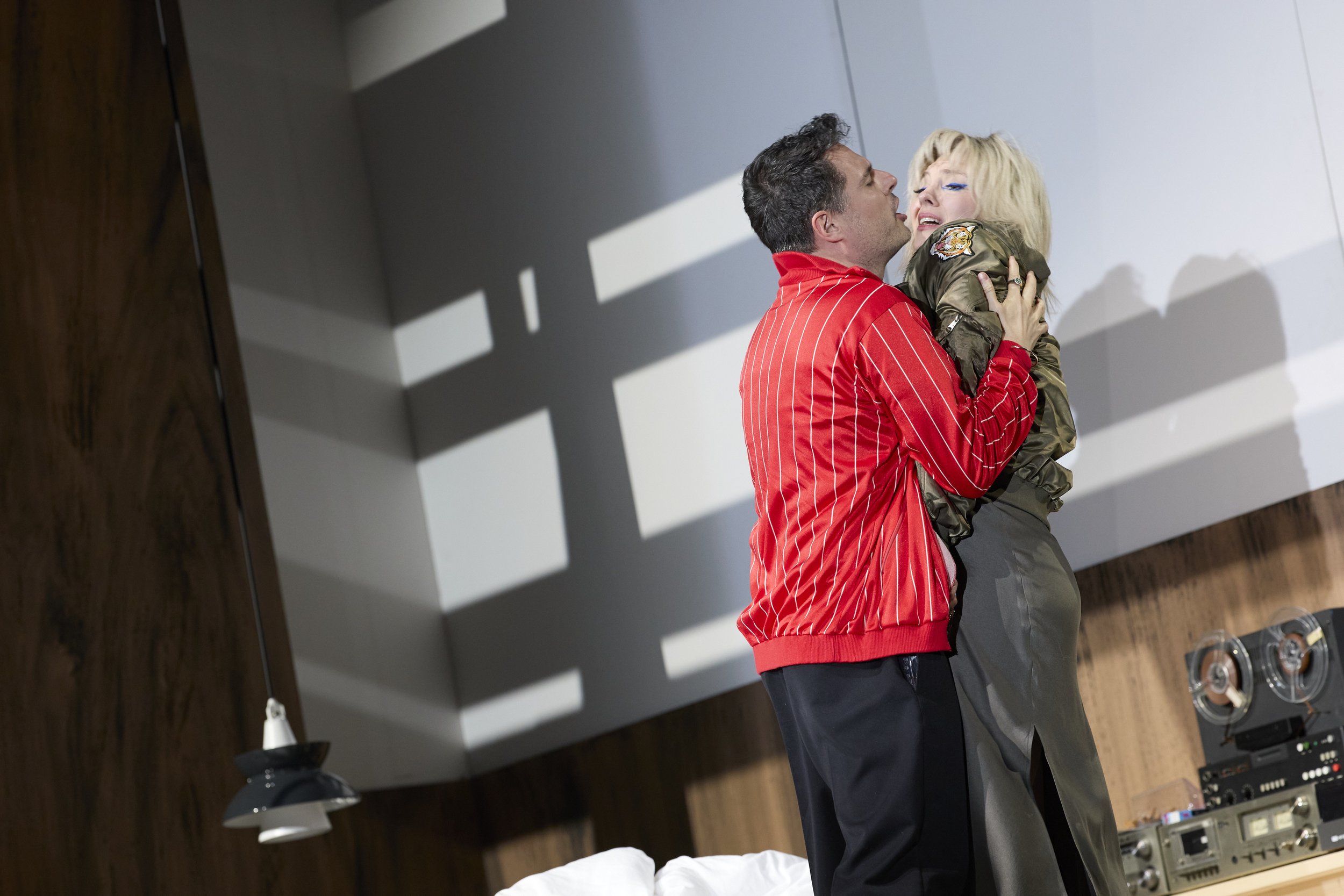
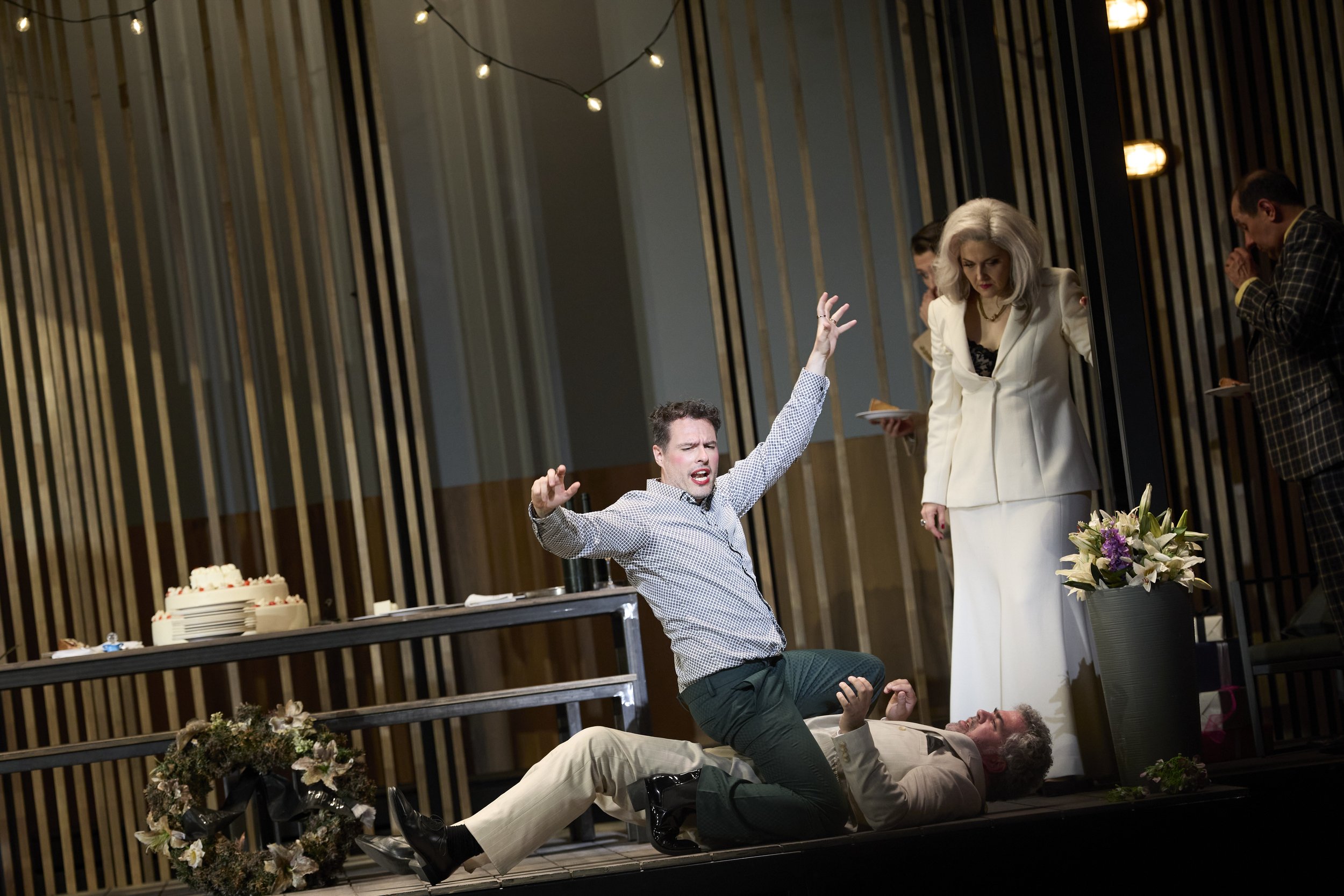
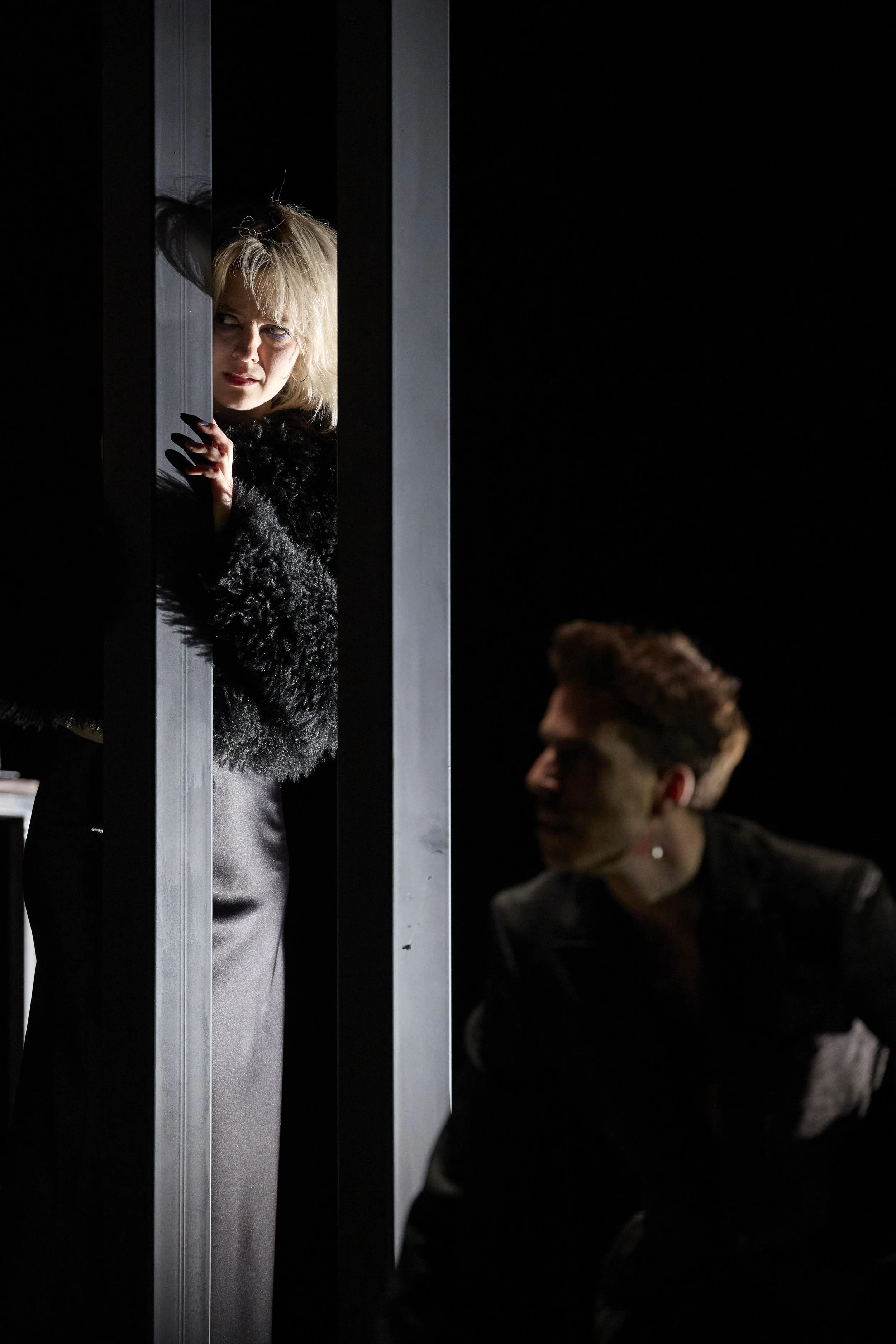
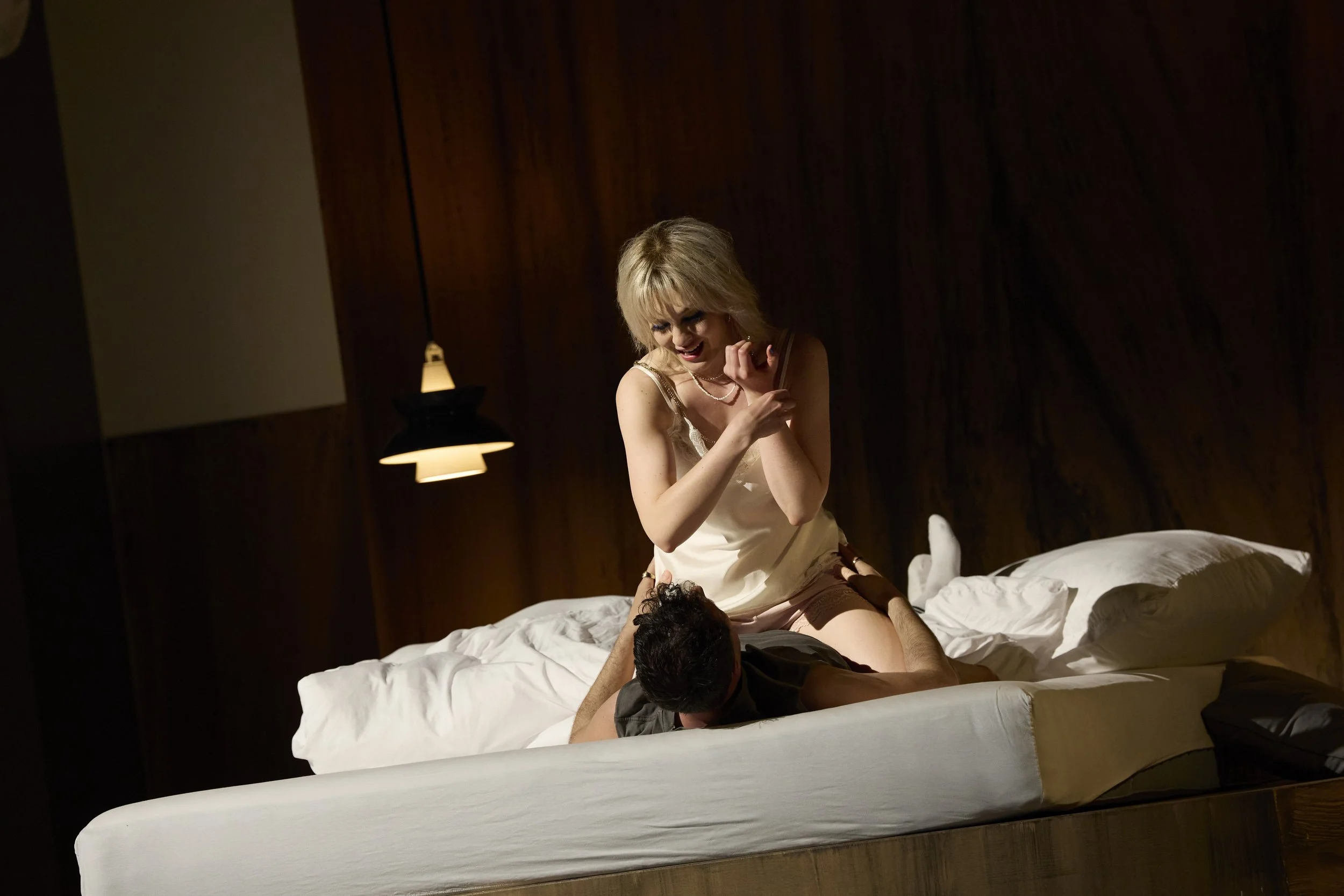
“A must-see (…) In general, things get intense in Ilaria Lanzino’s direction, which turns what remains of Francesco Gasparini’s opera seria Ambleto into a family tragedy of our century. (…) Lanzino’s staging shines with thoughtful, meticulous character work and both fascinates and shocks with graphic imagery: an abundance of blood, accentuated acoustically during axe attacks; and as Hamlet’s vision, an explicit blowjob between Gertrude and Claudius, followed by Hamlet’s ‘real’ rape of Ophelia. (…) Surprisingly, the intense scenes never clash with the music, which instead provides an emotional window into the characters’ souls and creates a compelling, almost harmonious contrast. (…) Both visually and musically clever. (…) Lanzino turns Ophelia into the true heroine of the piece. (…)
The impact is clear: thunderous applause, even for the directing team.”
OPERN.NEWS
“Gasparini’s opera is shaped by Ilaria Lanzino into a modern family drama. Netflix-style aesthetics that had the baroque-loving house erupting with excitement on Tuesday. (…) Lanzino places these suddenly disturbingly contemporary characters firmly in the present. (…) A stroke of genius (…)
An outstanding overall impression.”
Salzburger Nachrichten
“A horror trip at the Theater an der Wien (…) Bloody applause.”
Der Standard
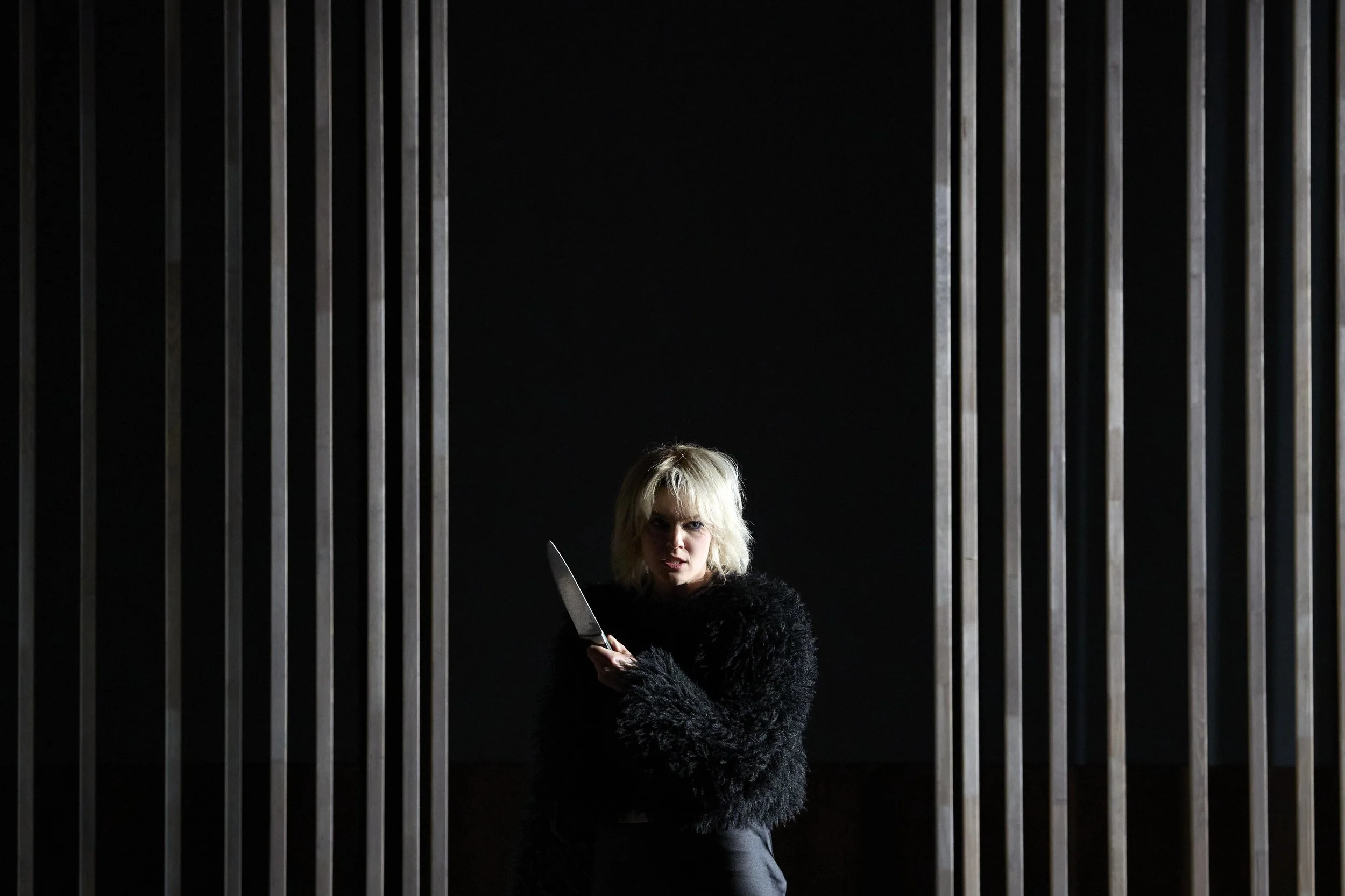
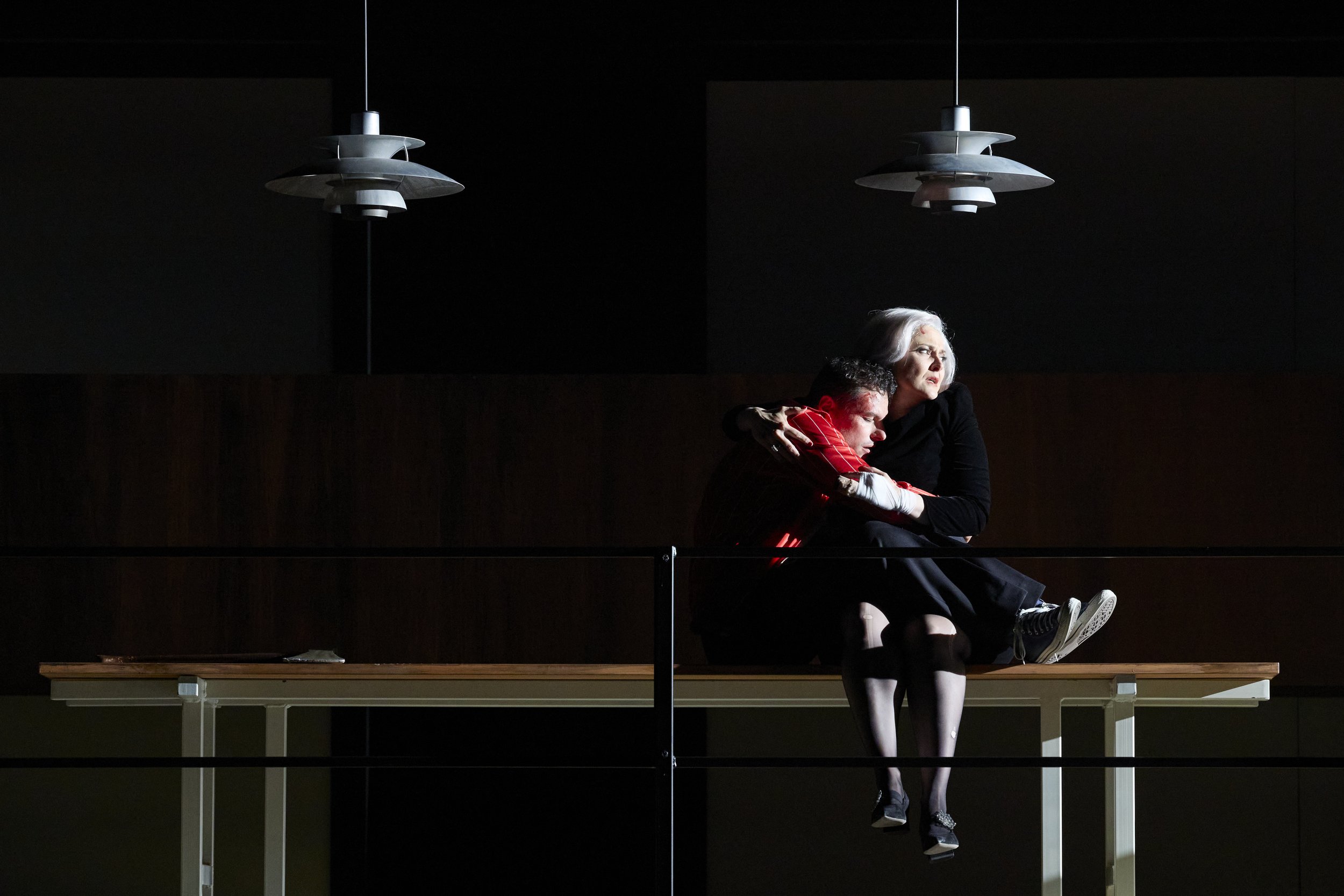
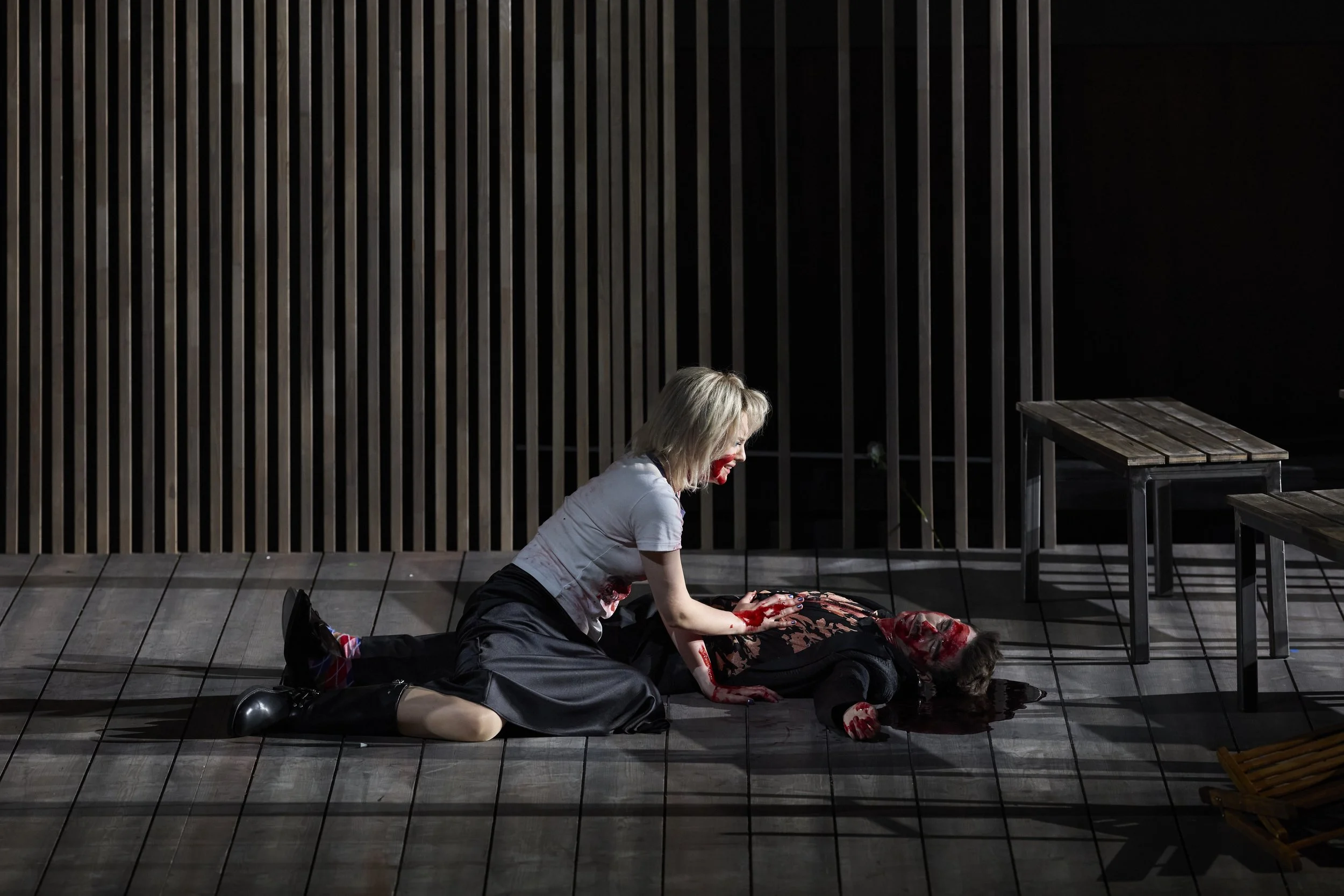
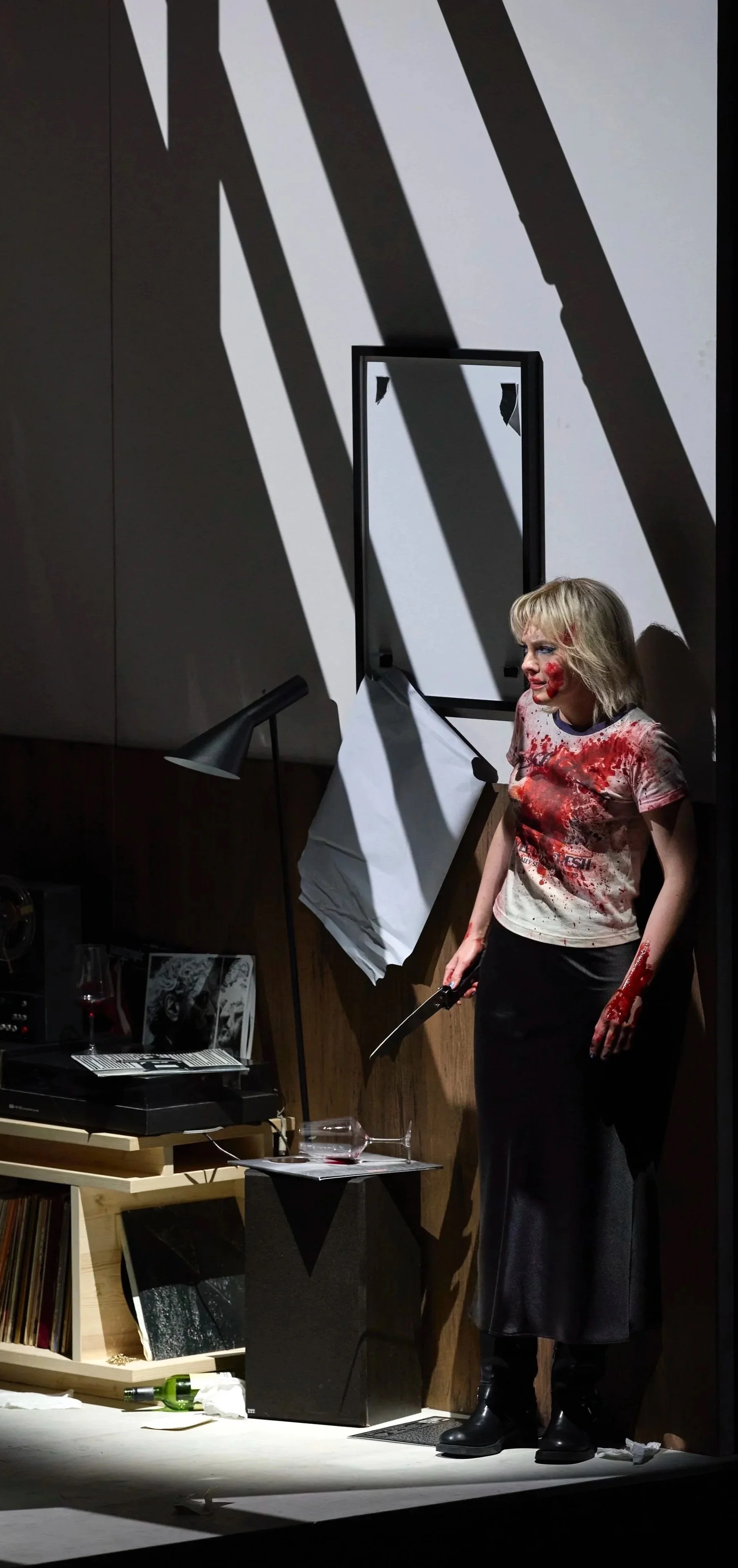
“At the height of the drama, there it is: that special music theatre moment. ‘This is how I show you my loyalty,’ sings Erika Baikoff as the deeply shaken Ophelia to her beloved Hamlet. She calmly and decisively pierces him with a giant kitchen knife — releasing him from his bloody rampage. (…)
A clever direction.”
Kronen Zeitung
“Bold, modern, imaginative.”
GN.at
“A contemporary family drama in a Nordic designer home (…) The acclaimed evening gives hope for a comeback of Ilaria Lanzino in the future.”
Kleine Zeitung
“Unconventional, bold, powerful, surprising.”
Die Furche
“A brilliant stage interpretation by Italian director Ilaria Lanzino. Her direction of the characters is fantastic. With this production, the Theater an der Wien rightly enjoyed a major success.”
Klassik Begeistert
“The director successfully staged a coherent drama because the cast portrayed real characters. (…) without the usual operatic pantomime.”
WDR
“A strong visual language, followed by long and thunderous applause.”
Der neue Wiener
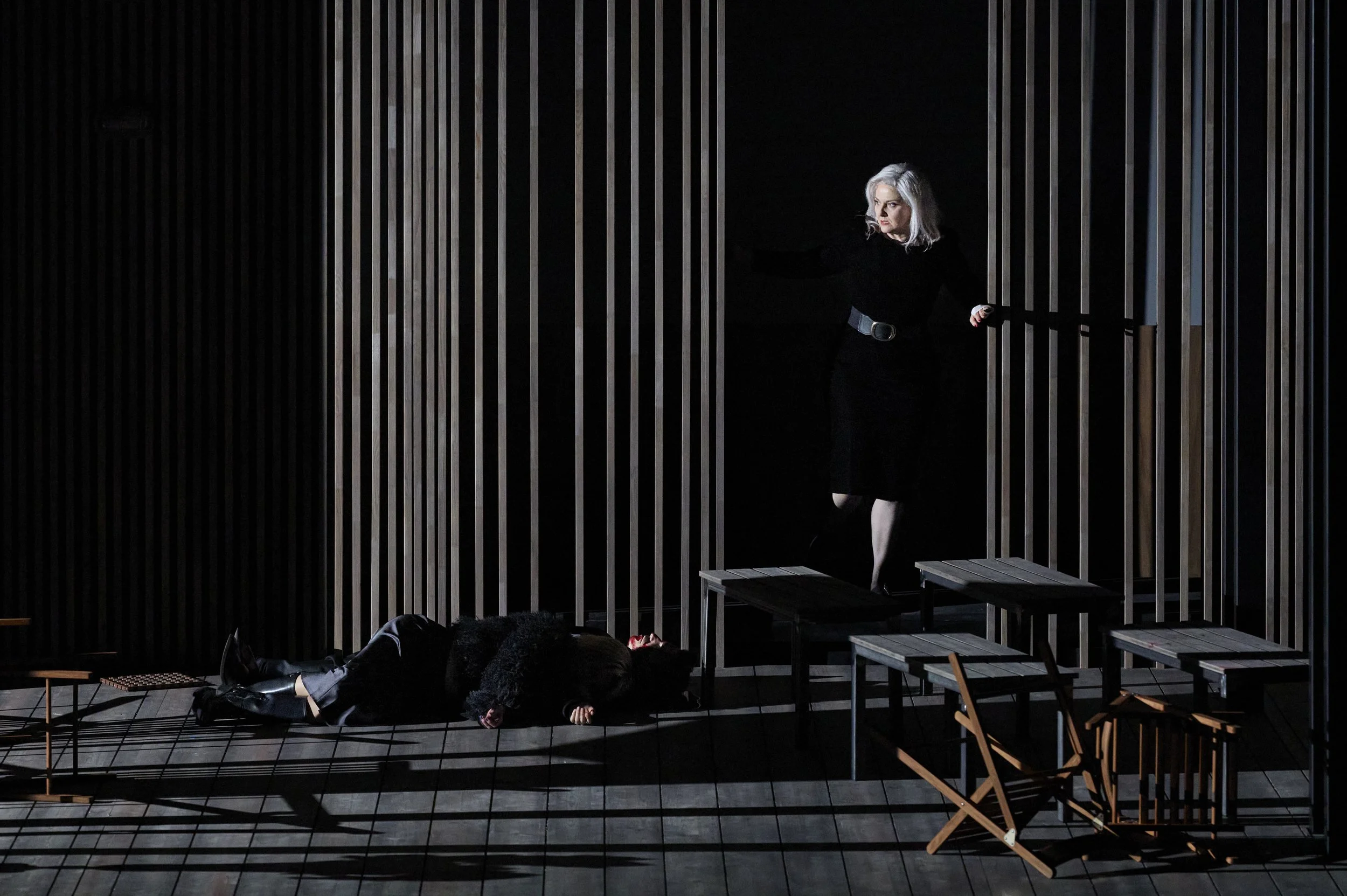
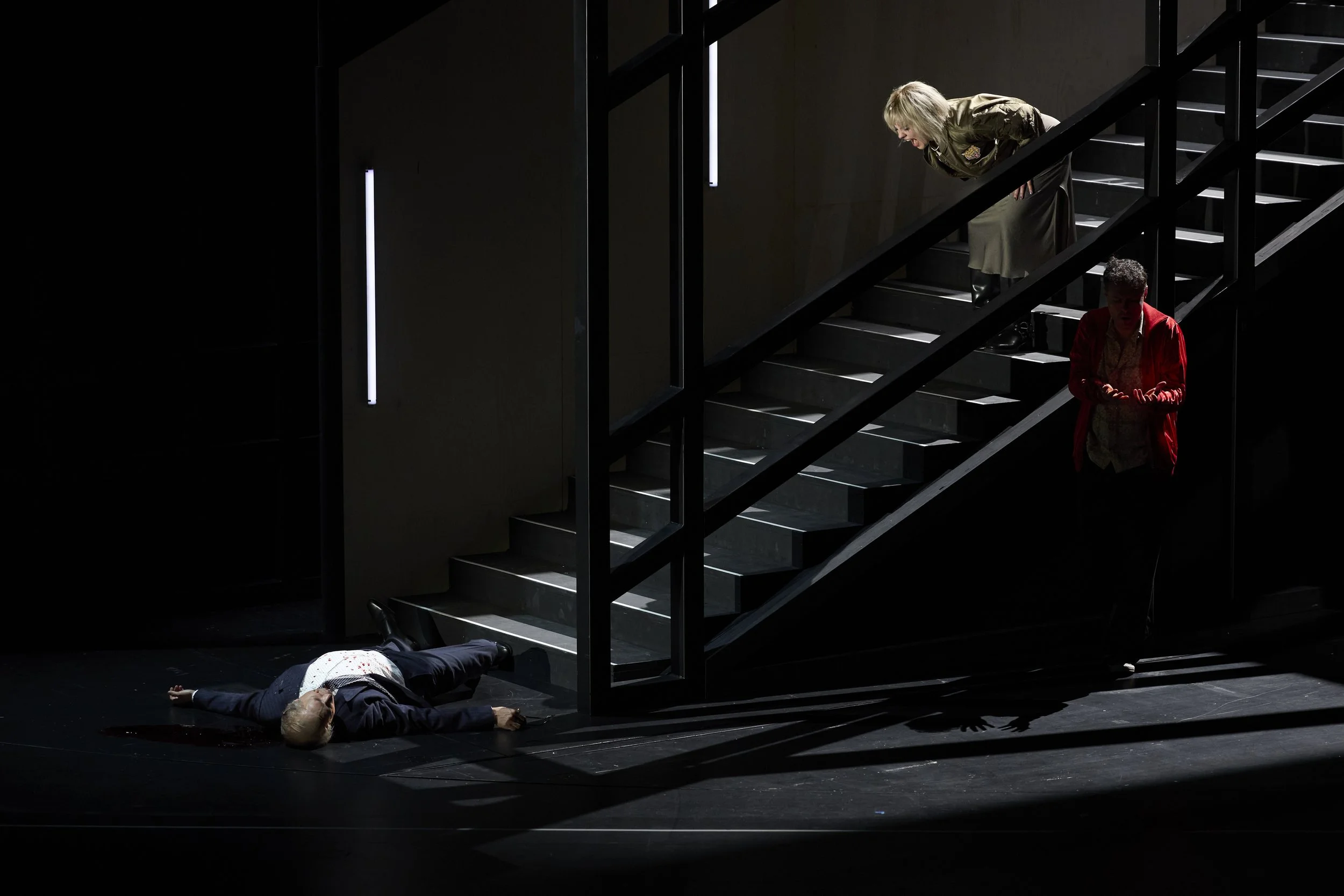
“The energy and commitment of the production are impressive. Spoken Shakespeare fragments cast intense spotlights on the characters’ souls, bridging the music and stage action. The result is as blood-drenched as Strauss’s Elektra or Bartók’s Bluebeard. In Martin Hickmann’s claustrophobic domestic labyrinth, Lanzino chillingly reveals human entanglements.”
Falter.at
“It was a psychological thriller like no other — you feel like you’re watching a movie. The mix of intense psychodrama and Baroque music is fantastic, even for those who don’t usually enjoy horror. Super thrilling.”
kulturknistern*
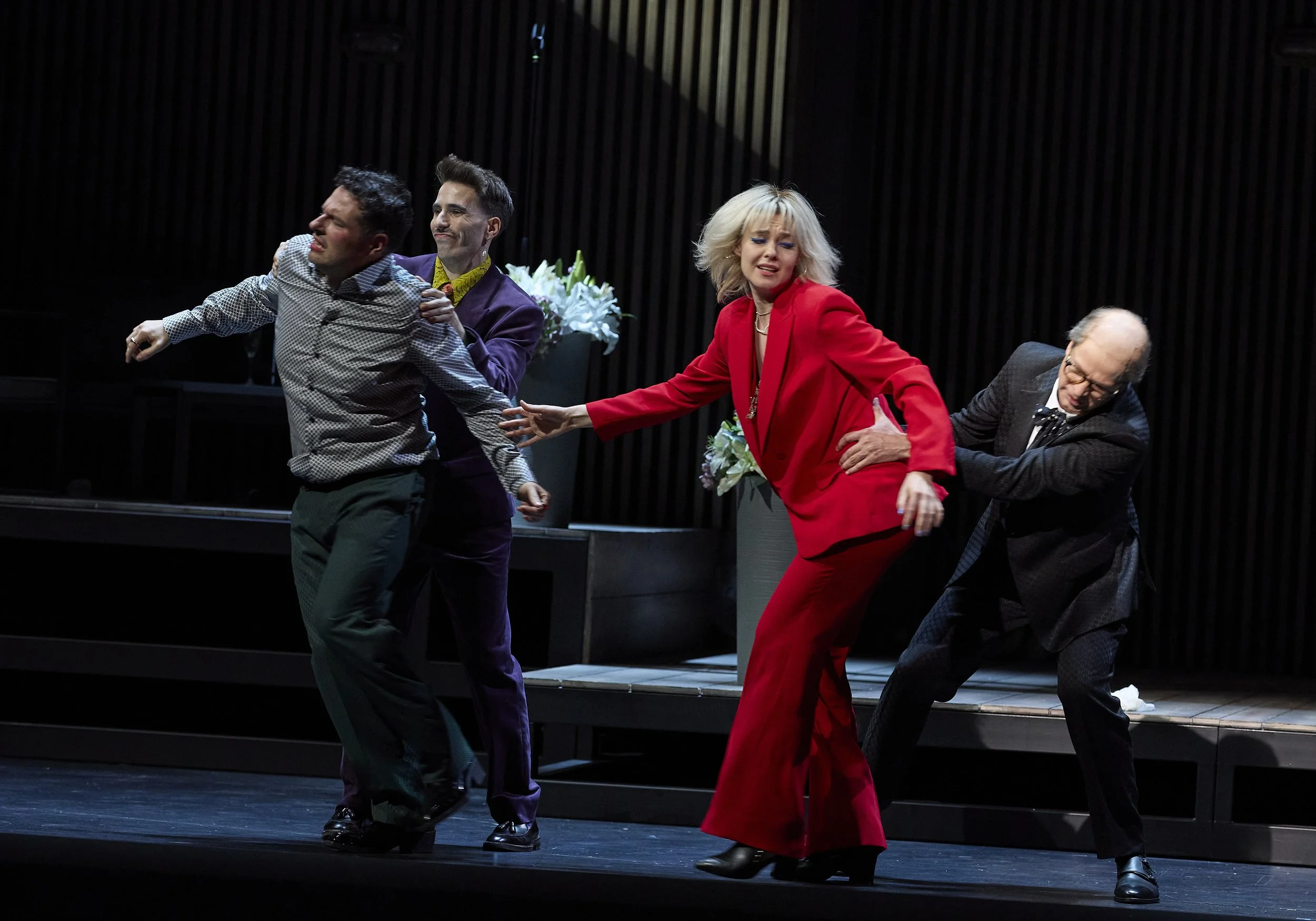
“The director gives it all. Violence and despair turn physical between characters — a blood-soaked frenzy on stage.”
Van Magazin
“A ‘bloodbath among relatives’ could subtitle this new production of Ambleto at Theater an der Wien. (…) This kind of music theater resonated strongly with the young audience (…) their enthusiastic, loud applause said it all.”
Simply Classic
“A successful experiment — a fascinating, fresh opera experience.”
Kulturundwien
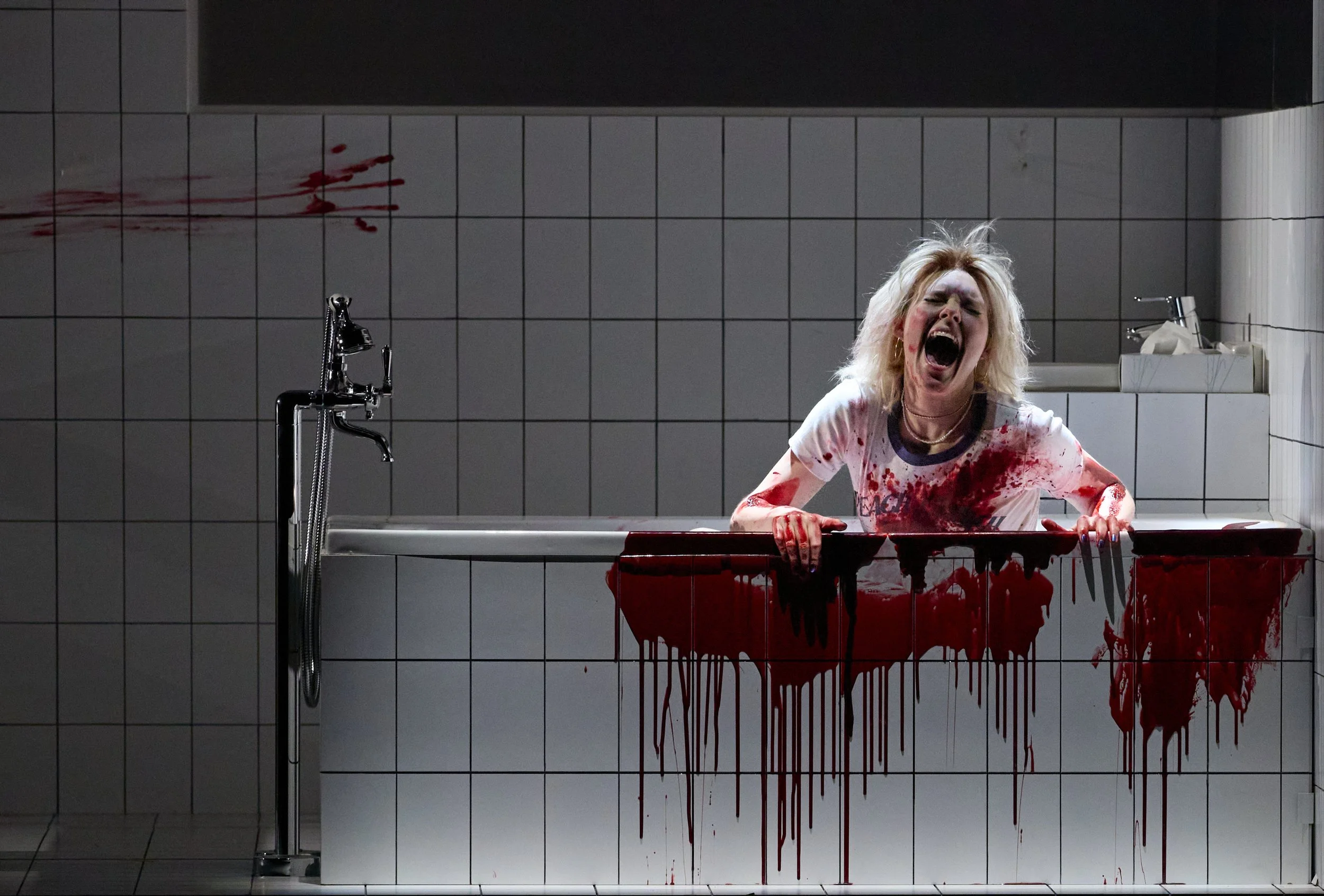
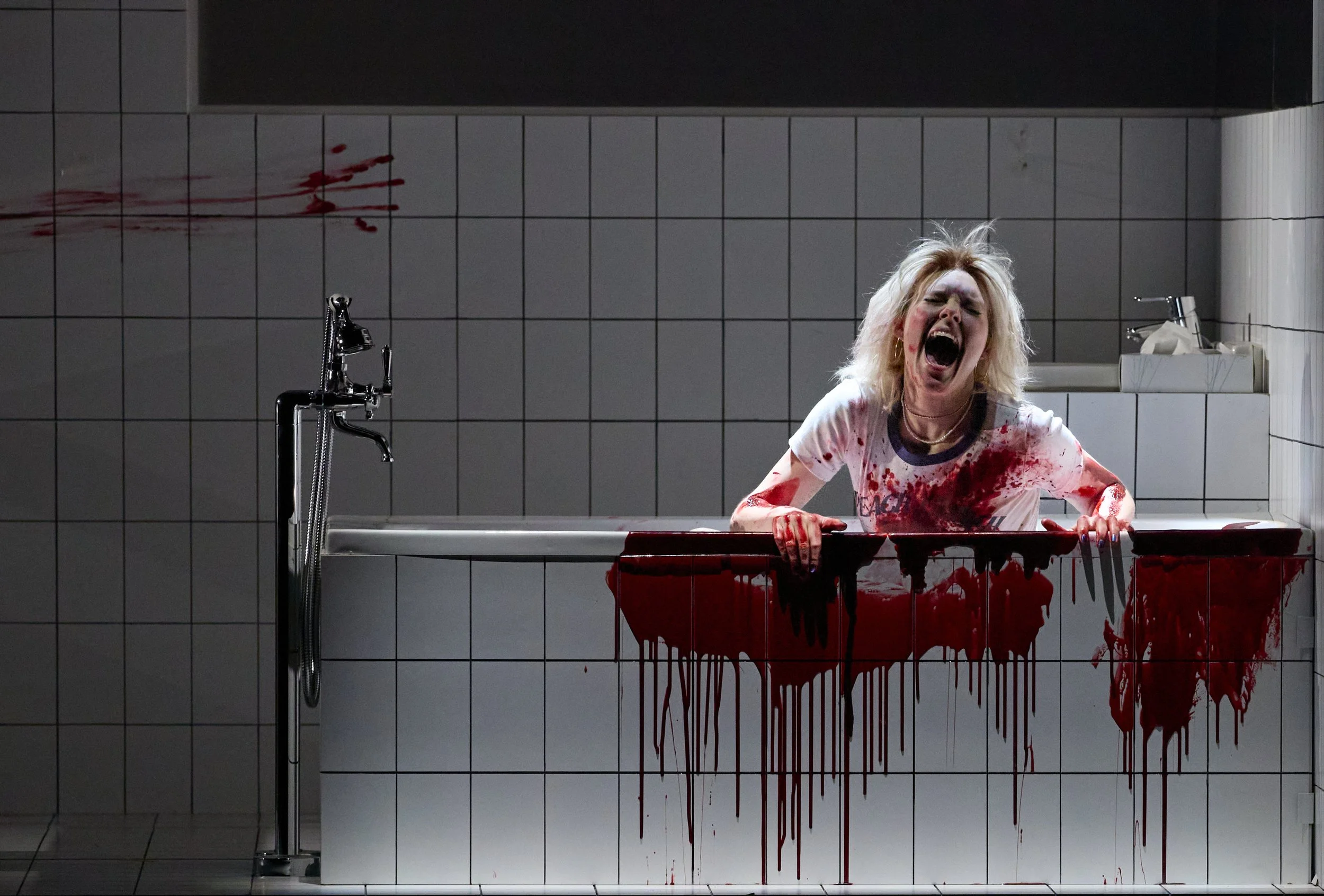
“Vividly acted, highly dramatic, bloody (…) In the very first scene, we see Ophelia, drenched in blood, screaming from the bathtub — a scream that chills the soul and announces a first-order tragedy. (…) The director spares no one — not even the audience.”
Online Merker
“The gaps in the score offer the opportunity for imaginative realization. (…) Lanzino and Pe approach it with marked creativity, both musically and scenically. (…)
The rest is silence.”
Die Presse
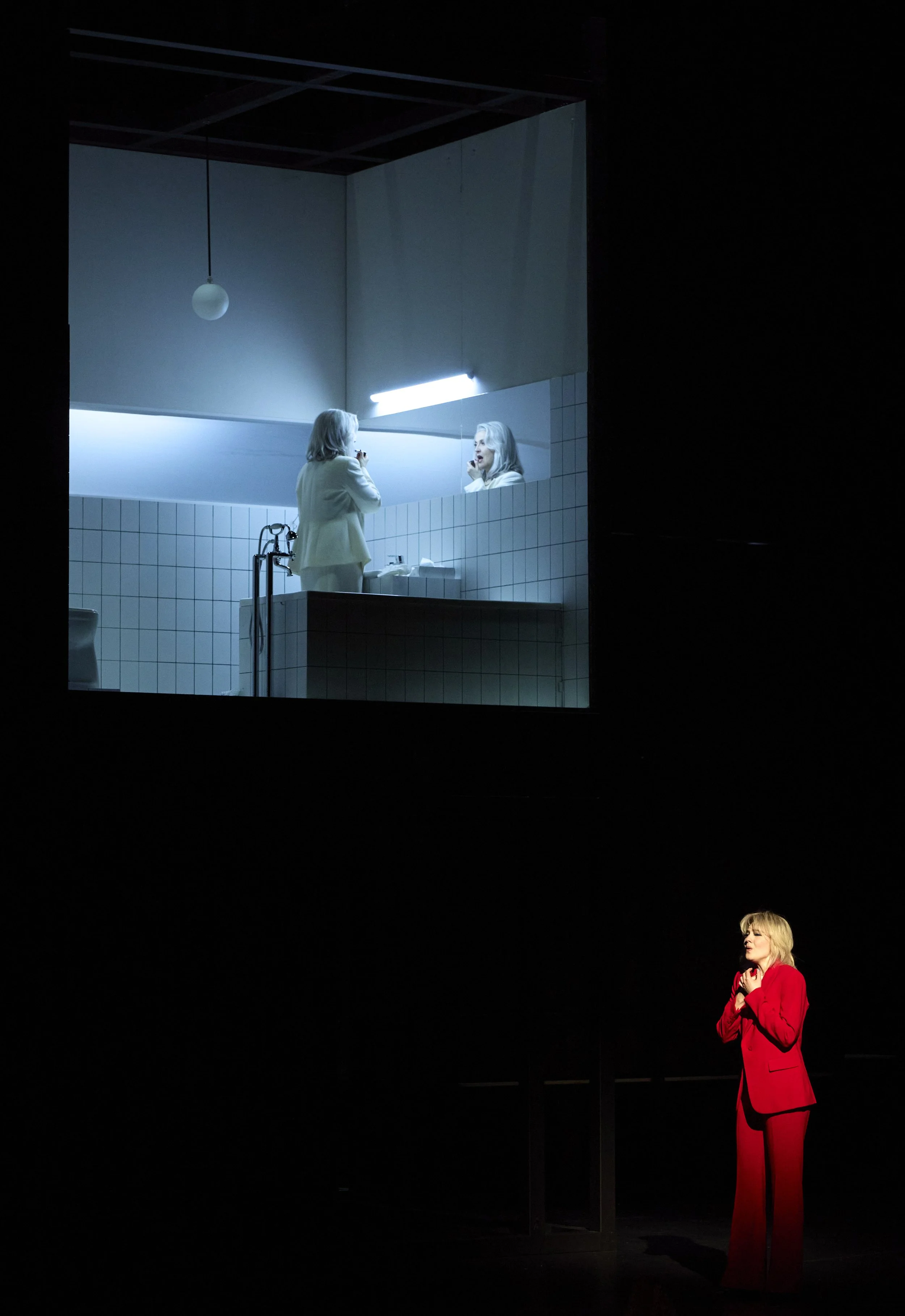
“Starting from this material, Raffaele Pe and director Ilaria Lanzino reconstructed the opera and presented it in a highly modern staging that reinterprets Gasparini’s original with great freedom and extraordinary theatrical appeal. Ilaria Lanzino turned the opera into a family tragedy of our time, with a cinematic approach (with clear references to Haneke, Lanthimos, and Lars von Trier) that makes optimal use of the gaps in the surviving performance material. The result is a vivid and gripping narrative. Even the free cutting of the arias seems perfectly suited to depicting a ‘dysfunctional’ family, whose six characters are characterized in the finest detail. Ambleto is a true anti-hero: an unstable, disturbed young man who experiences the death of his father—and above all his mother Gertrude’s affair with his uncle Claudio—as a psychological trauma (a brief scene in which he sees his mother performing fellatio on his uncle also appears as a vision). This drives him mad, to the point of raping Ophelia and carrying out a real massacre of the entire family with an axe. The true heroine of the work is Ophelia: a self-confident, independent young woman, Hamlet’s lover from the very beginning, who is capable of supporting him at first against all advice, then leaving him (by delivering the famous monologue ‘To be or not to be’), then mercifully killing him with a huge kitchen knife (singing ‘Thus I prove my fidelity to you’) in order to free him from his lust for murder, and finally committing suicide in a spotless, white-tiled but completely blood-smeared bathtub. It is a shocking image that both opens and closes an opera told as a long flashback to these moments of agony.”
Music Paper
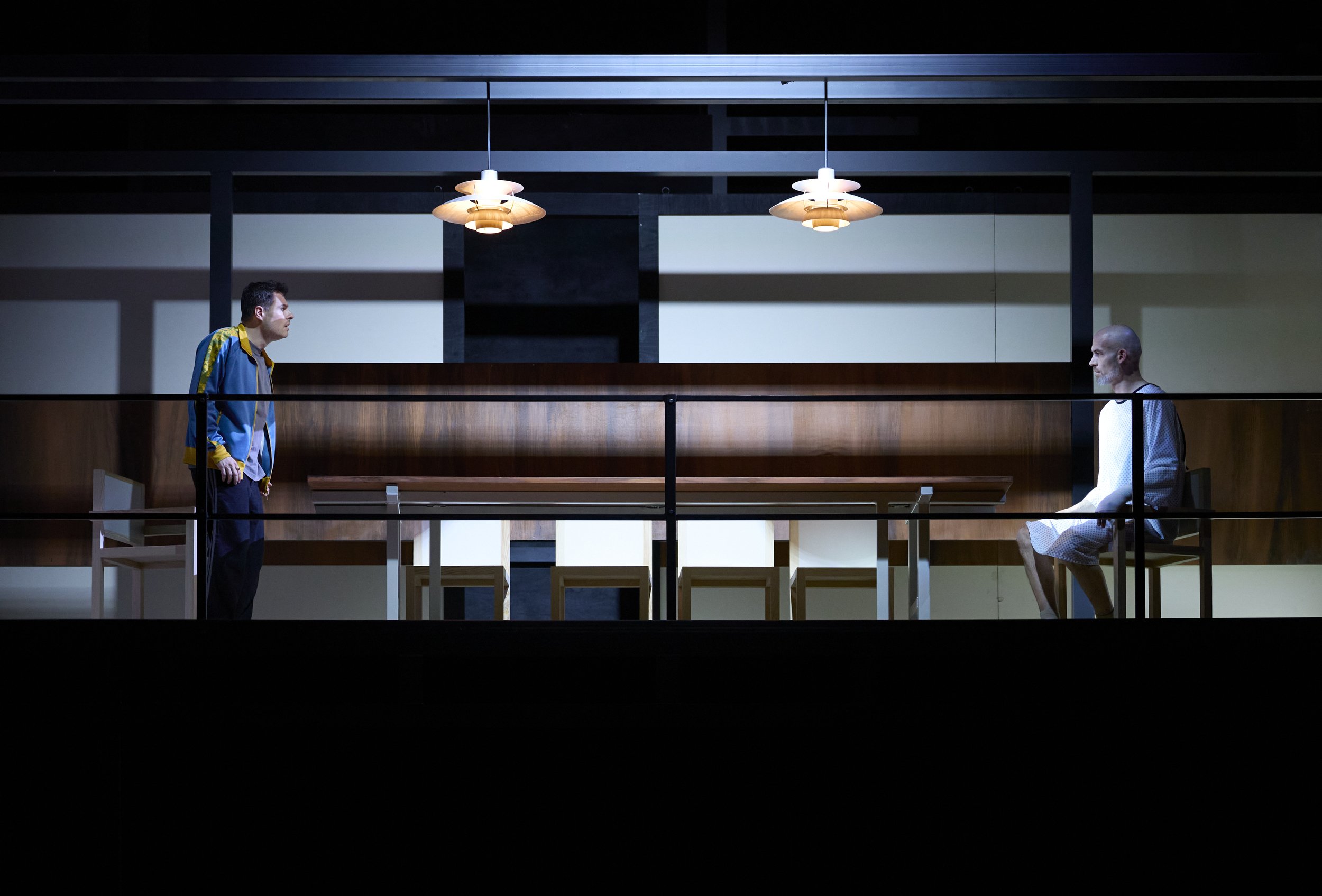
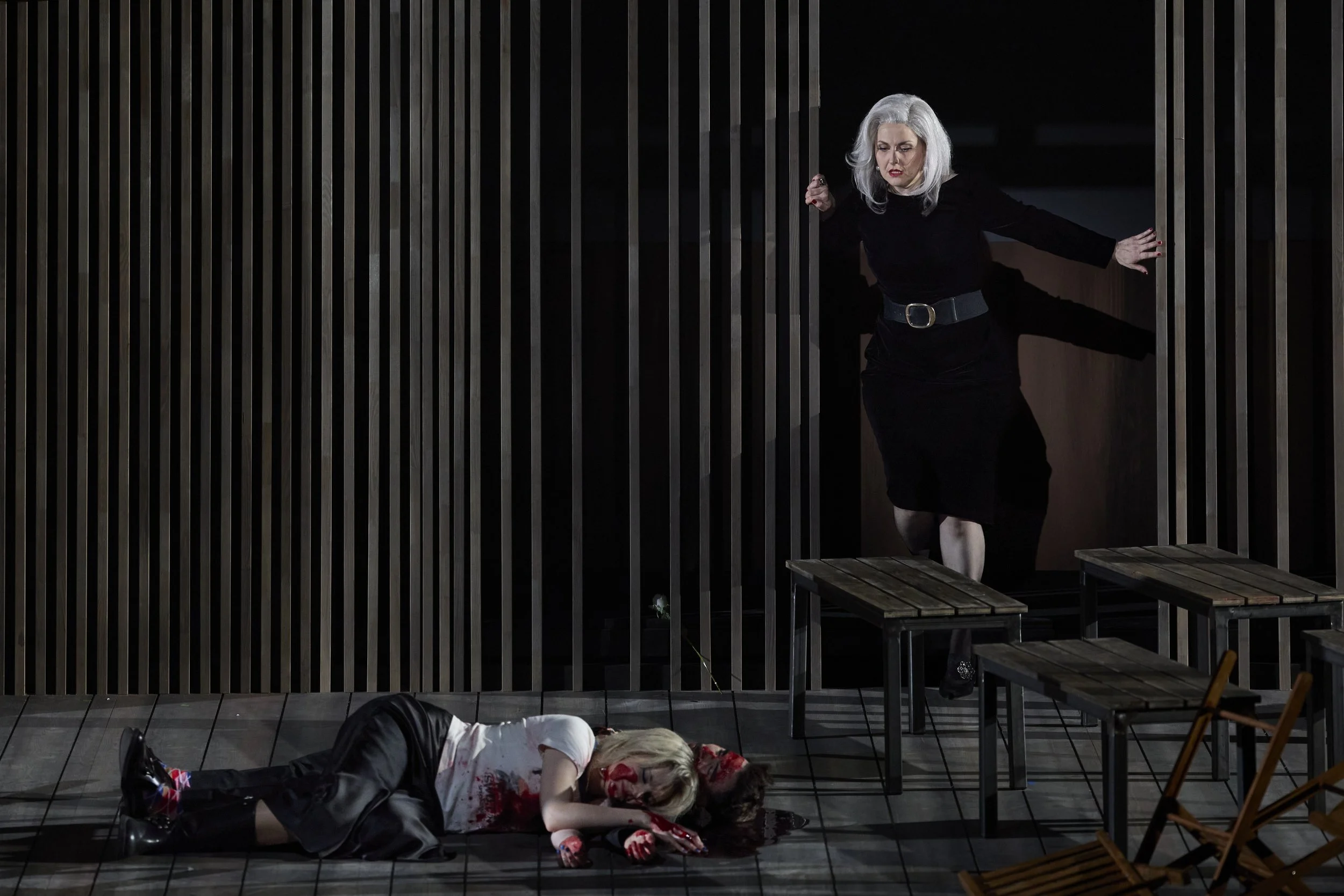
“Lanzino gave Hamlet a new form in which the fascination of early music merges with the traumatized mind of our time. Her concept relies uncompromisingly on the acting abilities of the performers, who embody psychologically complex characters. Lanzino made full use of the freedom offered by the incomplete score—not only to create a new dramaturgy of the work, but also to reshape the idea of the plot itself. The Vienna Hamlet is not flat political theater in any sense; it is not about conspiracies or power struggles. It is a cruel family drama that could happen anywhere, at any time, to anyone. The old Hamlet did not die from poison at the hand of his brother Claudius—as a brief scenic reminiscence suggests, he was a seriously ill man (perhaps a cancer patient?) whom his wife and brother cared for devotedly. The sensitive young Hamlet therefore does not avenge a murder, but loses his mind as a result of post-traumatic shock caused by his father’s death and his mother’s rapid remarriage. Gertrude, too, is not an intriguer or accomplice in her husband’s death, but a woman who has fallen in love with her brother-in-law—at a deeply inappropriate moment. Hamlet’s psychological disintegration is gradual but irreversible. Not even the beloved Ophelia can stop it—a dynamic young woman who energetically fights against her fiancé’s growing melancholy and bravely withstands his increasingly abrupt and aggressive mood swings. Hamlet’s mental collapse causes the destruction of two families and leads to multiple tragedy. At the funeral of Ophelia’s father Polonius, whom Hamlet killed in a furious quarrel after raping Ophelia, the title character appears covered in blood, with a crazed look and an axe in his hand. The rest of the production becomes a horror ride, with the revolving stage revealing ever more corpses. In the end, almost everyone is dead: Ophelia’s brother Laertes, Uncle Claudius, members of the mourning congregation. Hamlet meets Ophelia in the bedroom—where they had so often talked and loved, and where he had destroyed all hope of a shared future through an act of violence. ‘Come! See my pain, my soul no longer belongs to me,’ says Ophelia. Hamlet drops the axe and sinks like a child into her rocking embrace, where his raging and suffering come to an end. Ophelia stabs him without emotion, almost tenderly, and continues to cradle his lifeless body. Lanzino’s production is punctuated by the same shocking image with which it opened. In a lit section of the vertically structured stage, Ophelia lay in a bathtub filled with blood—the circle of the story had closed. But not quite yet. With the final bars, Gertrude, widowed for the second time, staggers into the bathroom with a bullet-ridden head and joins Ophelia’s dying song. Silence. Darkness.”
Hudobný život
Stage direction: Ilaria Lanzino
Stage design: Martin Hickmann
Costume design: Vanessa Rust
Light Design: Anselm Fischer
Fotos: Herwig Prammer